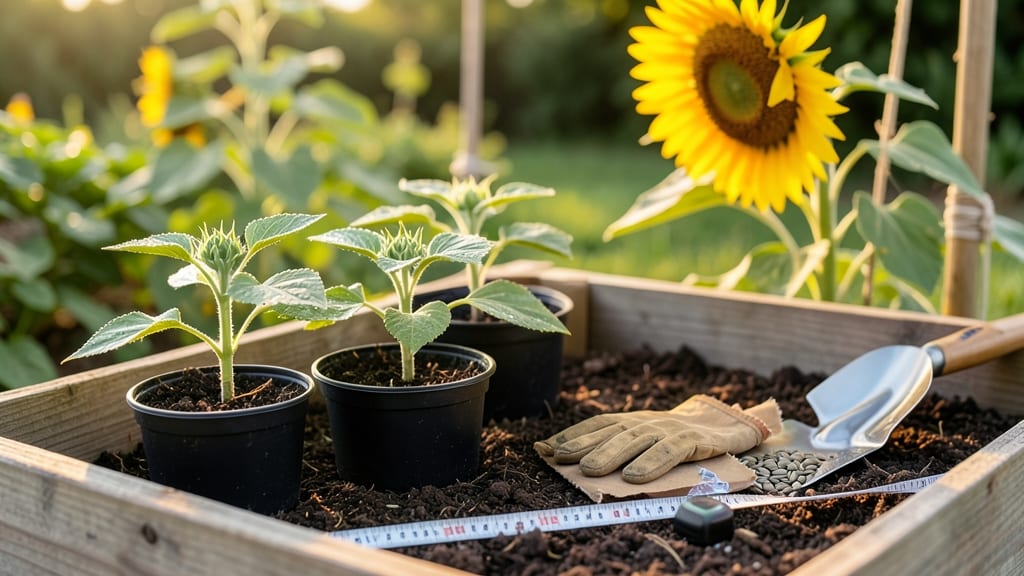
Planting sunflowers too close turns your garden into a jungle of weak stems and sparse blooms, but getting the spacing right is the secret to towering stems and abundant flowers 🌻.
Sunflowers may seem like hardy, low-maintenance plants, but their towering stems need the right spacing to thrive—and crowding them can turn your dream garden into a tangled mess.
Whether you're growing dwarf varieties for containers or giants for a statement border, the distance between plants determines everything from height to disease resistance.
In this guide, I’ll break down the exact spacing you need for every sunflower type, from dwarf varieties that fit in small gardens to giant sunflowers that need room to stretch their legs.
You’ll also learn how to fix common mistakes like overcrowding and uneven rows, so your sunflowers stand tall and proud instead of leaning or flopping.
Ready to maximize your yield and create a sunflower display that turns heads? Let’s dive into the spacing secrets that will have your sunflowers reaching for the sky—without the competition.
April - May (after last frost)
Plant seeds 1 inch deep, 6 inches apart in rows 2-3 feet apart
🌻
spring Planting Recommended
Optimal sunflower spacing by variety: dwarf to giant guide
Sunflowers are nature's skyscrapers, but their towering beauty requires thoughtful spacing to prevent weak stems, stunted growth, or disease outbreaks. Spacing directly impacts both the height and bloom size of your sunflowers—crowding them too closely can reduce flower heads by 30-50% while proper spacing ensures sturdy stems that support 10+ foot giants.
Whether you're growing dwarf varieties for containers or giant sunflowers as statement plants, the right distance between plants makes all the difference.
Most gardeners make the mistake of treating all sunflowers the same, but variety-specific spacing is critical. A 2-foot-tall dwarf packed too closely will flop over, while a 12-foot giant given too much room wastes valuable garden space.
The key is balancing root competition, air circulation, and light exposure—each of which varies dramatically between sunflower types. Let's break down the optimal spacing for every category, plus how to adapt for container gardening and small-space solutions.
Here's where spacing gets tricky: Overcrowding doesn't just stunt growth—it creates the perfect conditions for powdery mildew and stem rot, two common sunflower diseases. Proper spacing improves disease resistance by 35-40% by allowing air to circulate and reducing humidity around the foliage.
Meanwhile, under-spaced plants compete aggressively for nutrients, leading to yellowing leaves and weak stems that snap under their own weight. The good news? With the right distances, you'll get larger blooms, stronger stems, and healthier plants that thrive from seed to harvest.
| Variety Type |
Mature Height |
In-Ground Spacing |
Container Spacing |
Row Spacing |
Notes |
| Dwarf (e.g., 'Teddy Bear', 'Moulin Rouge') |
2-3 ft |
12-18 inches apart |
1 plant per 5-gallon container |
18-24 inches |
Ideal for borders, containers, and cut flowers |
| Semi-Dwarf (e.g., 'Sunspot', 'Autumn Beauty') |
4-6 ft |
24-30 inches apart |
1 plant per 10-gallon container |
30-36 inches |
Great for mixed borders and pollinator gardens |
| Standard (e.g., 'Mammoth', 'Russian Giant') |
8-12 ft |
36-48 inches apart |
Not recommended for containers |
48-60 inches |
Needs staking for tall varieties; plant at edge of garden |
| Giant (e.g., 'American Giant', 'Colossus') |
12-16 ft |
48-72 inches apart |
Not suitable for containers |
60-72 inches |
Requires deep, fertile soil; use trellis for support |
| Overcrowded (Any Variety) |
Stunted growth |
<12 inches apart |
5 Critical mistakes that ruin sunflower growth (and how to fix them)
Sunflowers are resilient, but even they struggle when planted too closely. Overcrowding leads to weak stems, disease spread, and fewer blooms—turning your sunny garden into a shadowy disappointment. The key? Understanding how much space each variety needs to reach its full potential.
I've seen firsthand how uneven rows or skipping spacing adjustments for tall varieties can turn a thriving patch into a tangled mess. Let's fix these common mistakes before they derail your sunflower dreams.
⚠️ Spacing Sunflowers Wrong Causes These Problems
Too close (under 6"): Leads to weak stems, fungus, and stunted growth. Plants compete for nutrients and sunlight, resulting in smaller blooms.
Too far (over 24"): Wastes garden space and can reduce pollination between plants. Giant varieties need 36"+ spacing to prevent toppling.
Uneven rows: Creates gaps where weeds thrive and pests hide. Consistent spacing ensures even sun exposure and airflow.
For most dwarf varieties, I recommend planting seeds 6-12 inches apart in rows 18-24 inches apart. This gives them room to grow without competing for resources. Medium-height sunflowers (4-6 feet) need 12-18 inches between plants and 24-30 inches between rows.
When dealing with giant sunflowers (8+ feet), space them 24-36 inches apart in rows 36-48 inches apart. These towering beauties need extra room to prevent stem breakage and ensure they get enough sunlight at their canopy level. Consider using trellises for varieties over 10 feet tall.
Another common mistake is ignoring seasonal adjustments. In cooler climates, plants grow slower and need closer spacing (6-12 inches). In hot, dry regions, increase spacing to 18-24 inches to reduce competition for water and nutrients. Always adjust based on your USDA zone and local microclimate.
To maximize growth, try companion planting. Pair sunflowers with bush beans or marigolds—these plants improve soil health and deter pests like aphids. For small gardens, use succession planting by staggering seeds every 2-3 weeks to ensure continuous blooms without overcrowding.
Remember, proper spacing isn't just about aesthetics—it's about plant health. With the right distances, your sunflowers will grow stronger stems, bigger blooms, and fewer diseases. Happy planting! 🌻
★★★★★4.9(1 review)
|