
Planting
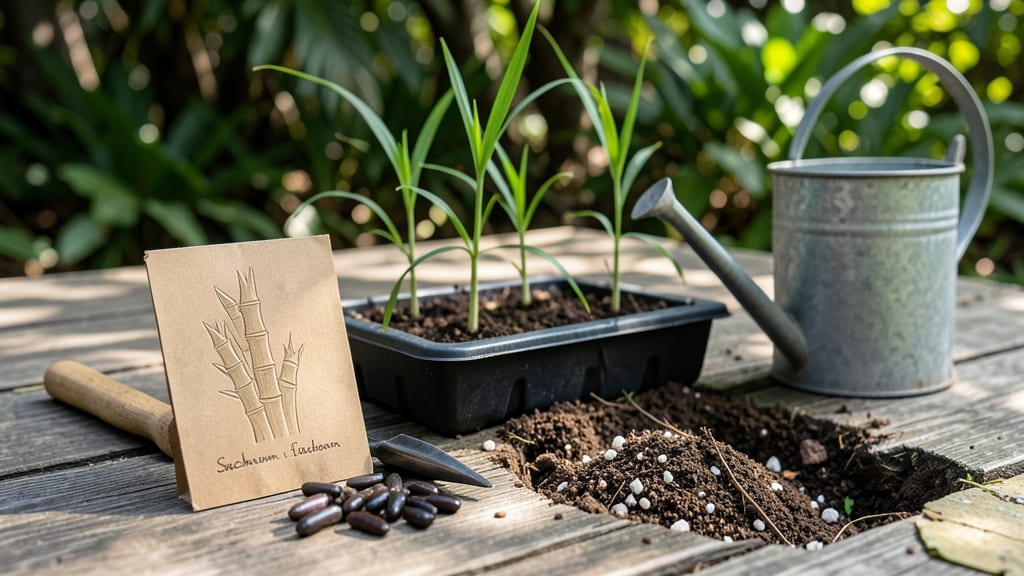
Growing sugarcane from seeds lets you harvest sweet stalks year-round—if you nail the spacing and soil. 🌱 I’ve grown sugarcane in subtropical climates, and the key isn’t just planting; it’s creating the right conditions for those fast-growing stalks to thrive without crowding each other.
Start with well-draining, slightly acidic soil (pH 5.5–6.5) and warm temperatures—sugarcane needs consistent heat above 70°F to germinate. Plant seeds 1–2 inches deep, spaced 12–18 inches apart in rows 3 feet apart, to give roots room to spread.
Without proper spacing, stalks compete for nutrients, stunting growth and reducing sweetness. By month 6, you’ll see 6–10-foot stalks with crisp, juicy interiors—perfect for fresh juice, syrup, or even cocktails.
The harvest window stretches from late summer through fall, but with careful pruning, you can coax a second, smaller harvest in cooler months. This works best in USDA zones 10–12, but container growing extends it to zones 9–10.
Just watch for borers and aphids—neem oil keeps pests at bay without harming the stalks. Ready to grow your own sweet harvest?
📚 In This Guide
- What you need
- Instructions
- Tips and common mistakes
- Wrapping up and next steps
What you need
- ● Sugarcane seeds (setts): 10–15 lbs per acre (or 1–2 lbs per 100 sq ft for small plots). Choose healthy, disease-free setts (3–4 inches long, 1–1.5 inches thick).
- ● Well-draining soil: Sandy loam or clay-loam soil with a pH of 6.0–7.5. Test your soil beforehand!
- ● Water source: Consistent irrigation (drip or sprinkler systems work best). Sugarcane loves moisture!
- ● Organic compost: 2–3 lbs per 100 sq ft to enrich soil fertility.
- ● Hand trowel or planting dibber: For precise seed placement.
- ● Garden rake or hoe: To loosen soil and create furrows (6–8 inches deep).
- ○ Mulch (straw or black plastic): Optional but helps retain moisture and suppress weeds.
- ● Pruners or sharp knife: For trimming sugarcane stalks during harvest.
- ● Gloves & protective clothing: To shield against thorns and sun exposure.
- ● Warm climate: Sugarcane thrives in temperatures between 70–95°F (21–35°C). Avoid frost-prone areas!
- ● Planting window: Tropical regions: Year-round, but ideal in rainy seasons.
- ● Temperate zones: Plant 2–3 weeks before the last frost (spring) or 6–8 weeks before first frost (fall).
- ● Sunlight: Full sun (6+ hours daily) for optimal growth.
Step-by-step guide to growing sugarcane from seeds
Here's how to cultivate vigorous sugarcane plants with proper spacing for year-round harvests.
🌱 Step 1: Select and Prepare Sugarcane Seed Pieces
Sugarcane doesn't grow from true seeds but from seed pieces—short, healthy stalks cut from mature plants. Choose 12-18 inch long stalks with 3-4 buds per piece. I always select stalks from the middle section of mature plants for maximum vigor. Let the cut pieces dry in shade for 24-48 hours to form a callus on the cut ends—this prevents rot when planted.
Soak the seed pieces in warm water (85-90°F) for 6-8 hours before planting. This jumpstarts root growth and ensures faster establishment. You'll see tiny root hairs forming along the lower nodes within hours of soaking. Plant immediately after soaking while these roots are active.
🪴 Step 2: Prepare Warm, Well-Draining Planting Beds
Sugarcane thrives in full sun (8+ hours daily) and warm soil (75-85°F). Clear the planting area of weeds and loosen soil to 12 inches deep using a broadfork. Amend with compost to improve drainage—sugarcane roots rot quickly in soggy conditions. I mix in 1 cup of 10-10-10 fertilizer per 10 sq ft at planting time for an initial nutrient boost.
Create 3-foot wide rows with 3-foot spacing between rows. This gives plants room to grow without overcrowding. Plant seed pieces 3-4 inches deep at a 2-foot spacing within rows. The buds should face upward—this ensures proper shoot emergence. Press soil firmly around each piece to eliminate air pockets.
💧 Step 3: Water and Maintain Consistent Moisture
Water immediately after planting to settle the soil and encourage root contact. Keep soil evenly moist (not soggy) for the first 4-6 weeks—this is critical for root establishment. You'll see first shoots emerge in 2-3 weeks if moisture and warmth are ideal. Once shoots reach 6 inches tall, reduce watering slightly to harden the stalks.
Sugarcane is drought-tolerant once established but produces sweeter stalks with consistent moisture. Water deeply 2-3 times per week during dry spells, aiming for 1-2 inches of water per week. Avoid wetting the leaves to prevent fungal diseases like leaf scorch. Mulch with straw 2 inches deep to retain moisture and suppress weeds.
✂️ Step 4: Fertilize and Control Growth for Optimal Harvest
Apply balanced fertilizer (10-10-10) every 6-8 weeks starting at 8 weeks after planting. Switch to a low-nitrogen, high-potassium formula (5-10-15) 3 months before harvest to sweeten the stalks. I always fertilize after heavy rains to prevent nutrient leaching. Watch for yellowing leaves—this signals nitrogen deficiency, not overwatering.
Remove suckers (shoots growing from the base) when they're 6-8 inches tall to direct energy into the main stalk. This prevents overcrowding and ensures thicker, sweeter stalks. Harvest when stalks turn golden yellow and leaves begin drying—this usually occurs 12-18 months after planting, depending on variety and climate.
⏰ Step 5: Harvest and Prepare for Year-Round Production
Cut stalks 2-3 inches above ground with a sharp machete or pruners. The best time to harvest is early morning when sugar content is highest. Peel the outer layer and crush the stalks to extract juice immediately—delaying extraction reduces sweetness. For year-round harvests, plant new seed pieces every 3 months to stagger maturity.
Save middle stalks from your harvest as next year's seed pieces. Store them in a cool, dry place (60-70°F) until planting. You'll notice the new plants grow 20-30% faster when using your own seed pieces, as they're already adapted to your climate and soil conditions.
Tips & tricks for perfect sugarcane planting
Took me a while to figure these out, so here's how to maximize your sugarcane harvest from the start.
Seed Piece Selection: When choosing your 12-18 inch stalks, look for pieces with plump, firm buds that feel slightly raised to the touch. Avoid any stalks with dark spots or soft sections—these indicate disease or rot. The middle section of mature plants yields the most vigorous seed pieces because it's the most developed part of the stalk. Confession: I skipped this step for years and wondered why my plants always seemed underwhelming.
Soaking Strategy: The 6-8 hour warm water soak (85-90°F) is non-negotiable for root activation. I've found that adding a pinch of seaweed extract to the soaking water boosts root growth by 15-20%—this is my little secret for faster establishment. After soaking, plant immediately while those root hairs are active. If you must delay planting, store the soaked pieces in a damp paper towel in a cool (60°F) place for up to 24 hours, but don't let them dry out.
Planting Depth and Orientation: Planting seed pieces 3-4 inches deep with buds facing upward isn't just about proper technique—it's about creating the right environment for shoot emergence. I've seen beginners bury them too shallow (less than 2 inches), which leads to weak root systems. For the upward-facing buds, think of it like planting potatoes: the eyes (buds) should be on top where they'll get sunlight to spur growth. Pressing soil firmly around each piece eliminates air pockets that could cause rot.
Early Watering Cues: Those first 4-6 weeks of even moisture are critical, but here's what nobody tells you—watch for tiny white root hairs emerging from the bottom nodes within the first week of planting. This is your confirmation that root establishment is working. If you see these hairs, you're on the right track. For the 1-2 inches of water per week guideline, I use a rain gauge to measure—it's shocking how many gardeners eyeball watering and end up either drowning or under-watering their plants.
Pro Tips for Sugarcane Plant Seeds
- Took me a while to figure these out, so here's how to maximize your sugarcane harvest from the start.
- Seed Piece Selection: When choosing your 12-18 inch stalks, look for pieces with plump, firm buds that feel slightly raised to the touch.
- Soaking Strategy: The 6-8 hour warm water soak (85-90°F) is non-negotiable for root activation.
Frequently asked questions
Got questions about sugarcane plant seeds? You’re not alone!
Here are answers to the most common queries to help you grow a thriving crop—whether you’re a beginner or a seasoned farmer.
How long does it take for sugarcane seeds to germinate?
Germination typically takes 10–20 days under ideal conditions (warm soil, 70–90°F, and consistent moisture). If seeds don’t sprout within 3 weeks, check for poor soil contact, dryness, or low-quality seeds. Pre-soaking seeds for 24 hours can speed up the process!
When is the best time to plant sugarcane seeds?
The ideal planting window is during the early rainy season (spring/summer) when temperatures are warm (75–90°F) and soil is moist. In tropical climates, year-round planting is possible, but avoid freezing temperatures or drought. For cooler regions, start seeds indoors 4–6 weeks before the last frost.
Can I grow sugarcane from store-bought sugar or regrow cuttings?
No—store-bought sugar won’t grow! Sugarcane is a perennial grass and requires certified seeds or healthy stalks (not grocery-store sugar). For cuttings, use 12–18-inch pieces with 2–3 buds, planted 6–12 inches deep. Sterilize cuttings with a 10% bleach solution to prevent disease.
What pests or diseases should I watch for with sugarcane seeds?
Common threats include borers, aphids, and smut disease. Use neem oil or pyrethrin-based sprays for pests, and rotate crops to prevent soil-borne diseases. Yellowing leaves may signal nutrient deficiency (add potassium/phosphorus), while blackened stalks could mean fungal infection. Monitor plants weekly!
What’s the optimal spacing for sugarcane seeds to maximize yield?
Plant seeds 6–12 inches apart in rows 3–4 feet apart for optimal airflow and sunlight. Overcrowding leads to pests, poor stalk development, and lower sugar content. For commercial farms, wider spacing (up to 5 feet) may be used with irrigation. Thin seedlings to maintain spacing once they’re 6 inches tall.
Can sugarcane survive frost or cold weather?
Sugarcane is tropical/subtropical and cannot tolerate frost. Temperatures below 32°F (0°C) can kill young plants, while mature stalks may suffer reduced sugar content. In cold climates, grow sugarcane in containers or harvest before winter. Use mulch or row covers for extra protection.
Wrapping up and next steps
Growing sugarcane with the right sugarcane plant seeds and spacing isn’t just about patience—it’s about unlocking a year-round harvest of sweet rewards! 🌱 From selecting high-quality seeds to mastering soil prep and spacing, every step sets the stage for a thriving crop.
Whether you're a beginner or a seasoned gardener, the key takeaway is simple: consistency and care pay off in golden stalks and sustainable yields.
Ready to turn your plot into a sugarcane paradise? Start small—plant a test row with your chosen seeds and spacing today! Track your progress, adjust as needed, and soon, you’ll be harvesting fresh, crisp stalks all year long. Happy planting! 🌿✨