
Planting
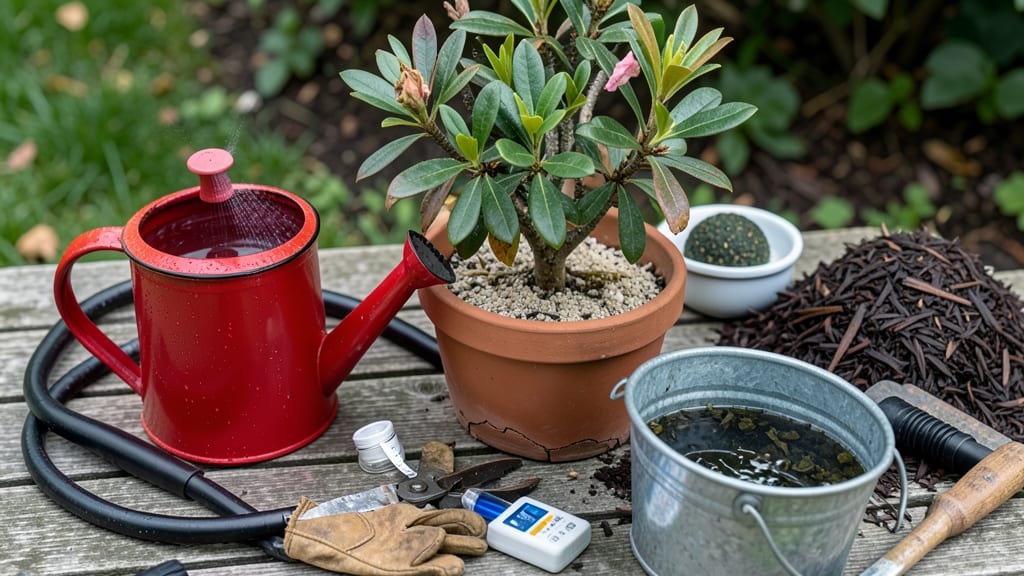
How to revive an azalea plant with drooping branches is totally doable—root recovery in 7 days is possible with the right pruning tricks. 🌿 I’ve nursed back more azaleas than I’d like to admit, and the key lies in reading the plant’s signals: yellowing leaves, crispy edges, or bare stems. These aren’t death sentences; they’re SOS calls for water, light, or a little surgical pruning.
The first step is diagnosing the real issue—overwatering? Underwatering? Or maybe the soil pH is off, starving those roots. A simple finger test (stick it in the soil) tells you if it’s too wet or dry.
Once you know the problem, you’ll prune the damaged growth, adjust your watering schedule, and add a slow-release fertilizer to coax those roots back to life.
Within a week, you’ll see new buds forming where the old leaves once were. The plant will start drinking water again, and those branches will perk up like they’re fresh from the nursery.
The secret? Pruning isn’t about hacking away—it’s about guiding the plant to focus its energy where it counts.
This works for azaleas struggling in containers, in-ground beds, or even after a harsh winter. The same principles apply whether your plant is wilting in summer heat or recovering from a freeze. Let’s get those roots reviving—step by step.
Root Causes Behind Azalea Decline
Azaleas are stunning shrubs that thrive in specific conditions, but when they start to wilt, drop leaves, or refuse to bloom, it’s often a sign of stress from underlying issues. Understanding why your azalea is struggling is the first step to bringing it back to life.
Below, we break down the scientific reasons behind common azalea decline triggers—so you can diagnose the problem and take targeted action.
Azaleas hate soggy roots. Unlike drought-tolerant plants, they prefer consistently moist—but never waterlogged—soil. When drainage fails, roots suffocate from a lack of oxygen, leading to root rot (Phytophthora and Pythium fungi thrive in these conditions).
- Why it happens:
- Compacted or clay-heavy soil traps excess water, preventing oxygen flow to roots.
- Overzealous watering (especially in pots) drowns roots, cutting off nutrient uptake.
- Lack of organic matter in soil reduces porosity, worsening water retention.
- Signs to watch for:
- Yellowing leaves (chlorosis) from oxygen deprivation.
- Mushy, blackened roots when inspected.
- Stunted growth despite frequent watering.
While azaleas dislike soggy soil, they also wiltingly protest when dehydrated. Their shallow root systems dry out quickly, especially in full sun or windy conditions.
- Why it happens:
- Insufficient irrigation during hot spells or dry seasons.
- Potted azaleas dry out faster than in-ground plants due to limited soil volume.
- Evaporative loss from sandy or fast-draining soil.
- Signs to watch for:
- Crispy, brown leaf edges.
- Drooping stems that don’t bounce back after watering.
- Soil pulling away from pot edges (indicating extreme dryness).
Azaleas are acid-loving plants (ideal pH: 4.5–6.0). Soil that’s too alkaline (pH > 7.0) locks out essential nutrients like iron, manganese, and phosphorus, causing nutrient deficiency.
- Why it happens:
- Lime or fertilizer overuse raises soil pH over time.
- Native soil (especially in northern climates) may naturally be alkaline.
- Old compost or aged manure can neutralize acidity.
- Signs to watch for:
- Yellowing between leaf veins (iron deficiency).
- Purple or red stems (phosphorus deficiency).
- Slow growth despite regular feeding.
Azaleas need balanced nutrition, but too much (or the wrong kind) of fertilizer can burn roots or disrupt microbial life in the soil.
- Why it happens:
- High-salt fertilizers (like synthetic blends) accumulate in soil, dehydrating roots.
- Lack of micronutrients (e.g., magnesium, zinc) leads to stunted growth.
- Over-fertilizing in winter stresses roots when the plant is dormant.
- Signs to watch for:
- Brown leaf tips (salt burn).
- Small, pale new growth (nitrogen deficiency).
- Leaf drop after fertilizing.
Azaleas attract sap-sucking pests (like lace bugs, spider mites) and fungal pathogens (like powdery mildew or leaf spot), which weaken the plant over time.
- Why it happens:
- Stressed plants (from drought or poor soil) are more vulnerable.
- Humid climates encourage fungal growth.
- Poor airflow (from overcrowded plantings) traps moisture and pests.
- Signs to watch for:
- Sticky residue on leaves (aphids or scale).
- White webbing (spider mites).
- Black spots on foliage (fungal infections).
Azaleas are sensitive to extreme conditions, whether too much sun, cold snaps, or sudden temperature swings.
- Why it happens:
- Full-sun exposure (especially in hot climates) causes leaf scorch.
- Late spring frosts damage new growth.
- Windburn dries out leaves faster than roots can replace moisture.
- Signs to watch for:
- Bleached or crispy leaf edges (sunburn).
- Drooping buds before they open (frost damage).
- Premature leaf drop in windy areas.
Potted azaleas outgrow their containers, leading to root circling (roots growing in tight loops) or root binding (roots pressing against pot walls).
- Why it happens:
- Not repotting every 2–3 years restricts root expansion.
- Hard, dense soil mixes prevent roots from spreading naturally.
- Plastic pots retain heat, accelerating root stress.
- Signs to watch for:
- Roots circling the pot’s base when checked.
- Stunted growth despite regular care.
- Wilting even after watering (roots can’t absorb enough).
Improper pruning—like cutting too late in the season or removing too many stems—can weaken the plant’s energy reserves.
- Why it happens:
- Pruning after mid-summer removes next year’s flower buds.
- Over-pruning reduces leaf surface area, limiting photosynthesis.
- Using dull shears crushes stems, inviting disease.
- Signs to watch for:
- No blooms the following spring.
- Leggy, sparse growth.
- Slow recovery after pruning.
Most azalea decline stems from one (or more) of these avoidable issues. The good news? Once you identify the root cause, revival is often just a few adjustments away—whether it’s improving drainage, adjusting pH, or giving roots space to breathe.
Next, we’ll dive into quick fixes to nurse your azalea back to health in 7 days or less!
Quick Fixes for Dying Azaleas
Reviving an azalea doesn’t have to be a guessing game—just match the symptoms to the right cure. Below, we’ve broken down the most common issues and practical, step-by-step solutions to get your plant back to blooming health in no time.
Plus, we’ll share prevention tips so you can keep your azalea thriving long-term.
Signs: Yellowing leaves, mushy stems, foul-smelling soil, or a plant that feels soggy when touched.
How to Fix It:
- 🚰 Stop Watering Immediately
- Let the top 1–2 inches of soil dry out completely before watering again. Overwatering is the #1 killer of azaleas—don’t let the roots suffocate!
- 🔪 Trim the Damage
- Use sterilized pruners to cut away any black, mushy stems or leaves. Healthy tissue is firm and green—snip anything else.
- 🏗️ Improve Drainage - Repot if needed into a container with drainage holes. Mix in perlite or orchid bark (20%) to aerate the soil. - For in-ground plants: Amend the soil with sand or compost to break up clay.
A 5-gallon bucket of coarse sand mixed into the top 6 inches works wonders.
- 💧 Revive with Balance
- Water only when the top inch is dry, and use a moisture meter to avoid guesswork. Azaleas hate "wet feet"—they need acidic, well-draining soil (pH 4.5–5.5).
💡 Prevention Tips:
- Water deeply but infrequently—once a week in summer, less in winter.
- Mulch with pine bark or pine needles (not wood chips) to retain moisture without suffocating roots.
- Avoid saucers under pots—empty them after watering to prevent root rot.
Signs: Crispy, brown leaf edges (like paper), wilting, or leaves curling up like a burrito.
How to Fix It:
- 🌿 Move It to the Right Spot
- Azaleas love morning sun + afternoon shade. If outdoors, relocate to dappled shade (under trees or a sheer curtain).
- Indoor azaleas? Keep them near east-facing windows—no direct midday sun.
- 💦 Hydrate Like a Pro
- Mist leaves daily in hot weather to mimic humidity. Use room-temperature water to avoid shock.
- Soak the soil until water runs out the drainage holes, then let it dry slightly before watering again.
- 🌡️ Cool It Down
- If temps hit 90°F+, move the plant to a shadier, cooler spot (like a porch or basement with light).
- Group plants together to create a microclimate with higher humidity.
💡 Prevention Tips:
- Gradually acclimate new azaleas to sun—start with 2–3 hours/day and increase slowly.
- Use a humidity tray (pebbles + water under the pot) for indoor plants.
- Avoid fertilizing during heatwaves—it stresses the plant.
Signs: White, pink, or black fuzzy spots on leaves/stems, yellowing leaves, or powdery residue.
How to Fix It:
- 🧼 Clean Up Immediately
- Remove infected leaves with pruners (sterilize with rubbing alcohol).
- Wipe healthy leaves with a neem oil solution (1 tsp neem oil + 1 quart water + a drop of dish soap).
- 🌿 Boost Airflow
- Space plants 12+ inches apart to reduce humidity buildup.
- Prune to improve airflow—aim for an open, rounded shape.
- 💊 Treat with Fungicide
- Spray copper fungicide or baking soda mix (1 tbsp baking soda + 1 quart water + 1 tsp soap) every 7–10 days for 3 weeks.
- For severe cases, repot with fresh, sterile soil and reapply fungicide.
💡 Prevention Tips:
- Water in the morning so leaves dry by evening.
- Avoid overhead watering—use a drip irrigation system or water at the base.
- Rotate pots occasionally to prevent uneven sunlight (which stresses plants).
Signs: Pale yellow leaves (chlorosis), slow growth, or no blooms despite healthy-looking foliage.
How to Fix It:
- 📊 Test the Soil
- Use a home soil pH test kit—azaleas need acidic soil (pH 4.5–5.5). If it’s higher, amend with sulfur or peat moss.
- 🍄 Feed with Azalea-Specific Fertilizer
- Use a slow-release, acidic fertilizer (like Miracle-Gro Azalea, Camellia & Rhododendron Food).
- When to apply:
- Spring (March): Light feeding to encourage blooms.
- After flowering (June): Another light dose for root growth.
- Avoid fertilizing in fall/winter—it promotes tender new growth that can freeze.
- 🥗 Natural Boosts
- Coffee grounds (dried, not fresh!) mixed into soil add nitrogen and acidity.
- Epsom salt (1 tbsp per gallon of water) can help with magnesium deficiency (yellowing between leaf veins).
💡 Prevention Tips:
- Don’t over-fertilize—more isn’t better! Follow package instructions.
- Use organic mulch (pine straw, oak leaves) to slowly release nutrients.
- Flush the soil every 6 months with water to remove excess salts.
Signs: Brown, brittle leaves, stunted growth, or blackened stems after frost.
How to Fix It:
- 🏠 Move to Safety
- Indoor azaleas? Keep them away from drafts (like AC vents or doors).
- Outdoor azaleas? Wrap in burlap or cover with frost cloth if temps drop below 25°F.
- 🌿 Prune Dead Growth
- Cut back any black or mushy stems to the nearest healthy bud. Don’t worry—azaleas are tough and will regrow!
- 💪 Give It Time to Recover
- Wait until spring to fertilize—damaged roots need time to heal.
- Mulch heavily (3–4 inches of pine bark) to insulate roots over winter.
💡 Prevention Tips:
- Choose cold-hardy varieties (like Rhododendron ‘Catawbiense’ for Zone 5–9).
- Avoid late-season fertilizing—it encourages tender growth that’s vulnerable to frost.
- Group plants together to create windbreaks naturally.
Frequently asked questions
Why are my azalea leaves turning yellow between the veins?
This is a classic sign of iron deficiency (chlorosis), often caused by alkaline soil (pH > 6.0). Azaleas need acidic soil (pH 4.5–5.5) to absorb iron. Test your soil and amend with sulfur or peat moss if needed. A quick fix is foliar feeding with Epsom salt (1 tbsp/gallon of water) sprayed on leaves.
Can I save an azalea with root rot? What should I do first?
Yes! Start by stopping all watering immediately and let the top 1–2 inches of soil dry out. Trim away any black, mushy stems with sterilized pruners, then repot in fresh, well-draining soil mixed with perlite (20%). For in-ground plants, improve drainage by mixing sand or compost into the top 6 inches of soil.
How often should I water my azalea, and how do I know it’s thirsty?
Water when the top inch of soil feels dry—azaleas prefer consistently moist but never soggy soil. For potted plants, check by lifting the pot (if it’s light, it’s dry). Look for wilting leaves that don’t bounce back or soil pulling away from pot edges as thirst signals. Always use room-temperature water to avoid shocking roots.
Is it too late to prune my azalea if it’s already stopped blooming?
No! Prune after flowering (late spring/early summer) to shape the plant and encourage next year’s blooms. Focus on removing dead, crossing, or weak branches—never cut more than 1/3 of the plant at once. Use clean, sharp shears and make cuts just above a leaf bud. Azaleas bloom on old wood, so avoid heavy pruning in fall/winter.
Why won’t my azalea bloom, even though it looks healthy?
No blooms often mean too much shade, improper pruning, or lack of nutrients. Ensure it gets morning sun + afternoon shade and prune only after flowering. Feed with an acid-loving plant fertilizer (like Miracle-Gro Azalea Food) in early spring and after blooming. Avoid late-season fertilizing—it encourages tender growth that won’t survive winter.