
Planting
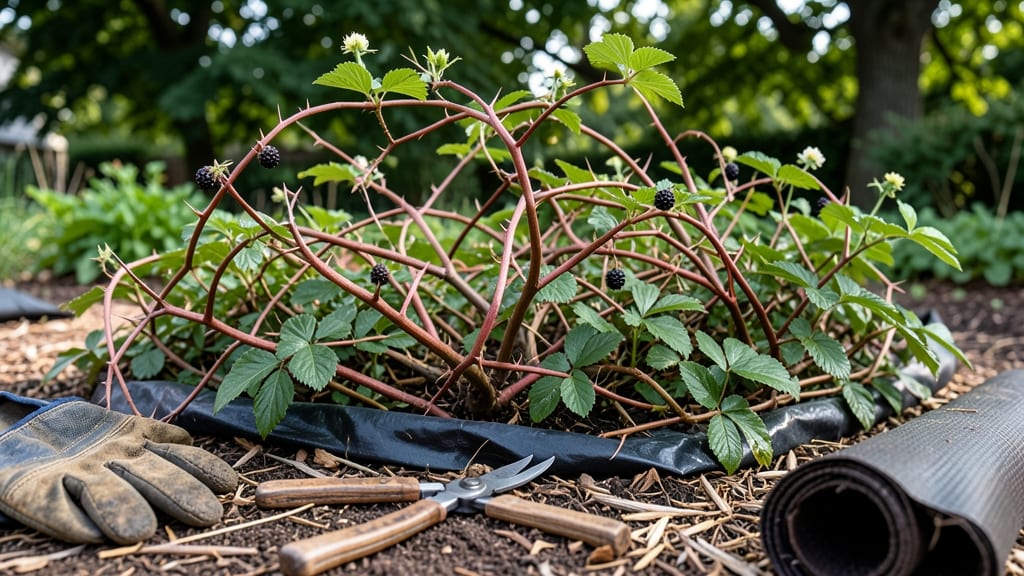
Eradicating invasive blackberry plants starts with understanding why they spread like wildfire. 🌿 These thorny brambles don’t just take over yards—they strangle native plants, clog drainage, and create impenetrable thickets that feel impossible to remove. I’ve battled them for years, and the key isn’t brute force but strategy.
The roots are the real enemy, stretching 10-12 feet underground and sending up new shoots from even tiny fragments. Simply cutting the canes back invites a fresh wave of growth.
What works is a three-pronged attack: dig out the roots, smother regrowth with thick mulch, and repeat until the soil stays bare for a full season. You’ll know you’ve won when the area stays weed-free for at least two years—no new shoots, no thorns, just reclaiming your space.
The process takes patience, but the payoff is a garden that’s actually yours again. Let’s break down the step-by-step method that finally worked for me.
First, identify your enemy: invasive blackberries have arching canes, sharp thorns, and white/pink flowers that turn into glossy black berries. Cultivated varieties (like boysenberries) are pruned into shapes, while invasives sprawl wildly. Grab gloves, loppers, and a shovel—this isn’t a job for bare hands.
Start by cutting canes at ground level in late winter or early spring, when they’re dormant. Then dig 12 inches deep around the plant, severing roots as you go. Bag the debris immediately—even a 1-inch root fragment can regrow.
For stubborn patches, repeat the process every 3-4 weeks until the soil is root-free.
Mulching is your secret weapon. After removal, cover the area with 6+ inches of cardboard or thick black plastic to block sunlight from sprouting roots. Check monthly for new shoots and pull them before they establish. Over time, the soil will weaken, making future removals easier.
This method works best in zones 5-9, where blackberries thrive. In drier climates, irrigation can help weaken roots before digging. The goal isn’t speed—it’s persistence. With each season, the battle gets easier, and your yard gets back to you.
How Blackberries Spread So Aggressively
Invasive blackberry plants—whether Rubus fruticosus (European blackberry) or native hybrids—don’t just pop up by accident. Their relentless spread is the result of a perfect storm of biological traits and environmental conditions.
Understanding these drivers is the first step to stopping them in their tracks. Here’s why these thorny intruders take over so effectively.
Blackberries are perennial powerhouses, meaning they regrow year after year from the same root system. Their roots can extend 10–15 feet deep and spread horizontally just as far, creating an underground network that’s nearly impossible to exhaust.
Even a small piece of root left in the soil can sprout new canes, thanks to:
- Adventitious buds: These are dormant growth points along the roots and stems that wake up when conditions are right (like after a disturbance or pruning). A single 6-inch root fragment can produce 3–5 new canes in a season.
- Fast canopy expansion: Mature plants send up arching canes that root at the tips (a process called layering). These canes grow 6–10 feet tall and sprawl outward, shading out competitors and creating dense thickets.
- Deep taproots: Unlike shallow-rooted plants, blackberries access water and nutrients deep in the soil, giving them an edge in drought-prone or poor-quality soil.
Pro tip: 🔥 Never assume a blackberry is fully removed—dig until you hit unbroken soil 12+ inches deep to sever the root system.
While blackberries primarily spread via roots and stems, their edible fruits play a sneaky role in colonization. Birds, wildlife, and even humans unknowingly transport seeds far from the original plant. Here’s how it works:
- Animal-assisted spread: Birds like robins and thrushes eat the berries and excrete seeds up to a mile away. Deer and livestock also spread seeds via their manure.
- Human activity: Gardeners or hikers may unknowingly carry seeds on clothing, tools, or shoes. Even discarded fruit pits can sprout if left in disturbed soil.
- Seed viability: Blackberry seeds remain viable for 1–2 years in the soil, lying dormant until conditions (like sunlight or moisture) trigger germination.
Pro tip: 🌡️ Remove fallen berries promptly—especially in areas where you’re eradicating blackberries—to starve the seed bank.
Blackberries are opportunistic invaders, thriving in areas where other plants struggle. They exploit disturbances like:
- Clearcuts or logging: Sunlight floods the forest floor, giving blackberries the light they need to outcompete seedlings. Their canes grow 30% faster in full sun.
- Construction or erosion: Loosened soil exposes roots, encouraging new growth. Even a plowed field or graded slope becomes a blackberry buffet.
- Fire or flooding: While these events kill existing plants, they also clear competitors, leaving open space for blackberry roots to dominate.
- Agricultural neglect: Overgrazed pastures or abandoned farmland lack ground cover, allowing blackberries to spread unchecked.
Pro tip: 🎯 Plant competitive ground covers (like clover or creeping thyme) or restore native understory plants to outcompete blackberries before they take hold.
Blackberries aren’t picky—they adapt to a wide range of climates and soil types, which is why they’re hard to contain. Their ideal conditions include:
| Factor | Blackberry Tolerance |
|---|---|
| Temperature | Thrives in USDA Zones 5–10; can survive brief cold snaps (down to -15°F) and heat waves. |
| Soil Type | Grows in clay, sand, loam, or rocky soil—even poor-quality or acidic soil won’t stop them. |
| Moisture | Prefers well-drained soil but tolerates drought and wet conditions once established. |
| Sunlight | Performs best in full sun (6+ hours/day) but can survive in partial shade. |
Pro tip: ❄️ In colder climates, target blackberries in early spring when canes are still dormant but roots are active—this weakens their resilience.
By recognizing these biological and environmental triggers, you can disrupt the cycle before blackberries turn your yard or landscape into an impenetrable thicket. The key? Act fast, dig deep, and stay vigilant.
Tackling Your Overgrown Bramble Patch
Now that you understand why invasive blackberry plants take over yards, it’s time to roll up your sleeves and reclaim your space! The key to success is a multi-step approach—combining removal methods, prevention strategies, and smart landscaping.
Below, we break down the best solutions based on the root cause of your problem, from quick fixes to long-term fixes.
Best for: Small patches, early-stage infestations, or when you want full control.
If your blackberries are still manageable (under 3 feet tall), physical removal is your best bet. Here’s how to do it right:
- 🍳 Cut the Canes at the Base
- Use loppers or pruning shears to cut the main stems as close to the ground as possible. This weakens the plant and prevents regrowth from higher-up buds.
- Pro Tip: Wear gloves—blackberry thorns are no joke! 🦽
- 👨🍳 Dig Out the Roots (The Hard Part) - After cutting, dig around the base with a shovel or garden fork to expose the roots. - Pull or pry the roots out—even small fragments can regrow!
Aim for at least 6–12 inches deep to get the whole root system. - Pro Tip: Work when the soil is moist (after rain) for easier removal. 🌧️
- 🔪 Dispose of Debris Properly
- Do NOT compost blackberry cuttings—they’ll just regrow! Instead, bag them tightly and throw them in the trash or burn them (if local laws allow).
- Pro Tip: Check your trash bin later—curious critters (or wind) might scatter pieces. 🐿️
- ⏰ Repeat as Needed
- Blackberries are persistent—new shoots may sprout from remaining roots. Recheck the area every 2–4 weeks and remove any regrowth.
Best for: Large infestations, thickets, or when roots are too deep to dig out.
If your blackberry patch is dense or sprawling, herbicides can be a powerful ally. Here’s how to use them safely:
- 💡 Choose the Right Herbicide
- Glyphosate (Roundup) is the most effective for systemic control (kills roots). Follow label instructions for foliar spray (spraying leaves) or cut-stump treatment (applying to freshly cut stems).
- Alternative: Triclopyr (Ortho Brush Killer) works well for woody plants like blackberries.
- 🎯 Apply at the Right Time
- Best timing: Late spring to early summer when plants are actively growing.
- Pro Tip: Spray on a windless day to avoid drift onto desirable plants. 🌬️
- 🔄 Follow Up
- Herbicides may take 2–4 weeks to fully kill the plant. Monitor the area and treat any new growth.
- Warning: Herbicides can harm other plants—spot-treat carefully and avoid overspray.
Best for: Preventing regrowth in previously infested areas or keeping blackberries from spreading.
If you’ve removed the plants but worry about sprouts popping up, these methods create a blackberry-proof zone:
- 🌡️ Solarization (For Small Areas)
- Cover the area with clear plastic sheeting for 4–6 weeks in hot weather (above 85°F). The sun bakes the soil, killing roots and seeds.
- Pro Tip: Weigh down edges with rocks to trap heat. ☀️
- 🏗️ Install Root Barriers
- Bury hard plastic or metal barriers (like corrugated metal sheets) 1–2 feet deep around your yard’s perimeter to block spreading roots.
- Pro Tip: Combine with mulch to suppress new shoots. 🪓
- 🌱 Plant Competitive Ground Covers
- Blackberries hate competition! Plant dense ground covers like:
- Clover (smothers weeds)
- Creeping thyme (drought-tolerant)
- Vinegarweed (natural weed suppressor)
- Pro Tip: Keep the area well-watered to help your chosen plants outcompete blackberries. 💦
- Blackberries hate competition! Plant dense ground covers like:
Best for: Large properties, agricultural land, or when blackberries have taken over entirely.
If your blackberry patch is the size of a small forest, manual methods won’t cut it. Consider:
- 🔧 Mowing & Disking
- Rent a rotary mower or tiller to cut and chop the thicket into small pieces, then disk the area to bury debris.
- Pro Tip: Do this multiple times in a season for best results. ⚙️
- 🚜 Tractor-Pulled Brush Cutter
- For massive infestations, a brush hog attachment on a tractor can shred blackberries down to the ground.
- Pro Tip: Follow up with herbicide or smothering to prevent regrowth. 🚜
- 💥 Controlled Burning (Where Legal)
- In rural areas, prescribed burns can kill roots and reduce future growth.
- Warning: Only attempt this if you’re experienced and follow local fire regulations. 🔥
Once you’ve won the battle, don’t let them win the war. Here’s how to keep blackberries from returning:
- 🌱 Regular Inspections: Check your yard monthly for new shoots, especially near fences or edges. - 🪓 Maintain Barriers: Repair or extend root barriers if you notice blackberries creeping closer. - 🌿 Mulch Strategically: Apply 3–4 inches of mulch (wood chips, straw) to starve out any remaining roots. - 🚫 Avoid Planting Nearby: Blackberries spread via birds, wind, and animals—keep them far from your yard. - 📅 Early Action: The sooner you act, the easier removal is.
Don’t let them go to seed! 🌱
Blackberries are tenacious, but with the right mix of removal, prevention, and persistence, you can reclaim your space. Start with manual removal for small patches, herbicides for larger areas, and barriers/smothering to lock in your victory.
Before you know it, your yard will be blackberry-free—and you’ll be the hero of your neighborhood! 🏡💪
Frequently asked questions
How can I tell if my blackberry plants are truly invasive?
Look for wild, sprawling growth patterns with arching canes and sharp thorns—cultivated varieties are pruned into neat shapes. Invasive blackberries also produce glossy black berries and have white or pink flowers. If your plants spread aggressively without pruning, they’re likely invasive.
Will vinegar kill invasive blackberry roots?
Vinegar can help with above-ground growth but won’t kill deep roots. For best results, use 20% acetic acid vinegar mixed with dish soap and spray directly on leaves and stems. Repeat weekly for 2-3 weeks while digging out remaining roots.
Can I use a weed eater to remove blackberry thickets?
Yes, but it’s only a first step! A weed eater cuts canes at ground level, weakening the plant. Follow up by digging out roots 12+ inches deep and monitoring for regrowth. Mow repeatedly for 3-4 weeks to exhaust root energy before full removal.
How long does it take to completely eradicate blackberries?
Most people see results in 1-2 seasons, but full eradication takes 2-3 years of consistent effort. The key is removing all roots and preventing new shoots. After two full years without regrowth, you can consider the area blackberry-free.
Are there any natural predators that help control blackberries?
Yes! Introducing goats or sheep can effectively graze down blackberry thickets. Some gardeners also plant native wildflowers that attract beneficial insects, though these won’t eliminate the plants on their own. For best results, combine grazing with manual removal methods.