
Planting
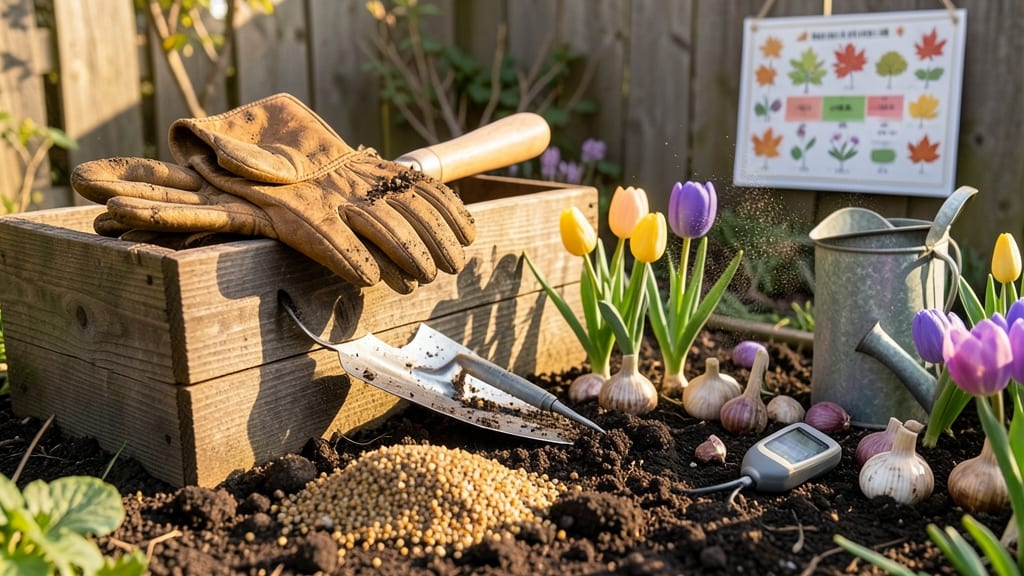
It's not too late to plant spring bulbs in many areas if you act before the first hard frost, but your success depends on your climate zone and bulb type. Cold-hardy varieties like tulips and daffodils still have time to establish roots, while tender bulbs like dahlias need special care. Speed matters—cooler soil and shorter daylight can delay growth.
Your local frost date is the real deadline—most regions can plant until 4-6 weeks before the average first frost, but this varies from October in Zone 5 to December in Zone 9.
The key is soil temperature: bulbs need 60°F or lower to trigger root growth. 🌱 For late plantings, I recommend choosing cold-resistant varieties and adding extra mulch to protect them. Even if blooms are delayed, many bulbs will still thrive with proper care.
If you're in a warmer zone, focus on winter-blooming bulbs like paperwhites or crocuses—they handle late planting better. For tender bulbs, consider treating them like annuals and planting them in containers you can move indoors during cold snaps.
The earlier you plant, the better, but don't give up—many gardeners successfully plant bulbs right up until Thanksgiving in milder climates.
💡 In This Article
- Spring Bulb Planting Deadlines by Climate Zone
- Late-Season Planting Tips for Spring Bulbs
Spring bulb planting deadlines by climate Zone
Your planting window hinges on two critical factors: soil temperature and the average first frost date. Bulbs like tulips and daffodils need 60°F or cooler soil to trigger root growth, while warmer-climate varieties like paperwhites tolerate 65-70°F.
In USDA Zone 5 (e.g., Chicago, Boston), you have until mid-October—after that, frost kills emerging roots. But in Zone 9 (e.g., Los Angeles, Miami), you can plant until December thanks to milder winters.
Here’s how frost dates break down by zone: Zone 6 (late Sept-Oct), Zone 7 (Oct-Nov), Zone 8 (Nov-Dec). The 6-week rule applies universally: plant bulbs 4-6 weeks before your area’s first frost.
For example, in Zone 4 (e.g., Minneapolis), that’s early September, while Zone 10 (e.g., Phoenix) allows planting until January. 🌱 The exception? Tender bulbs like dahlias or cannas, which need no chilling and can be planted until spring in warm zones.
Why does timing matter so much? Bulbs need 4-6 weeks of root establishment before winter dormancy. If planted too late, roots may not mature enough to access nutrients, leading to weak or no blooms.
For instance, tulips planted in November in Zone 6 might bloom, but those planted in December often fail entirely. The daylight hours also shrink in late fall, slowing photosynthesis in new shoots.
Cold-hardy bulbs like crocuses and snowdrops are your best bet for late plantings—they thrive even when soil temps drop to 40°F. These bulbs store energy in their basal plates, allowing them to survive light frosts.
In contrast, tender bulbs (e.g., gladioli) must be dug up and stored indoors in colder zones. The USDA zone map is your guide, but local microclimates (like urban heat islands) can extend your window by 2-3 weeks.
Pro tip: Check your local cooperative extension service for hyper-local frost data—some inland areas freeze earlier than coastal regions just 10 miles away. For example, San Francisco (Zone 9) might have frost in December, while Sacramento (Zone 8) could freeze by November.
Always plant 2 weeks earlier than your frost date to account for unexpected cold snaps.
If you’re in a transition zone (e.g., Zone 7b/8a), consider layered planting: bury bulbs at 3x their depth (e.g., 8 inches deep for tulips) to insulate them.
This buys you 3-4 extra weeks of planting time. The trade-off? You’ll need to mark their locations carefully to avoid disturbing them during spring digging.