
Planting
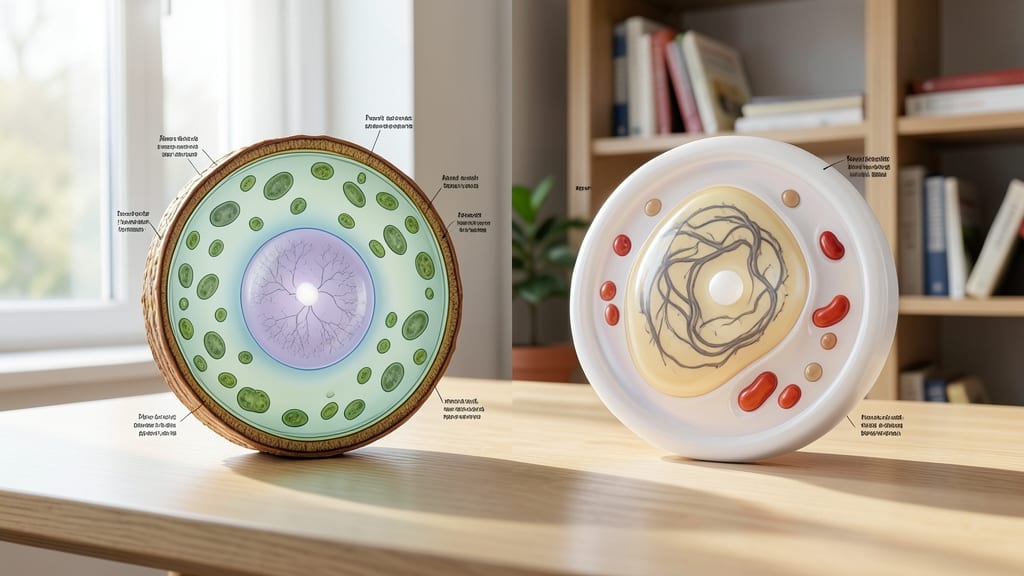
The nucleus is a defining component of both plant cells and animal cells, serving as the control center where genetic instructions are stored and executed in all eukaryotic organisms.
The nucleus isn't exclusive to either plant or animal cells—it's the powerhouse of all eukaryotic cells, from microscopic algae to towering oak trees and from single-celled amoebas to complex humans. 🌱 Inside this membrane-bound organelle, your DNA gets carefully organized and protected, while specialized regions called nucleoli assemble ribosomes for protein production.
What sets plant cell nuclei apart? Their chromatin often appears more densely packed due to the cell's rigid cell wall, which requires extra structural support for the entire cellular framework.
Think of the nucleus like a command center with two distinct operating systems: animal cells prioritize rapid response systems for mobility and growth, while plant cells balance genetic control with the need to maintain rigid structures.
The nuclear membrane in plant cells also interacts closely with chloroplasts during photosynthesis, creating a unique energy management system that animal cells simply don't need.
💡 In This Article
- How the Nucleus Functions in Plant vs Animal Cells
- Key Structural Differences Between Plant and Animal Nuclei
How the nucleus functions in plant vs animal cells
The nucleus acts as the genetic command center in both plant and animal cells, but its functional priorities differ based on each organism's needs.
In animal cells, the nucleus focuses on rapid cellular responses—like muscle contraction or nerve signal transmission—by maintaining a highly dynamic chromatin structure that allows quick access to genes. This flexibility supports the animal kingdom's mobility and adaptability, where cells often need to respond to external stimuli within milliseconds.
Plant cells, however, operate under different constraints. Their nuclei must balance genetic control with the plant's rigid cell wall, which requires extra structural support. The chromatin in plant nuclei often appears more condensed, particularly in regions near the cell wall, to maintain stability.
Additionally, plant cell nuclei contain specialized structures called nucleoli that are hyperactive during photosynthesis, producing ribosomes at accelerated rates to support the chloroplasts' energy demands. 🌱 The nuclear membrane in plants also interacts with the endoplasmic reticulum in unique ways, creating a network that helps distribute photosynthetic products throughout the cell.
One fascinating difference lies in RNA processing. Animal cells often produce mRNA with introns (non-coding sequences) that get spliced out before translation, allowing for greater protein diversity. Plant cells, however, frequently retain these introns in their mRNA, which can lead to alternative splicing patterns that create plant-specific proteins.
This mechanism helps plants adapt to environmental stresses like drought or salinity without altering their core genetic code.
The nucleus in plant cells also plays a crucial role in maintaining cellular turgor pressure—the force that keeps plants upright. By regulating the production of cell wall components like cellulose, the nucleus indirectly controls the plant's physical structure.
In contrast, animal cells focus more on cytoskeletal proteins that enable movement and shape changes. This functional specialization explains why plant cells often have larger nuclei relative to their overall size—sometimes occupying up to 50% of the cell's volume compared to just 10-20% in animal cells.
Another key distinction appears during cell division. Plant nuclei must coordinate with the formation of a new cell wall, a process that requires precise timing and additional nuclear proteins. Animal cells, lacking cell walls, can divide more quickly through cytokinesis.
The plant nucleus often contains specialized proteins called phragmoplastins that help organize the new cell plate during division—a process absent in animal cells. 🌿 This structural adaptation ensures the plant's growth pattern remains consistent despite environmental challenges.
Understanding these functional differences helps explain why plant cells can remain dormant for years while animal cells typically follow strict growth cycles. The plant nucleus maintains genetic stability through epigenetic modifications that silence non-essential genes during dormancy, while animal nuclei prioritize gene expression for immediate physiological needs.
This dual functionality is why the nucleus remains one of biology's most fascinating structures—equally vital yet fundamentally different between kingdoms.