
Planting
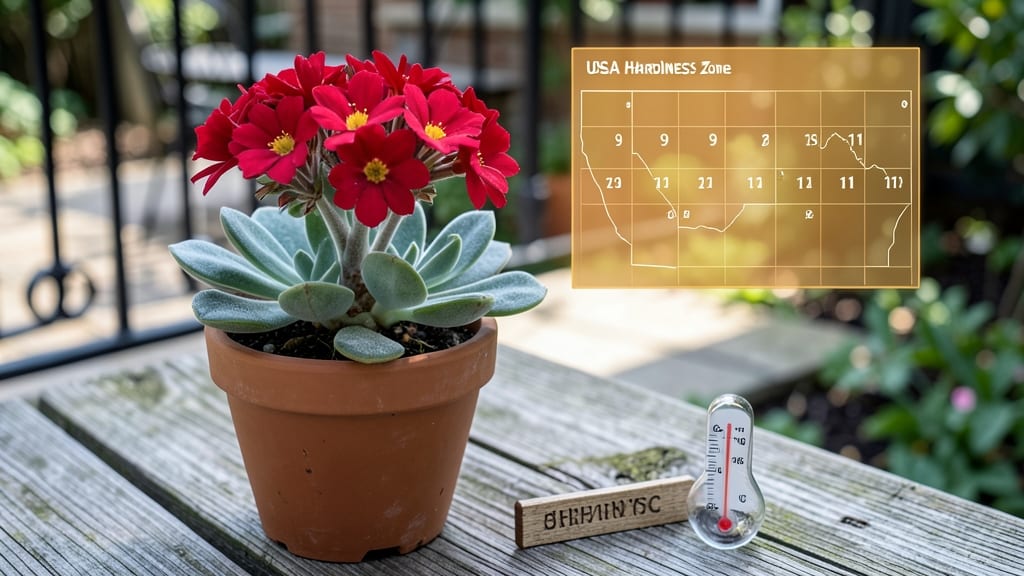
Kalanchoe plants thrive best in USDA hardiness zones 10 through 12, where temperatures stay above 30°F (-1°C) year-round, as these succulents cannot tolerate frost or prolonged cold exposure.
Kalanchoes originate from tropical and subtropical regions, where they evolved to store water in their thick leaves—this adaptation helps them survive dry conditions but makes them extremely sensitive to cold. 🌡️ Even a brief dip below 30°F (-1°C) can cause irreversible damage to their cellular structure, leading to brown patches or complete death.
In zones 9 and below, gardeners must treat kalanchoes as tender perennials, using containers for mobility or providing winter protection like frost blankets.
What many don’t realize is that temperature fluctuations are just as harmful as extreme cold. A sudden drop from 70°F (21°C) to 40°F (4°C) can shock the plant’s metabolism, stunting growth or triggering leaf drop.
For outdoor cultivation in cooler climates, I recommend placing plants near south-facing walls or under patio covers during winter months to create a microclimate that mimics their native conditions.
💡 In This Article
- Understanding Kalanchoe Cold Sensitivity and Survival Limits
- How to Grow Kalanchoe in Cooler Climates
Understanding kalanchoe cold sensitivity and survival limits
Kalanchoes evolved in tropical and subtropical climates where temperatures rarely dip below 60°F (15°C), and their biology reflects this sensitivity. Their thick, water-storing leaves contain up to 90% moisture by weight, which freezes at 32°F (0°C) and causes cellular rupture.
Unlike hardy succulents like sedum, kalanchoes lack protective pigments that prevent ice crystal formation in their tissues. When exposed to 30°F (-1°C) or colder, their cell membranes break down within 2-4 hours, leading to irreversible damage.
The difference between USDA zones 10, 11, and 12 comes down to their average minimum temperatures. Zone 10 (30-40°F/-1 to 4°C) sees brief cold snaps but rarely sustained frost, while zone 11 (40-50°F/4-10°C) offers more consistent warmth.
Zone 12 (50-60°F/10-15°C) is ideal because it mimics their native environments. Temperature fluctuations are equally damaging—sudden drops from 70°F (21°C) to 40°F (4°C) trigger metabolic shock, causing leaves to wrinkle or fall off as the plant diverts energy to survival rather than growth.
Root health suffers most from cold exposure. Kalanchoe roots contain minimal insulation and can rot if soil temperatures drop below 50°F (10°C) for more than 24 hours. In their native habitats, these plants grow in well-draining volcanic soils that maintain warmth.
When grown in cooler climates, their roots become vulnerable to fungal infections like Phytophthora, which thrive in damp, chilled conditions—another reason why proper drainage and winter protection are critical.
What most gardeners overlook is how humidity interacts with cold. Kalanchoes in zones 10-12 experience dry air, which helps prevent fungal growth. In cooler, more humid zones (like 9), the combination of cold and moisture creates the perfect storm for rot.
Even if air temperatures stay above 30°F (-1°C), soil moisture can drop to freezing levels at night, causing root damage that manifests as yellowing leaves weeks later.
Leaf damage often appears as brown, mushy patches along the edges—a classic sign of cold injury. Unlike frost damage in hardy plants, kalanchoe leaves don't recover because their cells can't regenerate once ruptured.
The plant may produce new growth, but it will always be weaker, with thinner leaves that store less water. This is why professional growers in marginal zones (like southern California's coastal areas) use thermometers buried in soil to monitor root zone temperatures, aiming to keep them above 55°F (13°C) year-round.
Interestingly, some kalanchoe varieties (like Kalanchoe blossfeldiana) have slightly better cold tolerance than others due to thicker leaf cuticles. However, this doesn't mean they're frost-resistant—just that they can handle brief exposure to 28°F (-2°C) without immediate collapse.
The key takeaway is that these plants are tropical at heart, and any deviation from their preferred 65-85°F (18-29°C) range will stress them, regardless of how well you water or fertilize them.