
Planting
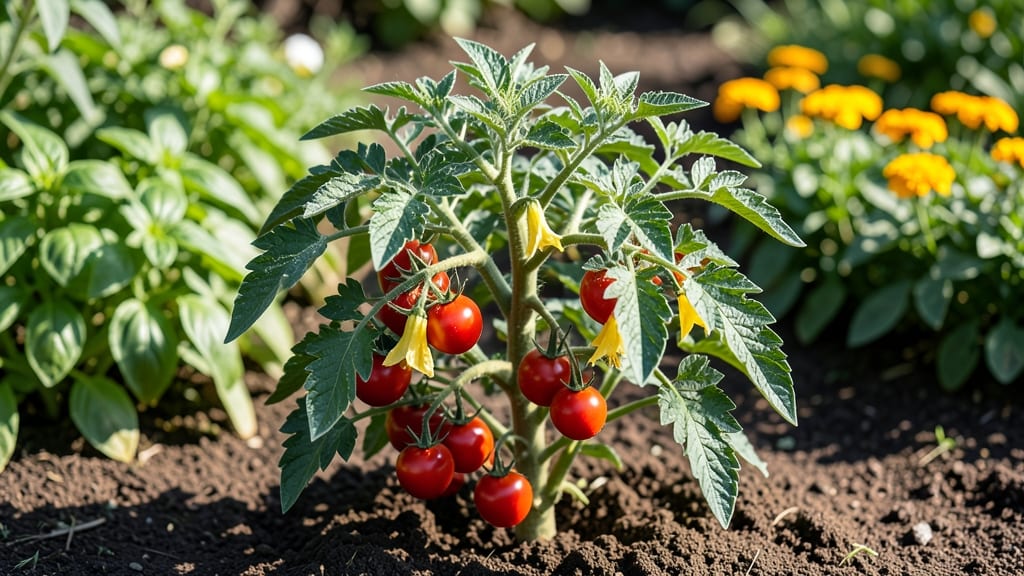
Growing a Little Napoli tomato plant means sweet, bursting red fruit that keeps producing even when temperatures soar. 🌞 I’ve grown this variety for three summers now, and it’s the only tomato that thrives in my 90°F+ afternoons without cracking or turning mealy.
The key? A little extra care in the heat and patience for those first perfect tomatoes.
The secret starts with well-draining soil—mix in compost and a handful of perlite to prevent soggy roots. Plant in full sun (at least 6-8 hours daily), but use shade cloth if your summers are brutal.
Water deeply twice a week (more in extreme heat), always at the base to avoid wetting leaves—this cuts down on fungal diseases like blight. A cage or stake keeps the plants upright as they grow.
By mid-summer, you’ll be harvesting 1-inch cherry tomatoes that explode with flavor. Prune suckers regularly to focus energy on fruit, and fertilize lightly with a balanced 10-10-10 every 4-6 weeks.
The payoff? A vine that keeps producing until frost, with less fuss than other heat-sensitive varieties. Even my neighbor’s "tough" tomatoes gave up by August—mine kept going.
Container growing works too: just use a 5-gallon pot or larger, and keep it near a sunny wall. The real trick? Don’t rush ripening—let them stay on the vine until fully red for the best sweetness.
And if birds or squirrels eye your harvest, cover the plants with netting before they ripen. Trust me, the first bite of a sun-warmed Little Napoli is worth every effort.
📚 In This Guide
- What you need
- Instructions
- Tips and common mistakes
- Wrapping up and next steps
What you need
- ● Little Napoli tomato seeds or seedlings: 3–5 plants (check seed packets for spacing requirements).
- ● Growing containers or garden bed: Containers: 5-gallon pots or larger (12–18" deep) with drainage holes.
- ● Garden bed: Full sun (6+ hours/day), well-draining soil.
- ● High-quality potting mix: 10–20 lbs (sterile, organic, with perlite or vermiculite for drainage).
- ● Balanced fertilizer: 10-10-10 or 5-10-10 (organic options like compost or worm castings work too!).
- ● Tomato cages or stakes: 4–6 ft tall (2–3 per plant for support).
- ● Watering can or hose with a gentle nozzle: For deep, consistent hydration.
- ● Pruning shears: Sharp, clean pair for trimming suckers and dead leaves.
- ● Mulch: Straw or shredded leaves to retain moisture and suppress weeds.
- ● pH testing kit: To ensure soil pH is between 6.0–6.8 (ideal for tomatoes).
- ● Drip irrigation system: For automated, stress-free watering.
- ● Plant clips or twist ties: To secure vines to stakes/cages.
- ● Grow lights (indoor start): LED or fluorescent for seedlings (12–16 hours/day).
- ● Epsom salt: 1 tbsp per plant mid-season for magnesium boost.
Step-by-step guide to growing Little Napoli tomato plants
This heat-tolerant variety thrives with the right balance of sun, water, and support.
🌱 Step 1: Select and Prepare the Planting Site
Choose a location with full sun exposure (6-8 hours daily), as Little Napoli tomatoes demand warmth to ripen their sweet fruit. I like to test spots by observing how quickly soil warms—press your hand into the ground at midday; if it feels too hot to hold for 10 seconds, add a 2-inch mulch layer of straw to protect roots while keeping foliage dry.
Amend the soil with compost or aged manure mixed into the top 12 inches to ensure good drainage. Little Napoli plants hate soggy feet, so avoid heavy clay without amending. A soil pH between 6.0-6.8 works best—test your soil if unsure, as tomatoes struggle in acidic conditions.
☀️ Step 2: Transplant Seedlings at the Right Time
Wait until nighttime temperatures stay above 55°F before transplanting, as Little Napoli seedlings won't tolerate frost. I plant mine 2-3 weeks after the last frost date in my zone, but I always check for first true leaves on the seedlings—hardier plants with 3-4 sets of leaves handle transplant shock better.
Dig holes twice as wide as the root ball but only as deep—burying too deep encourages rot. Space plants 24-36 inches apart in rows 3 feet apart for airflow. Gently remove the seedling from its container, loosen tangled roots with your fingers, and place it in the hole so the top of the root ball sits just below soil level.
💧 Step 3: Water Deeply and Establish a Consistent Routine
Water immediately after transplanting to eliminate air pockets, then once every 2-3 days until the plant reaches 12 inches tall. You'll know it's time to water when the top 2 inches of soil feel dry—stick your finger in to check. Avoid wetting leaves, especially in humid weather, to prevent fungal diseases like early blight.
Mulch heavily with straw or grass clippings to retain moisture and regulate soil temperature. Little Napoli plants reward consistent watering with vibrant red fruit, but they'll drop blossoms if stressed. I use a drip irrigation system during dry spells to keep roots evenly moist without overhead watering.
✂️ Step 4: Prune and Support for Maximum Yield
Install a stake or cage at planting time—Little Napoli's indeterminate vines grow 6-8 feet tall if left unchecked. Prune suckers (the small shoots in the leaf axils) when they're 2-3 inches long to direct energy to fruit production. I remove every other sucker to balance growth and airflow, leaving only the strongest shoots.
Pinch off the first few blossoms if the plant looks leggy—this encourages stronger stem development before heavy fruiting. Once fruit sets, I reduce pruning to maintain the plant's structure while allowing clusters to mature. Harvest when tomatoes turn fully red and slightly soft to touch—they won't ripen further off the vine.
🌿 Step 5: Maintain Through Harvest and Beyond
Fertilize lightly every 3-4 weeks with a balanced tomato fertilizer (10-10-10) after the first fruit sets. Too much nitrogen early on leads to leafy growth at the expense of fruit. I switch to a low-nitrogen, high-phosphorus formula (5-10-10) when flowers appear to boost blossom production.
Watch for pests like hornworms—Little Napoli's large leaves attract them, but a quick handpick in the morning prevents damage. Harvest regularly to encourage more production; overripe tomatoes on the vine attract pests and diseases. If frost threatens before all fruit ripens, pick green tomatoes and ripen indoors in a paper bag with a banana for 2-3 days.
Tips & tricks for perfect Little Napoli tomato growth
These heat-tolerant plants reward patience with sweet, vibrant fruit—but only if you nail a few key details.
Sunlight Strategy: The 6-8 hours of daily sun requirement is non-negotiable, but I've found that morning sun (before 10am) is especially crucial for Little Napoli. Position plants to catch those first rays—it jumpstarts photosynthesis and prevents afternoon wilting. If your garden gets intense afternoon heat, provide afternoon shade during peak summer months (12-3pm) to prevent leaf scorch while still maintaining full sun exposure overall.
Transplant Timing Secret: Those nighttime temperatures above 55°F are your green light, but don't rush—wait until your seedlings show 3-4 sets of true leaves. I've learned the hard way that transplanting too early (even with warm nights) leads to stunted growth. Use a soil thermometer to confirm ground temps are above 60°F at planting time for best results.
Watering Wisdom: The 2-3 day watering schedule only works if you're checking that top 2 inches of soil. I've switched to a moisture meter for my Little Napoli plants—it's worth the investment. Water deeply at the base (not overhead) to encourage strong root development. The key is consistency: irregular watering causes blossom drop, and that's wasted energy from your plant.
Pruning Precision: When removing those 2-3 inch suckers, I use sharp pruning shears dipped in rubbing alcohol between cuts to prevent disease spread. Focus on removing suckers that grow in the leaf axils (the V-shaped junctions) rather than random shoots. This technique maintains the plant's natural structure while maximizing fruit production—exactly what you want from an indeterminate variety.
Pro Tips for Little Napoli Tomato Plant
- These heat-tolerant plants reward patience with sweet, vibrant fruit—but only if you nail a few key details.
- Sunlight Strategy: The 6-8 hours of daily sun requirement is non-negotiable, but I've found that morning sun (before 10am) is especially crucial for Little Napoli.
- Transplant Timing Secret: Those nighttime temperatures above 55°F are your green light, but don't rush—wait until your seedlings show 3-4 sets of true leaves.
Frequently asked questions
Got questions about growing Little Napoli tomato plants? You’re not alone—this heat-loving variety has its own quirks! Here are answers to the most common queries to help you cultivate juicy, burst-ready tomatoes with confidence.
How hot can Little Napoli tomatoes handle?
This variety thrives in extreme heat (up to 95°F+), making it perfect for Southern climates or late-summer growing. Drought tolerance is high, but consistent moisture (1–1.5 inches/week) prevents blossom drop. Mulch heavily to retain soil heat and reduce stress.
When should I plant Little Napoli seeds vs. seedlings?
For seeds: Start indoors 6–8 weeks before last frost, or direct-sow after soil reaches 70°F+ (late spring). Seedlings can go in 2–3 weeks after frost risk passes. Pro tip: Use black plastic mulch to warm soil faster!
Why aren’t my Little Napoli tomatoes ripening?
Common culprits:
- Heat stress: If temps exceed 95°F, flowers may drop. Provide afternoon shade or use shade cloth.
- Nutrient deficiency: Yellow leaves? Boost nitrogen (early growth) or potassium (fruit set) with compost or balanced fertilizer.
- Blossom end rot: Irregular watering causes calcium deficiency. Water deeply 2–3x/week and add crushed eggshells to soil.
Can I grow Little Napoli in containers?
Use a 5-gallon+ pot with drainage holes and a lightweight potting mix. Place containers in full sun (6+ hours/day) and fertilize weekly with tomato-specific feed. Dwarf varieties like this do well in pots but may yield slightly less than in-ground plants.
What’s the best way to harvest Little Napoli tomatoes?
Pick when fully red and slightly soft to the touch (usually 60–70 days after transplanting). Use pruning shears to avoid damaging vines. Harvest regularly to encourage more fruit—overripe tomatoes on the vine can deter new blooms!
Are there alternatives if Little Napoli doesn’t thrive?
If your climate is too cool, try heat-tolerant but slightly less extreme varieties like:
- Solar Fire (red, drought-resistant)
- Heatmaster (yellow, prolific)
- Celebrity (classic, reliable)
Wrapping up and next steps
Growing Little Napoli tomato plants is a rewarding journey—whether you’re a seasoned gardener or just starting out!
Their heat resistance and sweet, cherry-sized fruit make them a standout choice for containers, small spaces, or even your kitchen windowsill. 🌱 With the right care, you’ll soon be harvesting vibrant red tomatoes that taste like summer in every bite.
Ready to dive in? Start by gathering your supplies and pick a sunny spot—your future tomato harvest is just a few steps away! 🌞