
Planting
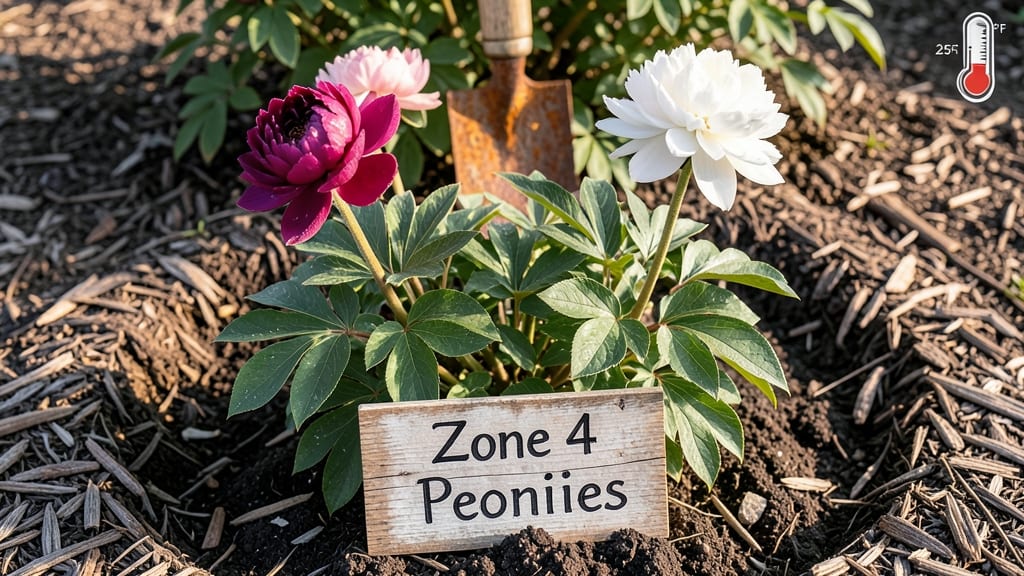
Growing peonies in Zone 4 means blooms that outlast spring's fleeting warmth—their hardy roots survive winters that would kill most perennials. 🌷 I've watched mine push through snow, then reward me with 5-inch blooms in June that last for weeks.
The secret isn't complicated: it's about timing, soil, and giving them the right winter hug. Zone 4 peonies thrive with full sun (6+ hours daily) and well-draining soil—amend heavy clay with compost to prevent rot.
Plant bare-root peonies in early fall (September-October) so roots establish before winter, or spring if you miss the window. Varieties like 'Sarah Bernhardt' and 'Bowl of Beauty' handle our cold like champions, while 'Duchesse de Nemours' adds late-season romance.
Once established, they're nearly maintenance-free: water deeply once a week after blooming, then let them rest. In winter, mound soil or mulch 4-6 inches high over the crown—this protects against heaving and keeps roots snug.
The first year is about patience; by year three, you'll have lush, fragrant blooms that make every spring worth the wait. The real magic? Peonies multiply underground, giving you free plants for years. Just divide clumps every 5-7 years to keep them vigorous.
No pesticides needed—deer leave them alone, and pests rarely bother these tough perennials. Now, let's get those roots in the ground!
📚 In This Guide
- What you need
- Instructions
- Tips and common mistakes
- Wrapping up and next steps
What you need
- ● Peony roots: Choose Paeonia lactiflora or Paeonia officinalis varieties (e.g., 'Sarah Bernhardt,' 'Bowl of Beauty'). Buy 3–5 healthy, dormant roots per plant (look for 3–5 "eyes" or buds).
- ● Well-draining soil: Aim for loamy soil with a pH of 6.5–7.0. Amend heavy clay with compost (2–3 inches mixed into the top 12 inches of soil).
- ● Organic matter: Composted manure or leaf mold (1–2 gallons per planting hole) for nutrients.
- ● Fertilizer: Balanced 10-10-10 or low-phosphorus fertilizer (5-10-10)—avoid high nitrogen!
- ● Mulch: 2–3 inches of organic mulch (straw, shredded bark, or wood chips) to insulate roots.
- ● Garden shovel or trowel (for digging holes 12–18 inches deep).
- ● Garden fork (to loosen compacted soil).
- ● Pruning shears (for trimming dead foliage after blooming).
- ● Measuring tape or ruler (to ensure proper planting depth).
- ● Garden hose or watering can (for deep watering).
- ○ Optional: Soaker hose for consistent moisture, plant tags to track varieties, or cold-frame for overwintering tender varieties.
- ● Timing: Plant bare-root peonies in early spring (March–April) or fall (September–October) when soil is workable but not frozen.
- ● Sunlight: Full sun (6+ hours daily)—peonies thrive in bright, open spaces.
- ● Drainage: Avoid low spots where water pools. Elevate beds if needed.
- ● Patience: Peonies take 2–3 years to establish and bloom—plan ahead!
Step-by-Step instructions for planting peonies in Zone 4
Here's how to establish peonies that thrive through Zone 4 winters and reward you with decades of blooms.
🌱 Step 1: Choose and Prepare the Planting Site
Peonies need full sun—at least 6-8 hours daily—and well-draining soil to prevent root rot. I always test my soil first: dig a hole, fill it with water, and check drainage. If water remains after 6 hours, amend with 1-2 inches of compost and a handful of coarse sand to improve texture. The ideal spot is slightly elevated to prevent winter waterlogging.
Here's the thing—peonies hate disturbance. Once planted, they'll thrive for 50+ years if left undisturbed. Mark your chosen location with stakes before digging, as you'll need to work the soil to a depth of 12-18 inches. Loosen the soil without creating clumps, which can strangle roots.
🪴 Step 2: Plant Bare-Root Peonies at the Right Depth
Plant your peony roots in early fall (4-6 weeks before first frost) or early spring when soil is workable. Dig a hole 2 feet wide and deep—this gives roots room to establish before blooming. Place the roots so the eyes (buds) sit 2 inches below soil level. I know it seems counterintuitive, but planting too deep delays flowering.
Spread the roots evenly in all directions, ensuring they don't overlap. Add a 3-inch layer of compost to the bottom of the hole, then backfill with native soil mixed with 1 cup of bone meal (for phosphorus) per plant. Water thoroughly until soil settles, then add another inch of soil. Peonies need 12-18 inches of depth to overwinter successfully in Zone 4.
☀️ Step 3: Mulch and Protect for Zone 4 Winters
After planting, apply 3-4 inches of organic mulch (straw or shredded leaves) around the base, keeping it 6 inches away from stems to prevent rot. In Zone 4, peonies need winter protection, but don't smother them—too much mulch traps moisture and causes crown rot. I add a lightweight burlap wrap around the crown in late fall, secured loosely to allow airflow.
Here's what to watch for: In extreme winters (below 0°F), add a 4-inch layer of straw mulch over the burlap. Remove it in early spring (March) when soil thaws. Never remove mulch before the last frost—you'll shock the plant and delay blooming.
✂️ Step 4: Prune and Maintain for Long-Term Health
Prune peonies in late fall or early spring (before new growth appears). Cut back stems to 1 inch above the soil line—never leave stubs. I use clean, sharp shears to avoid tearing stems, which invites disease. In Zone 4, you'll see new growth emerge in late April or May, depending on your microclimate.
Feed peonies in early spring with 10-10-10 fertilizer (1 tablespoon per plant) to encourage blooms. Water deeply once weekly during the growing season, but reduce in fall to harden off the plant for winter. The key is consistency—peonies hate soggy roots but also dry spells during bloom season.
🌿 Step 5: Divide and Propagate Every 5-7 Years
Peonies multiply over time, so divide them in early fall when foliage yellows but before frost. Dig around the clump with a spade, lifting entire root balls. Separate into sections with 3-5 eyes per division, ensuring each has healthy roots. Replant divisions immediately in prepared holes, following the same depth guidelines.
Real talk: Peonies take 2-3 years to bloom after division, but it's worth it to rejuvenate old clumps. Discard any divisions with soft, mushy roots—these are diseased and will infect healthy plants. Label new plantings to track their progress.
Tips & tricks for perfect peony planting in Zone 4
These hard-won lessons will help you establish peonies that thrive through Zone 4's harsh winters and reward you with decades of blooms.
Soil Test Precision: The 6-hour drainage test in Step 1 is non-negotiable for peonies. I've seen too many gardeners skip this and end up with root rot. If your soil drains poorly, mix in 1 part coarse sand to 3 parts native soil—this creates the perfect air-to-moisture balance. For clay-heavy soils, consider raised beds where you can control the mix entirely. The goal is to mimic the well-draining conditions peonies evolved in their native Asia.
Planting Depth Secret: In Step 2, that 2-inch eye depth is crucial—any deeper and your peonies won't bloom for years. I mark the depth with a stake before planting to avoid guesswork. For extra insurance, use a ruler to measure from the soil surface down to the eyes after backfilling. Remember, peonies are shallow-rooted perennials that need this precise positioning to thrive in Zone 4's freeze-thaw cycles.
Winter Protection Layering: The mulch instructions in Step 3 are your first line of defense against Zone 4's extreme winters. For that 4-inch extra layer in sub-zero conditions, I use straw rather than leaves—it insulates better and resists compaction. The key is creating an air pocket around the crown while keeping stems dry. I've found that wrapping the entire crown in burlap before adding mulch prevents moisture buildup that leads to rot during thaw cycles.
Division Timing Nuance: When dividing in Step 5, aim for early fall when foliage yellows but before hard frost sets in. I've learned this the hard way—dividing too late leaves new roots vulnerable to winter kill. For maximum success, replant divisions immediately in prepared holes with the same 2-inch eye depth. The 3-5 eyes per division guideline ensures each new plant has enough energy to establish before blooming.
Pro Tips for Peonies For Zone 4
- These hard-won lessons will help you establish peonies that thrive through Zone 4's harsh winters and reward you with decades of blooms.
- Soil Test Precision: The 6-hour drainage test in Step 1 is non-negotiable for peonies.
- Planting Depth Secret: In Step 2, that 2-inch eye depth is crucial—any deeper and your peonies won't bloom for years.
Frequently asked questions
Got questions about growing peonies in Zone 4? You’re not alone! Here are some of the most common concerns—and their solutions—to help you cultivate stunning blooms even in colder climates.
Can peonies survive Zone 4 winters?
Absolutely!
Peonies are exceptionally cold-hardy, thriving in Zone 4 with proper care. Their hardiness (USDA Zones 3–8) makes them ideal for snowy winters. Just ensure they’re planted in well-draining soil and mulched lightly in late fall to protect roots from extreme cold. Pro tip: Avoid heavy mulch—too much can suffocate roots.
When is the best time to plant peonies in Zone 4?
Fall is the golden window—aim for 4–6 weeks before the first hard frost (typically September–October in Zone 4). Planting in fall gives roots time to establish before winter, while spring planting (March–April) is a backup if fall misses you. Key: Never plant peonies in summer—they hate heat stress!
Why aren’t my Zone 4 peonies blooming?
Patience is key! Peonies often take 2–3 years to bloom after planting. If they’re established but still skimp on flowers, check these fixes:
- Too much nitrogen: Fertilize lightly with low-nitrogen options (like 5-10-10).
- Overcrowded roots: Divide clumps every 5–7 years to boost blooms.
- Insufficient sunlight: Ensure 6+ hours of sun daily.
How do I divide peonies in Zone 4?
Divide peonies in early fall or spring when the plant is dormant. Dig up the clump, separate into sections with 3–5 eyes (buds) per division, and replant immediately. Warning: Never divide peonies in their first 3 years—they need time to root!
What’s a good alternative to peonies for Zone 4?
If peonies aren’t your style, try these cold-hardy, low-maintenance bloomers:
Plant
Why It Works
Daylilies (Hemerocallis)
Thrives in Zones 3–9, drought-tolerant, and blooms like crazy!
Russian Sage (Perovskia)
Drought-resistant, silvery foliage, and no-deadheading needed.
Coneflowers (Echinacea)
Native to Zone 4, attracts pollinators, and blooms all summer.
Wrapping up and next steps
Growing peonies in Zone 4 is absolutely doable—and what a reward! With the right cold-hardy varieties, proper planting techniques, and a little patience, you’ll enjoy stunning blooms for decades. These hardy perennials bring elegance and fragrance to your garden, making them a must-have for any landscape.
Ready to transform your garden? Start by selecting your peony varieties, then follow our step-by-step planting guide to get them established. Before you know it, you’ll be savoring those romantic, velvety blooms year after year! 🌸✨