
Planting
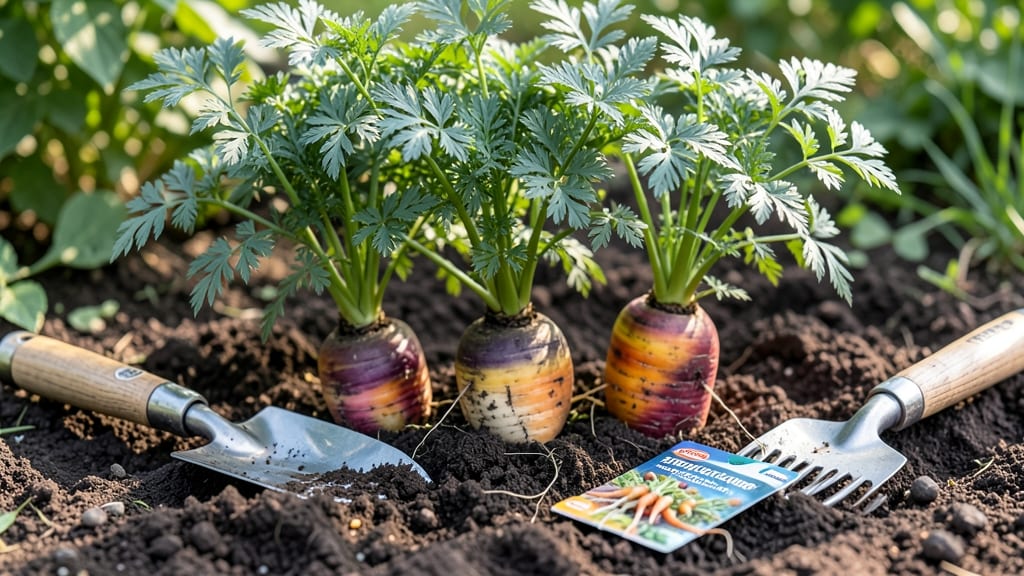
Growing rainbow carrots from seed delivers vibrant, crunchy rewards in just 60 days—if you nail the soil and spacing. 🌱 The secret to perfect, fork-free roots lies in loose, stone-free soil and precise planting depth, not just patience.
My first attempt produced lopsided carrots because I ignored soil texture, but this method guarantees straight, colorful harvests every time.
You'll need a sunny spot with 6+ hours of direct light, well-draining soil amended with compost, and 1/4-inch-deep furrows spaced 12 inches apart. The key? Fine, sandy loam—rocky soil or clay will cause forking.
Plant seeds 1/8-inch deep, thin seedlings to 2 inches apart once they sprout, and keep the soil consistently moist but never soggy.
By day 60, you'll pull sweet, rainbow-hued carrots with crisp texture and bold flavor. The purple, yellow, and orange varieties store well too, lasting up to 3 weeks in the fridge. Just watch for carrot rust fly and aphids—row covers prevent most issues without chemicals.
This method works for spring or fall planting in most climates. For summer crops, use shade cloth to protect seedlings from intense heat. The payoff? A harvest that rivals store-bought—but with colors and flavors grocery stores can't match.
📚 In This Guide
- What you need
- Instructions
- Tips and common mistakes
- Wrapping up and next steps
What you need
- ● Rainbow carrot seeds – Choose heirloom or hybrid varieties (e.g., 'Rainbow Mix' or 'Cosmic Purple'). Aim for 1–2 grams per 10 feet of row (about 100–200 seeds).
- ● Well-draining soil – Loose, sandy loam with a pH of 6.0–6.8. Mix in 2–3 inches of compost per square foot for nutrients.
- ● Garden bed or containers – Minimum 12-inch-deep soil (shallow soil stunts growth). Containers need drainage holes.
- ● Organic fertilizer – Balanced (e.g., 5-5-5) or veggie-specific blend. Apply ½ cup per 10 feet of row at planting.
- ● Watering can or hose with gentle nozzle – Carrots need 1–1.5 inches of water weekly (consistent moisture is key!).
- ○ Row cover or shade cloth (optional but helpful) – Protects seedlings from pests and extreme sun (30–50% shade for hot climates).
- ● Garden trowel or transplanting knife – For sowing seeds and loosening soil.
- ● Rake or hoe – Smooths soil and creates furrows for seeds.
- ● Measuring tape or ruler – Seeds need 1–2 inches apart; rows should be 12–18 inches apart.
- ● Mulch (straw or grass clippings) – 1–2 inches thick to retain moisture and suppress weeds.
- ○ Gloves (optional) – Protects hands from thorny soil or prickly weeds.
- ○ Plant markers (optional) – Label varieties if growing multiple colors to track harvest times.
Step-by-Step instructions for planting rainbow carrots
Here's how to grow vibrant, colorful carrots from seed—no fancy tools needed.
🌱 Step 1: Prepare the Soil for Optimal Growth
Rainbow carrots need loose, stone-free soil to grow straight and true. Work in 2-3 inches of compost into the top 6 inches of soil to improve drainage and fertility. I like to sift the soil through a ¼-inch mesh screen to remove any rocks or clumps that could deform the roots. The goal is soil so fine it almost feels like flour—this prevents forking and ensures those perfect tapered shapes.
Test your soil moisture by squeezing a handful. It should hold together lightly but not be sticky. If it's too dry, add a sprinkle of water and mix again. Avoid freshly tilled soil—it's too dense and can cause seedlings to struggle. The ideal soil temperature for germination is 60-70°F. If your spring is still chilly, wait until the ground warms up before planting.
💧 Step 2: Sow Seeds in Rows for Even Germination
Carrot seeds are tiny and slow to germinate—don’t rush! Use a seed spacing tool or toothpick to create ¼-inch-deep furrows spaced 12 inches apart. I scatter seeds ½ inch apart along the furrow, then cover them with ¼ inch of fine soil. Press gently to ensure good seed-to-soil contact, but don’t compact it tightly. Overcrowding leads to weak, forked carrots.
Water gently with a fine mist until the soil is evenly moist. Avoid soaking the area—carrot seeds need consistent moisture but hate soggy conditions. Place a small marker at each end of the row to avoid disturbing the seeds later. Germination takes 14-21 days, so patience is key. Keep the soil surface damp (not wet) during this time—use a spray bottle if needed.
☀️ Step 3: Thin Seedlings for Strong, Straight Carrots
Once seedlings reach 2 inches tall, it’s time to thin. Use pinking shears or scissors to snip unwanted seedlings at soil level—this prevents disturbing roots and keeps the soil intact. Leave 2 inches between plants for short varieties and 3 inches for longer types. I always thin on a cloudy day to reduce stress on the remaining plants.
Thinning isn’t just about space—it’s about light and nutrients. Crowded carrots compete for resources, leading to stunted growth and forking. After thinning, water deeply to settle the soil around the remaining seedlings. You’ll see first true leaves emerge within a week—that’s your signal everything is working. Mulch with 1 inch of straw to retain moisture and suppress weeds.
🪴 Step 4: Maintain Consistent Moisture and Fertility
Carrots need 1 inch of water per week, delivered consistently. I water deeply 2-3 times per week rather than daily shallow watering. Let the top 1 inch of soil dry out between waterings—this encourages deep root growth. Use a drip irrigation system or water early in the morning to avoid fungal issues.
Side-dress with ½ cup of compost tea or balanced fertilizer when seedlings are 4 inches tall. Avoid high-nitrogen fertilizers—they promote leafy growth at the expense of root development. Watch for yellowing leaves, which can signal overwatering or nutrient deficiencies. If you see this, adjust your watering schedule or add a small handful of organic fertilizer around the base of the plants.
⏰ Step 5: Harvest at Peak Sweetness and Maturity
Rainbow carrots are ready to harvest 60-70 days after sowing, depending on the variety. Check for 3-4 inch diameter and vibrant color—this is your cue they’re ready. Grip the tops firmly and pull gently but steadily. Most varieties come out cleanly, but if resistance builds, use a small hand fork to loosen stubborn roots.
Harvest on a dry day to prevent soil from clinging to the roots. Store in the refrigerator for up to 2 weeks or preserve by peeling and slicing for quick pickling. If you miss the window, leave them in the ground—they’ll sweeten further with frost. I always save a few seeds from the best-looking carrots for next year’s planting!
Tips & tricks for perfect rainbow carrot planting
Growing vibrant rainbow carrots from seed is all about patience and preparation—here's how to avoid common pitfalls and maximize your harvest.
The Soil Texture Secret: The key to straight, fork-free carrots starts with soil preparation. I can't emphasize enough how critical it is to remove all rocks and clumps—even tiny pebbles can deform developing roots. After sifting through that ¼-inch mesh screen, I run my hands through the soil to check for any remaining grit. Think of it like preparing a canvas: the smoother and finer, the better your final product will be. For extra insurance, I mix in a handful of sand if my soil feels too dense—this helps create that ideal loose, flour-like texture.
Germination Timing Strategy: Those 14-21 days of waiting for germination can feel like an eternity, but there's a way to stack the odds in your favor. I always plant my seeds in small batches every 2 weeks during the growing season. This staggered approach ensures a continuous harvest rather than one big event. During the waiting period, maintain that soil surface dampness by covering the rows with clear plastic wrap (secured with rocks) for the first 10 days. This creates a mini greenhouse effect that can speed up germination by 3-5 days—just remember to remove it once you see sprouts.
Thinning Technique That Makes All the Difference: When it comes time to thin those seedlings in Step 3, I've learned that timing and method matter just as much as spacing. Instead of thinning when seedlings reach 2 inches, I wait until they're about 3 inches tall. This gives them a bit more strength to handle the process. For the actual thinning, I use a pair of clean, sharp scissors to snip seedlings at soil level—never pull them out by hand as this can disturb the roots of remaining plants. After thinning, I always water deeply to help settle the soil around the remaining seedlings, which prevents them from drying out or becoming stressed.
Harvesting Insight: The 60-70 day window for harvest is actually quite flexible, especially if you're growing for flavor rather than size. I've found that carrots left in the ground for an extra 2-3 weeks after reaching maturity actually develop deeper, sweeter flavors—almost like nature's way of curing them. For the most vibrant colors, harvest on a sunny morning after a light rain when the soil is moist but not soggy. This makes the roots easier to pull cleanly while preserving their brilliant hues. If you notice any particularly stubborn carrots, I recommend using a small hand fork to gently loosen them rather than pulling forcefully, which can cause breakage.
Pro Tips for Planting Rainbow Carrots
- Growing vibrant rainbow carrots from seed is all about patience and preparation—here's how to avoid common pitfalls a...
- The Soil Texture Secret: The key to straight, fork-free carrots starts with soil preparation. I can't emphasize enoug...
- Germination Timing Strategy: Those 14-21 days of waiting for germination can feel like an eternity, but there's a way...
Frequently asked questions
Got questions about growing your own rainbow carrots? You’re not alone—these colorful root veggies spark curiosity! Here are answers to the most common queries to help you grow a thriving, vibrant harvest.
When is the best time to plant rainbow carrots?
Plant rainbow carrots 2-3 weeks before your last frost in spring or 8-10 weeks before the first fall frost. They thrive in cool weather (50–75°F) and bolt in heat, so avoid summer planting in hot climates. For year-round harvests, try staggered plantings every 2–3 weeks.
How long do rainbow carrots take to grow?
Most rainbow carrot varieties mature in 60–80 days, but some heirlooms (like ‘Rainbow Mix’) may take up to 90 days. Check seed packets for exact timelines—smaller varieties (like ‘Paris Market’) can be harvested in as little as 50 days for baby carrots!
Can I grow rainbow carrots in containers or small spaces?
Rainbow carrots adapt well to containers if you choose shorter varieties (under 6 inches long) and use deep pots (at least 12 inches). Loosen soil with compost and avoid crowding—space seeds 1–2 inches apart and thin seedlings to 2–3 inches apart for optimal growth.
What should I do if my rainbow carrots are forked or stunted?
Forked or stunted carrots often mean crowded roots or rocky/dense soil. Thin seedlings early to 2–3 inches apart and amend soil with compost or sand for looser texture. Avoid heavy fertilizers—carrots need low nitrogen to grow straight and sweet!
Are rainbow carrots as sweet as orange carrots?
Yes! Rainbow carrots (purple, yellow, red, etc.) are just as sweet and nutritious as orange varieties—they just pack extra antioxidants (like anthocyanins in purple carrots). Flavor varies slightly by variety, so try a mix for the best taste and color variety in your dishes!
Wrapping up and next steps
Growing rainbow carrots is a rewarding journey that brings color, nutrition, and joy to your garden in just 60 days! 🌈 With the right soil, patience, and a little love, you’ll soon be harvesting vibrant, sweet roots that’ll make your meals—and your garden—stand out.
Whether you’re a seasoned gardener or a beginner, this colorful crop is a fun and delicious way to connect with nature.
Ready to dive in? Start by prepping your soil this week, then sow those seeds with confidence. Once your rainbow carrots are thriving, share your progress with fellow gardeners or experiment with creative recipes—because the best part of growing them is enjoying the harvest! 🥕✨