
Planting
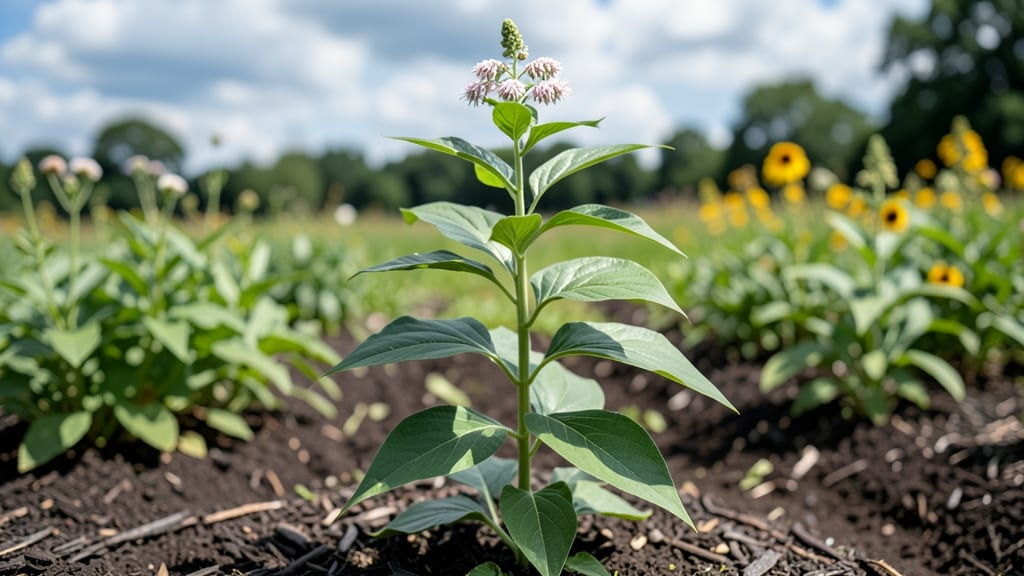
A poke salad plant image should show its signature arrowhead-shaped leaves with jagged edges and clusters of white star-like flowers. Look for young, tender leaves for harvesting, as mature plants develop thick stems and can grow up to 3 feet tall. Capturing these key features helps identify edible stages and avoid toxic parts.
A poke salad plant's most recognizable visual clues are its glossy, deep green leaves that resemble arrowheads with serrated edges. 🌿 The younger leaves are the most prized for culinary use, as they're tender and free from the bitter compounds that develop as the plant matures.
When photographing these plants, focus on capturing both the leaf structure and the distinctive white flower clusters that appear in late summer. These visual markers help distinguish edible poke salad from its toxic lookalikes, which is crucial for safe harvesting.
For clear documentation, use natural lighting to highlight the plant's texture and vibrant color. A macro lens works best to showcase the fine details of the leaf edges and flower patterns.
I always include a reference object like a ruler or coin in my shots to give viewers a sense of scale, especially when showing the plant's eventual height of 2-3 feet.
💡 In This Article
- Identifying Pokeweed Stages for Harvesting
- Best Practices for Photographing Poke Salad Growth
Identifying pokeweed stages for harvesting
The poke salad plant, or Phytolacca americana, undergoes dramatic transformations through its growth cycle. At the seedling stage, you'll spot tiny, rounded leaves emerging from the soil, measuring just 1-2 inches wide.
These early leaves are the most tender and safest to harvest, but they contain mild toxins that must be properly prepared through boiling or fermenting to remove phytoacins. The key visual clue here is the plant's rapid growth—seedlings can reach 6 inches in just 2 weeks under ideal conditions.
As the plant matures to the juvenile leaf stage, the leaves develop their signature arrowhead shape with 5-7 prominent veins radiating from the base.
This is when the leaves become most flavorful, with a slightly bitter, spinach-like taste. 🌱 However, the stems begin thickening during this phase, signaling that the plant is transitioning toward maturity.
Harvesting at this stage requires careful selection—focus on the top 6-8 inches of the plant where the leaves remain thin and vibrant green, avoiding any leaves with brown or yellowing edges.
The transition to mature leaves marks a critical shift in both appearance and safety. Leaves develop a thicker, waxier texture and may grow up to 10 inches long, with more pronounced serrations along the edges.
This stage is when toxicity increases significantly, as the plant produces higher concentrations of phytoacins. The stems become woody and can reach 2-3 feet tall, making the plant less desirable for culinary use.
The visual warning sign is the appearance of purple-tinged stems, which indicates advanced maturity and higher toxin levels.
When the plant reaches its flowering stage in late summer, it produces clusters of white, star-shaped flowers that can be up to 1 inch wide.
These flowers are followed by purple berries that are highly toxic and should never be consumed. 🚨 The presence of flowers or berries means the plant is past its prime for harvesting, and all parts should be avoided.
This stage also marks when the plant's roots develop a deep, fibrous system that can spread aggressively, making identification of younger plants more challenging in subsequent growing seasons.
For safe harvesting, always prioritize plants in the seedling to juvenile leaf stages, focusing on the youngest, most tender leaves. The preparation process—typically boiling for 10-15 minutes—is essential to neutralize toxins, regardless of the plant's age.
Understanding these growth stages helps gardeners and foragers make informed decisions about when to harvest, ensuring both safety and optimal flavor in their poke salad preparations.