
Planting
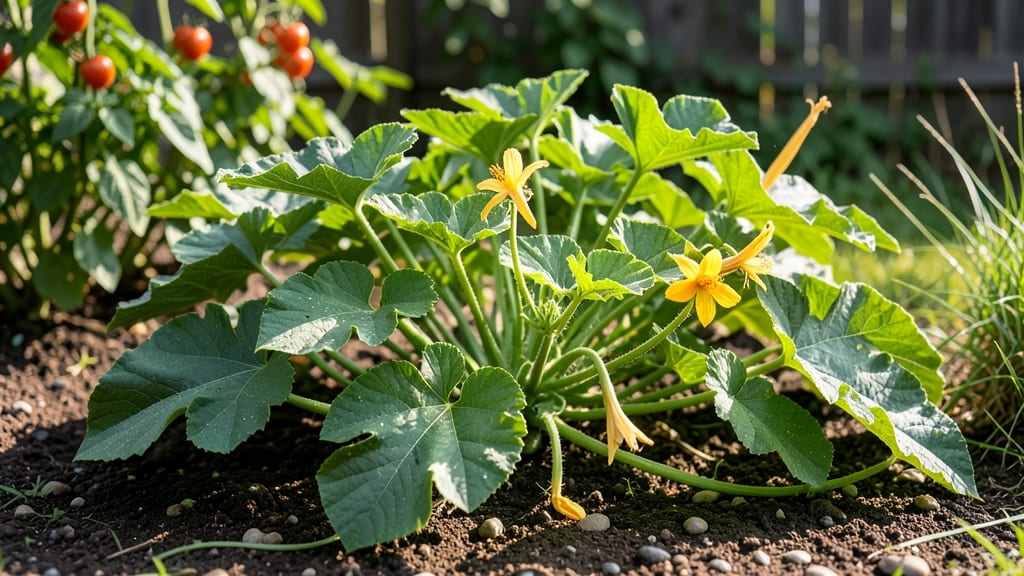
Your pumpkin plant only has male flowers? 🌱 That’s frustrating—but here’s the good news: you can boost female blooms naturally without expensive tricks. The imbalance happens for simple reasons like too much nitrogen, young plants, or inconsistent heat, and fixing it is easier than you think.
First, cut back on nitrogen-heavy fertilizers (like fresh manure) and switch to a balanced 10-10-10 or phosphorus-heavy formula. Female flowers need phosphorus to develop, and your plant is probably starving for it. Prune the male blooms too—sounds counterintuitive, but it forces energy into female flowers instead.
Watch for morning sunlight and even watering—pumpkins need 6+ hours of sun daily and consistent moisture (not soggy soil). Once you adjust these, you’ll see tiny yellow female flowers (with tiny pumpkins at their base) within 2-3 weeks. The first harvest will be worth the wait!
This works for all pumpkin varieties—from small sugar pies to giant jack-o’-lanterns. If you’re still struggling, check your plant’s age: vines need 4-6 weeks to mature before female flowers appear. Patience pays off!
Why Your Pumpkin Plant Skips Females
If your pumpkin vines are bursting with male blooms but leaving you high and dry with female flowers, don’t panic—it’s a common (and fixable!) quirk of pumpkin biology. Understanding the why behind this imbalance is the first step to flipping the script in your garden.
Let’s break down the science and environmental triggers that cause pumpkin plants to favor male flowers over females.
Pumpkin plants (Cucurbita spp.) follow a developmental hierarchy when producing flowers. Young vines prioritize male flowers because they’re easier and faster to grow—they require less energy and mature in just 3–5 days after appearing.
Female flowers, on the other hand, demand more resources: they develop from the same stem as a tiny pumpkin (the ovary), which saps energy and delays their bloom.
What’s happening in your garden?
- Early-season plants (first 2–3 weeks of flowering) often produce 90%+ male flowers as they “test” their environment.
- Solution: Wait it out! Female flowers typically dominate after 4–6 weeks of consistent growth, provided the plant has enough energy.
Pumpkins are heavy feeders, but too much of the wrong nutrient throws their flower production off balance. Excess nitrogen (N)—the macronutrient in leafy greens and many fertilizers—stimulates foliage growth at the expense of flowers.
When your plant is busy churning out leaves, it prioritizes male blooms because they’re low-maintenance.
Signs of nitrogen overload:
- Dark, glossy leaves with rapid vine growth but few flowers.
- Stems are thin but long, with weak stems that flop.
- Soil test results show high nitrogen (ideal range: 0.5–1.0% for flowering plants).
Actionable fix:
- Switch to a balanced fertilizer (e.g., 5-10-10 or 10-10-10) once vines start running.
- Add phosphorus (P)—the “flowering nutrient”—via bone meal or compost (target 0.3–0.5% in soil).
- Avoid fresh manure early in the season (it’s too rich in nitrogen).
Pumpkin plants are sensitive to environmental fluctuations, and stress triggers a survival response: producing male flowers to spread pollen before resources run out. Here’s how climate factors skew the ratio:
| Stress Factor | How It Affects Flowers | Fix It With |
|---|---|---|
| Extreme heat (>90°F) | Stops female flower development; males thrive. | Shade cloth (30–50%) or drip irrigation to cool roots. |
| Inconsistent watering | Drought stress = fewer females; males persist. | Deep water 1–2”/week (mulch to retain moisture). |
| Short daylight (<12 hrs) | Delays female flower maturation. | Choose early-maturing varieties (e.g., ‘Jack Be Little’). |
| Cold snaps (<50°F) | Halts flower production entirely. | Black plastic mulch or row covers for nighttime protection. |
Pro tip: 🌡️ Ideal conditions for females:
- Daytime temps: 70–85°F
- Soil moisture: Consistently damp (not soggy)
- Sunlight: Full sun (6–8+ hours/day)
Not all pumpkins are created equal! Some heirloom and hybrid varieties are genetically predisposed to produce more males early on.
For example: - ‘Sugar Pie’ and ‘Cinderella’ (small pumpkins) often play it safe with males first. - ‘Howden’ and ‘Giant Canadian’ (large varieties) may take longer to shift to females due to their energy demands.
What to do?
- Plant a mix of varieties to hedge your bets.
- Check seed packets for notes on “early female production.”
- Save seeds from productive female-heavy plants for next year!
When pests (like cucumber beetles or squash vine borers) or diseases (powdery mildew, downy mildew) attack your pumpkin, the plant diverts energy to recovery—often at the cost of female flowers. Damaged leaves = less photosynthesis = fewer females.
Common culprits:
- Cucumber beetles (chew stems, spread disease).
- Aphids (sap-suckers that weaken vines).
- Fungal infections (yellowing leaves = poor energy storage).
Combat it:
- Neem oil spray (preventative).
- Row covers (early season).
- Handpick pests (drop them in soapy water).
Pruning pumpkin vines too aggressively can reset the plant’s hormonal balance, causing it to revert to male flower production as a “safety mechanism.” While light pruning (removing weak vines) is fine, severing main runners can trigger stress responses.
Rules for pruning: ✅
- Remove weak or diseased vines (use clean shears).
- Pinch off excess side shoots (leave 2–3 main runners per plant).
❌ Don’t:
- Sever primary vines (this can halt female production).
- Prune during flowering (wait until post-harvest for heavy cuts).
Your pumpkin’s male-dominated phase isn’t a failure—it’s biology in action. By addressing nutrient imbalances, environmental stress, and genetic traits, you can tip the scales toward females and enjoy a bountiful harvest. Patience and precision are your best tools! 🚀
Fixing your pumpkin’s flower imbalance
If your pumpkin vines are bursting with male flowers but female blooms stay scarce, don’t panic—there are practical, science-backed fixes to tip the scales in your favor. The key is understanding the why behind the imbalance (which we covered earlier) and then targeting those root causes with actionable steps.
Below, we’ve mapped out solutions based on the most common triggers, from quick fixes to long-term strategies. Plus, we’ll share prevention tips to keep your pumpkins thriving season after season.
Male flowers thrive on nitrogen, while female flowers need phosphorus (P) and potassium (K) to develop. If your soil is heavy on nitrogen (like fresh manure or synthetic fertilizers), your plant prioritizes leafy growth over fruit production.
How to Fix It:
- 🔥 Test Your Soil
Use a DIY soil test kit (or send a sample to your local extension office) to check P and K levels. Ideal ratios for fruiting plants: NPK 5-10-10 or 10-20-20.
- 🍳 Boost Phosphorus & Potassium
Amend your soil with:
- Bone meal (3-4-0): Sprinkle 1–2 tbsp per plant and water in. Best applied before flowering.
- Potassium sulfate (0-0-50): Use 1 tbsp per gallon of water as a foliar spray or soil drench during bloom.
- Wood ash (0.5-0-10): Lightly scatter ½ cup around the base (avoid overdoing it—it raises pH).
- Composted manure (balanced NPK): Aged cow, chicken, or rabbit manure adds micronutrients too.
- 👨🍳 Fertilize Strategically
Switch to a low-nitrogen, high-P/K fertilizer once vines start flowering (e.g., 5-10-10 or 7-9-5). Follow the package rate but halve it if your soil is already rich.
💡 Prevention Tips:
- Rotate crops annually to avoid nutrient depletion.
- Add compost (2–3 inches) to garden beds in early spring.
- Use mulch (straw or grass clippings) to retain soil moisture and slow nutrient leaching.
Pumpkins are heat-loving, but extreme temps (above 90°F/32°C) or erratic watering can stunt female flower development. Male flowers often appear first because they’re less sensitive to stress.
How to Fix It:
- 🌡️ Shade Cloth for Extreme Heat
If temps hit 95°F+ (35°C+), drape 30–50% shade cloth over plants for 2–4 hours daily. This cools the vines without blocking light.
- 💦 Water Deeply & Consistently
Pumpkins need 1–2 inches of water per week (more in sand/rocky soil). Use:
- Drip irrigation (best) to keep foliage dry and roots moist.
- A soaker hose run for 30–60 minutes daily during dry spells.
- Mulch with straw or wood chips to retain moisture.
- 🌅 Adjust Planting Time
If you’re in a hot climate, opt for heat-tolerant varieties like ‘Howden’ or ‘Jack Be Little.’ Or plant in early spring or late summer to avoid peak heat.
🎯 Prevention Tips:
- Monitor soil moisture with your finger—top 2 inches should feel damp but not soggy.
- Avoid wetting leaves (especially at night) to prevent fungal diseases like powdery mildew.
- Use black plastic mulch to warm soil in cool climates and retain moisture.
When pumpkin vines compete for space, they focus on male flowers (which are energy-efficient) over female blooms. Plus, if bees aren’t visiting, unfertilized females drop off without a trace.
How to Fix It:
- 🔪 Prune Aggressively
Cut back vines to 2–3 main runners per plant, removing side shoots. This redirects energy to fruit production.
- 🐝 Hand-Pollinate Female Flowers
If bees are scarce (common in early morning or rainy weather), do it yourself:
- Identify female flowers: They have a tiny pumpkin at the base.
- Gently rub the male flower’s pollen onto the female’s stigma (the fuzzy center) with a paintbrush or cotton swab.
- Do this early in the morning when flowers are open.
- 🌼 Plant Bee-Friendly Companions
Add pollinator magnets nearby:
- Marigolds, borage, or nasturtiums (repel pests too!).
- Avoid pesticides—even “organic” sprays can harm bees.
✨ Prevention Tips:
- Space pumpkins 4–6 feet apart (or use trellises for varieties like ‘Sugar Pie’).
- Plant in blocks (not rows) to improve cross-pollination.
- Install a bee hotel or native wildflower patch nearby.
Young pumpkin plants (under 4 weeks old) won’t produce female flowers. Stress from transplant shock, pests, or disease also delays fruiting.
How to Fix It:
- ⏰ Give Plants Time
Female flowers typically appear 4–6 weeks after pollination (when vines are 6+ feet long). If your plants are small, wait and nurture them first.
- 🛡️ Protect from Pests/Disease
Common culprits:
- Squash vine borers: Wrap stems with aluminum foil at the base.
- Powdery mildew: Spray with baking soda mix (1 tbsp baking soda + 1 gallon water + a drop of dish soap).
- Aphids: Blast off with water or introduce ladybugs.
Frequently asked questions
Why does my pumpkin plant keep producing only male flowers?
Male flowers are easier for young plants to produce since they require less energy. This is normal during the first 3-4 weeks of flowering. The imbalance often corrects itself once vines mature (4-6 weeks old) and have enough phosphorus. Check for excess nitrogen in your soil, which can delay female blooms.
How can I tell if a pumpkin flower is male or female?
Male flowers grow on long stems with no swelling at the base, while female flowers have a tiny pumpkin-shaped ovary at their base. The female flower's stigma (fuzzy center) is also more prominent. This visual difference helps you identify which blooms to pollinate.
Should I remove male flowers to encourage female blooms?
Yes! Prune 90% of male flowers once female flowers start appearing, but leave a few for pollination. This forces the plant to redirect energy toward female blooms. Do this in the morning when flowers are open and bees are active.
What's the best fertilizer to fix this imbalance?
Switch to a low-nitrogen, high-phosphorus fertilizer like 5-10-10 or 7-9-5. Add bone meal (1-2 tbsp per plant) or composted manure to boost phosphorus. Avoid fresh manure early in the season—it's too nitrogen-heavy.
Will hand-pollination help if my plant has mostly male flowers?
Use a paintbrush to transfer pollen from male to female flowers in the morning. Focus on female blooms with tiny pumpkins at their base. This works especially well if bees are scarce or weather conditions are poor for natural pollination.