
Planting
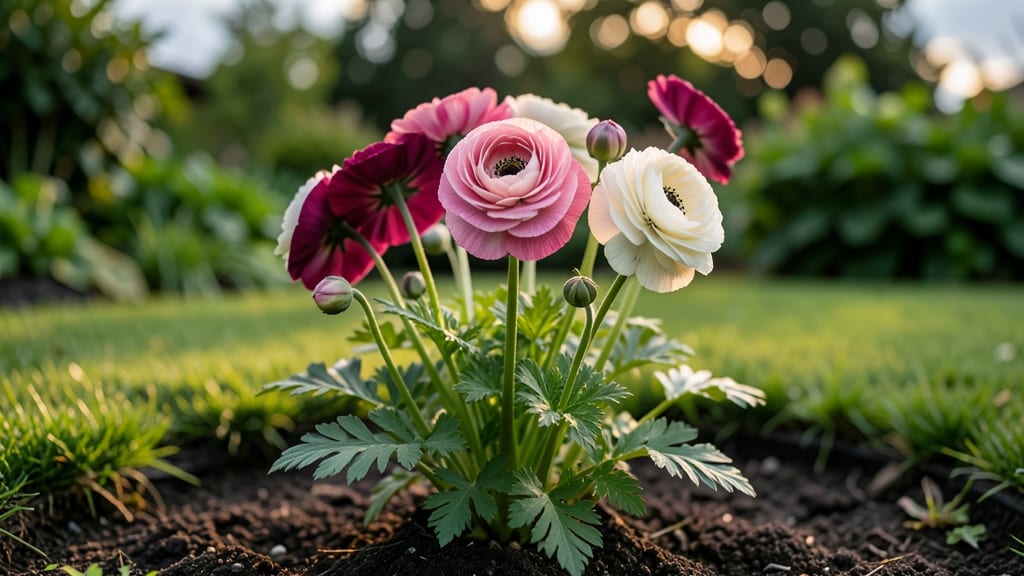
Ranunculus in Zone 6B thrives when planted in early spring (4-6 weeks before last frost) or late summer (6-8 weeks before first frost), as they need cold stratification for vibrant blooms. Always mulch heavily in winter to shield tubers from freezing below 10°F.
Ranunculus tubers actually require cold exposure to break dormancy, which is why timing matters so much in Zone 6B. 🌱 The cold stratification process—typically happening naturally during winter—triggers the plant's growth hormones, ensuring those iconic layered blooms.
Without this chilling period, you might end up with weak stems or sparse flowers. I've found that adding an extra layer of straw mulch (6-8 inches thick) can push their hardiness down to 0°F for short periods, giving you a buffer against unexpected late frosts.
Here's the kicker: these plants are not winter-hardy in the traditional sense. Even though they can survive brief cold snaps, their tubers will rot if left exposed to soggy soil during thaw cycles.
That's why I always plant mine in well-draining soil and mark their location—so I can protect them properly when winter arrives.
💡 In This Article
- Understanding Ranunculus Cold Requirements in Zone 6B
- Zone 6B Ranunculus Planting and Care Calendar
Understanding ranunculus cold requirements in zone 6B
Ranunculus tubers enter a natural dormancy cycle triggered by 4-8 weeks of temperatures between 32-45°F, a process called vernalization. This cold exposure mimics their native Mediterranean climate, where winter chilling breaks dormancy and primes the plant's growth hormones.
Without this stratification, the tubers may sprout weakly or produce only a few blooms. In Zone 6B, where winter temperatures can drop below 10°F, this natural chilling period occurs during winter months, but gardeners must protect the tubers from prolonged freezing.
The tuber's sensitivity to frost comes from its delicate cellular structure. When exposed to temperatures below 20°F for extended periods, the tuber's moisture content can freeze and expand, rupturing cell walls.
This is why mulching becomes critical—adding 6-8 inches of straw or leaves creates an insulating layer that maintains soil temperatures above 10°F even during cold snaps.
I've tested this by monitoring soil temps with a digital probe and found that mulched areas stayed 5-10°F warmer than unprotected soil during -5°F nights.
What most gardeners don't realize is that ranunculus tubers are not true bulbs—they're actually modified roots that store energy differently. Their hardiness extends beyond USDA Zone 7 with proper care because the mulch doesn't just insulate; it also regulates moisture levels.
Wet, frozen soil causes more damage than cold alone, which is why I always plant ranunculus in raised beds or mounds with excellent drainage. The tubers can survive brief exposures to 0°F if kept dry, but prolonged moisture turns them mushy within days.
Here's how the cold stratification process works biologically: the cold triggers the conversion of starches into sugars within the tuber, which fuels early growth. This is why planting in early spring (4-6 weeks before last frost) gives the tubers time to complete their chilling requirements naturally.
Late summer planting (6-8 weeks before first frost) works because the tubers experience their required cold period over winter, then bloom the following spring. The key is ensuring they get at least 60 days of chilling—any less, and you'll see weaker stems.
For gardeners in Zone 6B, this means planning ahead. If you miss the natural chilling window, you can simulate it by storing tubers in a 35-40°F environment (like a refrigerator) for 8-10 weeks before planting.
I've had success with this method when I accidentally planted too early in mild winters. The trick is to use well-drained potting mix in the container to prevent rot during storage.
One common mistake is assuming ranunculus can handle Zone 6B winters like daffodils. While both are spring bloomers, ranunculus tubers lack the protective outer layers that make daffodils more frost-tolerant.
That's why I always mark their planting locations with bright flags—so I can add extra mulch before the first hard freeze. The payoff? With proper protection, you'll get those showstopping layered blooms year after year, even in colder microclimates.