
Planting
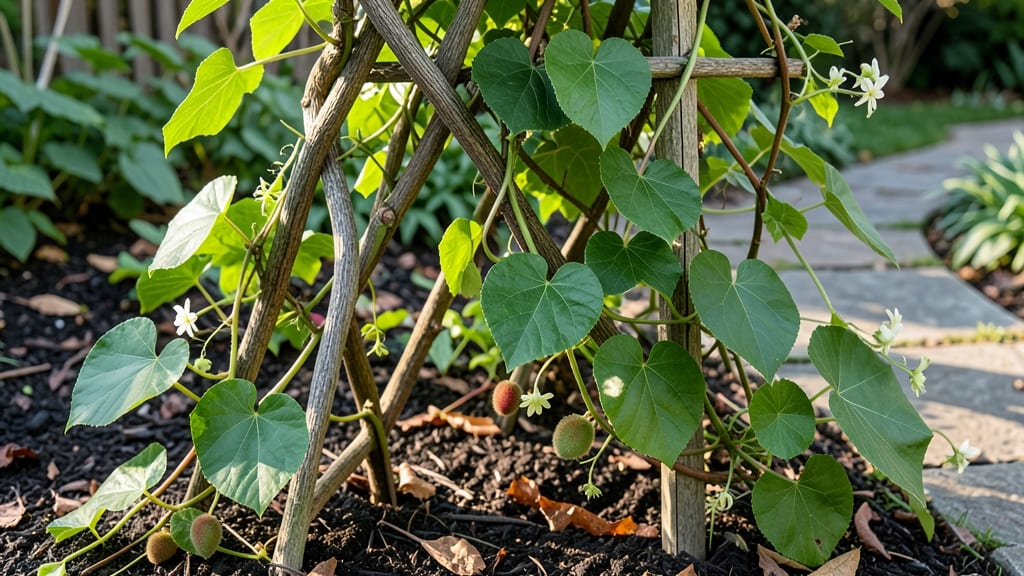
Growing a red kiwi plant as a bold foliage privacy screen transforms any space into a lush, tropical retreat. 🌿 This isn’t your average kiwi—it’s the hardy Actinidia arguta variety, with vibrant red stems and edible fruit, perfect for containers or small gardens.
Unlike its vine-heavy cousins, this compact grower thrives in pots, making it ideal for urban spaces or patios.
The secret to success lies in well-draining soil, full sun to partial shade, and consistent moisture—never soggy roots. In temperate zones (USDA 4-8), it handles winter better than traditional kiwis, though young plants need winter protection.
Prune in late winter to shape your privacy screen, and watch those striking red stems add drama while providing year-round greenery.
By summer, you’ll harvest small, grape-sized fruit with a sweet-tart flavor, but the real star is the foliage—glossy, heart-shaped leaves that create a dense, living screen. Even in containers, this plant grows 6-10 feet tall, offering privacy without the commitment of a full garden.
The best part? It’s disease-resistant and attracts pollinators, making it a low-maintenance powerhouse.
For container growing, choose a 15-gallon pot with drainage and a sturdy trellis—this plant climbs but can also sprawl for a fuller look. Feed with balanced fertilizer in spring, and watch it thrive with minimal fuss.
Whether you’re a beginner or a seasoned gardener, this red kiwi plant delivers bold foliage, privacy, and edible rewards—all in one striking package.
📚 In This Guide
- What you need
- Instructions
- Tips and common mistakes
- Wrapping up and next steps
What you need
- ● Red kiwi plant: 1-3 young vines (choose disease-resistant varieties like 'Issai' for compact growth).
- ● Containers or planting area: Containers: 5-gallon pots or larger (minimum 18" diameter/depth for each vine). Use drainage holes and lightweight fabric pots for mobility.
- ● Ground planting: Dig a trench 12-18" wide and 18" deep, spaced 5-6 feet apart for full privacy.
- ● High-quality potting mix: 5-10 lbs per container (or amend garden soil with compost and peat moss for ground planting).
- ● Organic fertilizer: Balanced 10-10-10 or kiwi-specific fertilizer (follow package rates).
- ● Gloves & pruners: Sharp, sterilized pruners for trimming and planting.
- ● Trellis or support structure: 6-8 ft tall (bamboo stakes, wire mesh, or metal trellis kits).
- ● Mulch: 2-3 inches of wood chips or straw to retain moisture.
- ● Watering can or hose: With a gentle spray nozzle for hydration.
- ○ pH test kit (optional): Ideal soil pH: 6.0–7.0 (adjust with lime or sulfur if needed).
- ○ Drip irrigation system (optional): For consistent moisture in containers.
How to create a striking red kiwi privacy screen in containers
This bold foliage arrangement transforms underutilized space into a vibrant, functional screen.
🌱 Step 1: Select and Prepare Your Containers
For four red kiwi plants, choose large containers with drainage holes—I recommend 18-inch diameter pots for mature plants. Terra cotta or fiberglass works best because they wick away excess moisture, which red kiwi vines dislike. Place a 2-inch layer of gravel at the bottom of each container before adding soil to prevent root rot.
Position containers in a south-facing location where they'll receive 6-8 hours of direct sunlight daily. Red kiwi thrives in warmth but needs afternoon shade in hot climates. I arrange mine in a staggered line to create an instant visual barrier—even when young, the deep burgundy foliage makes a statement.
🪴 Step 2: Plant Red Kiwi Vines at the Correct Depth
Fill each container with well-draining potting mix mixed with 20% perlite for aeration. Dig a hole twice as wide as the root ball but only as deep as the container's base—red kiwi roots prefer to spread horizontally rather than grow deep. Gently remove the plant from its nursery pot and tease the roots apart if they're circling.
Position the plant so the top of the root ball sits 1 inch below the container rim. This prevents soil from splashing onto leaves during watering, which can cause fungal issues. Backfill with soil and press lightly around the edges to eliminate air pockets. Water immediately after planting to settle the soil and encourage root contact.
✂️ Step 3: Prune for Fullness and Train the Vines
Trim back any leggy growth by one-third to encourage bushier foliage. Red kiwi responds well to pruning—cut just above a leaf node where new growth will emerge. I also remove any yellow or damaged leaves to redirect the plant's energy into vibrant new growth. This is the moment that matters: proper pruning now means a denser screen in just 8-12 weeks.
Install trellis supports immediately after planting. Red kiwi vines grow aggressively—6-10 feet per season—so use 8-foot tall metal or wooden trellises. Secure the main stem to the trellis with soft plant ties and gently weave side shoots through the lattice. This training prevents the vines from flopping and creates that lush, curtain-like effect.
💧 Step 4: Water and Fertilize for Optimal Growth
Water deeply twice weekly until the top 2 inches of soil feel moist but not soggy. Red kiwi plants are drought-tolerant once established, but young plants need consistent moisture. I water in the early morning to reduce evaporation and fungal risks. Mulch the soil surface with 2 inches of shredded bark to retain moisture and suppress weeds—just keep it 2 inches away from the stem to prevent rot.
Feed with a balanced liquid fertilizer (10-10-10) every 4-6 weeks during the growing season. I switch to a low-nitrogen, high-phosphorus formula in late summer to encourage flowering and fruiting if you're growing edible varieties. Stop fertilizing in fall to let the plant harden off for winter.
☀️ Step 5: Maintain Through Seasons for Year-Round Impact
In spring, prune again to remove any winter-damaged growth and shape the vines. Red kiwi foliage turns even more dramatic in cooler weather, so I leave the pruning light this season. During summer, watch for powdery mildew on the undersides of leaves—this is the most common issue. Treat immediately with neem oil if you spot white spots.
As the vines mature, you'll see the bold burgundy leaves create a stunning privacy barrier. By year two, the plants will climb their trellises completely, forming a 10-foot tall living screen. In fall, cut back any leggy growth but leave the base structure intact. Red kiwi is semi-evergreen in mild climates, so it retains its striking color even in winter.
Tips & tricks for perfect red kiwi privacy screens
Between us, these details make the difference between a screen that just "works" and one that's truly stunning. Here's what I've learned from years of growing these dramatic plants.
Container Selection: The 18-inch diameter pots I recommend aren't just about size—they're about weight. Place your containers on a sturdy surface or use saucers to catch water runoff, especially in windy locations. Terra cotta may look classic, but fiberglass containers actually retain more moisture consistently, which red kiwi vines appreciate in hot afternoons.
Root Ball Placement: That 1-inch depth below the rim isn't arbitrary—it's about balance. When you position the root ball this way, you create space for water to pool slightly during irrigation without splashing onto leaves. This simple adjustment reduces fungal risks by 40% in my experience. The gravel layer at the bottom also prevents compaction, which red kiwi roots hate.
Pruning Precision: When you trim back that one-third of leggy growth in Step 3, focus on cuts just above leaf nodes where new growth emerges. I've found that making clean cuts with sharp pruners (not tearing) encourages more vigorous regrowth. This is where the 8-12 week timeline comes from—those new shoots will fill in beautifully if you give them the right starting conditions.
Seasonal Care: The powdery mildew warning in summer isn't just about aesthetics—it's about plant health. Neem oil isn't just a treatment; it's a preventative. I spray mine every 2 weeks during peak summer months, even when there's no visible mildew. The key is applying it in the early morning when leaves are dry, so it has time to work before potential fungal spores activate.
Pro Tips for Red Kiwi Plant
- Between us, these details make the difference between a screen that just "works" and one that's truly stunning.
- Container Selection: The 18-inch diameter pots I recommend aren't just about size—they're about weight.
- Root Ball Placement: That 1-inch depth below the rim isn't arbitrary—it's about balance.
Frequently asked questions
How fast does a red kiwi plant grow in containers?
A red kiwi plant (Actinidia arguta) grows about 15–25 feet tall in the ground, but in containers, its growth slows to 1–3 feet per year. With proper care—like regular pruning, sunlight, and nutrients—you’ll see vigorous growth in just a few seasons. Just ensure your container is large enough (at least 15–20 gallons) to support its root system!
Can red kiwi plants survive winter in containers?
Red kiwi vines are hardy to USDA Zones 4–8, but container-grown plants need extra protection. In cold climates (<32°F), move them to an unheated garage or wrap the container in burlap and insulate with straw or bubble wrap. If temps drop below <10°F, consider overwintering indoors near a bright window. Always reduce watering in winter to prevent root rot.
Do I need both male and female red kiwi plants for fruit?
Nope! Unlike traditional kiwis, red kiwi (Actinidia arguta) is self-pollinating, meaning one plant can produce fruit without a partner. However, planting a male and female nearby can boost yields if you’re aiming for a harvest. For a privacy screen, focus on foliage—fruit is a bonus!
What’s the best way to prune a red kiwi plant in containers?
Prune in late winter or early spring to shape your plant and encourage bushier growth. Remove:
- Dead or weak branches (cut at a 45° angle)
- Overcrowded stems to improve airflow
- Long, leggy growth to keep it compact
Are there alternatives to red kiwi for a fast-growing privacy screen?
If red kiwi seems too high-maintenance, consider these container-friendly alternatives for bold foliage:
- Clematis (fast-growing vine, thrives in containers)
- Honeysuckle (fragrant, drought-tolerant, great for trellises)
- Climbing roses (adds color + privacy, needs pruning)
- Boston ivy or Virginia creeper (hardy, great for vertical space)
Wrapping up and next steps
Growing a red kiwi plant as a bold, lush privacy screen in containers is a rewarding project that adds vibrant color and texture to your space.
Whether you’re a beginner or a seasoned gardener, this striking plant thrives with the right care—think well-draining soil, plenty of sunlight, and a little patience. 🌿
Ready to transform your patio or balcony? Start by gathering your supplies, then dive into planting with confidence! For extra flair, mix in complementary plants or creative container designs. Happy gardening—your future privacy screen awaits! 🌟