
Planting
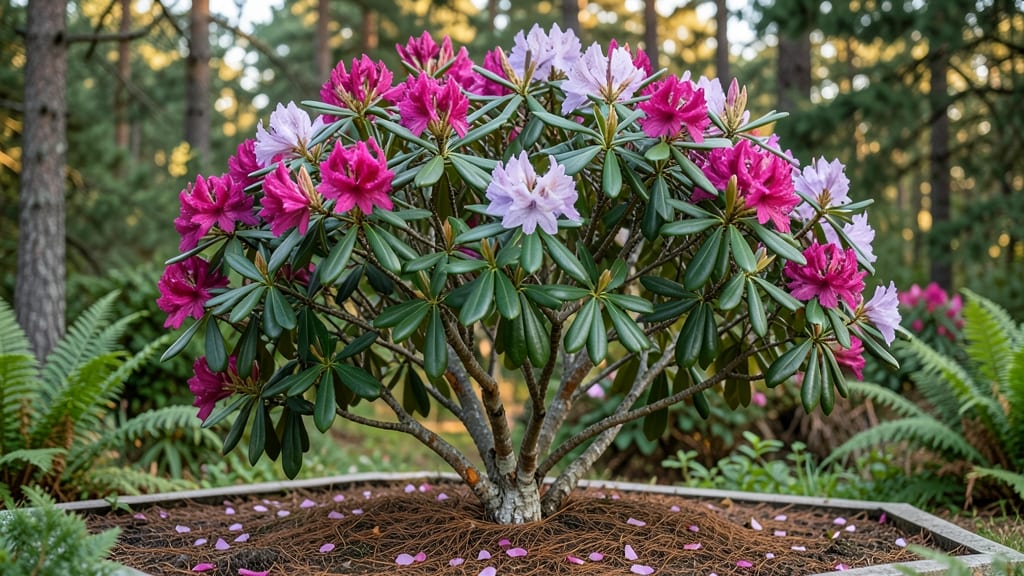
Rhododendrons thrive in Portland, Oregon, where varieties like 'Nova Zembla' and 'Catawbiense Grandiflorum' excel in USDA Zones 6b-8a. Plant them in acidic, well-draining soil with morning sun and afternoon shade for lush growth and stunning blooms.
Portland’s mild, wet winters and dry summers create perfect conditions for rhododendrons, but the key is mimicking their natural acidic soil environment. 🌿 The city’s USDA Zone 8a climate allows these shrubs to flourish year-round, though younger plants may need winter protection.
I’ve found that amending garden soil with peat moss or pine needles helps maintain the ideal pH of 4.5-6.0, while mulching with bark keeps roots cool in summer and insulated in winter.
Beyond soil prep, location matters—these plants love dappled sunlight, which prevents leaf scorch while encouraging vibrant blooms. Morning sun gives them energy, while afternoon shade protects them from Portland’s occasional heat spikes.
For best results, plant in early spring or fall when temperatures are mild, giving roots time to establish before extreme weather arrives.
💡 In This Article
- Portland’s Ideal Rhododendron Planting Zones and Soil Conditions
- Top 5 Rhododendron Varieties for Portland Gardens
Portland’s ideal rhododendron planting Zones and soil conditions
Portland’s climate—characterized by USDA Zones 6b-8a—creates a near-perfect environment for rhododendrons, thanks to its mild winters and moderate summers.
The city’s average annual temperature of 54°F and 40-45 inches of rainfall provide the moisture these plants crave, while the cool maritime influence from the Pacific Ocean prevents extreme heat stress.
However, the real magic happens in the soil: rhododendrons evolved in acidic forests, and Portland’s native soils often lean toward alkaline or neutral pH (6.5-7.5), which is toxic to their roots.
The ideal soil pH for rhododendrons is 4.5-6.0, mimicking the acidic conditions of their native habitats in Asia and North America. To achieve this, gardeners often mix 50% native soil with 50% organic matter, such as peat moss, pine bark fines, or composted leaves.
For example, amending a 10-square-foot planting area with 2-3 inches of pine needles or sphagnum peat can lower the pH by 0.5-1.0 points over time.
Additionally, well-draining soil is critical—rhododendrons hate soggy roots, so raised beds or mounds with perlite or coarse sand help prevent waterlogging during Portland’s wet winters.
Microclimates in Portland also play a role. Urban areas with concrete and pavement can reflect heat, creating "heat islands" that stress rhododendrons, while wooded or north-facing slopes provide natural shade and cooler temperatures.
I’ve seen 'Nova Zembla' thrive in Zone 7a microclimates near the Willamette River, where winter lows rarely drop below 10°F, while 'Catawbiense Grandiflorum' handles Zone 6b conditions in higher-elevation areas like Mount Tabor, where temperatures can dip to 5°F.
The key is observing your specific site’s temperature patterns over 3-5 years to match the right variety.
Moisture retention is another critical factor. Rhododendrons need consistent moisture but hate waterlogged roots. In Portland’s dry summers, mulching with 3-4 inches of bark mulch helps retain soil moisture while regulating temperature.
For containers, use a fast-draining mix with 50% peat moss, 30% pine bark, and 20% perlite, and water when the top 1-2 inches of soil feel dry. Overwatering is a common mistake—rhododendrons in containers can develop root rot within 48 hours if left in soggy soil.
If your soil tests too alkaline, you can temporarily lower the pH by adding elemental sulfur (apply 1 pound per 100 square feet and water thoroughly). However, this takes 2-3 months to fully adjust the soil.
For quick fixes, vinegar or aluminum sulfate can provide immediate pH reduction, but use sparingly—too much can harm beneficial microbes. Always test your soil before and after amendments using a digital pH meter or lab analysis to avoid overcorrecting.
One often-overlooked detail is root zone insulation. In Portland’s wet winters, roots can suffer from temperature fluctuations between day and night. A 4-inch layer of mulch acts as insulation, keeping roots 5-10°F warmer in winter and 10-15°F cooler in summer.
For container-grown rhododendrons, wrapping pots in burlap or moving them to a sheltered location during hard freezes (below 20°F) can prevent root damage.