
Planting
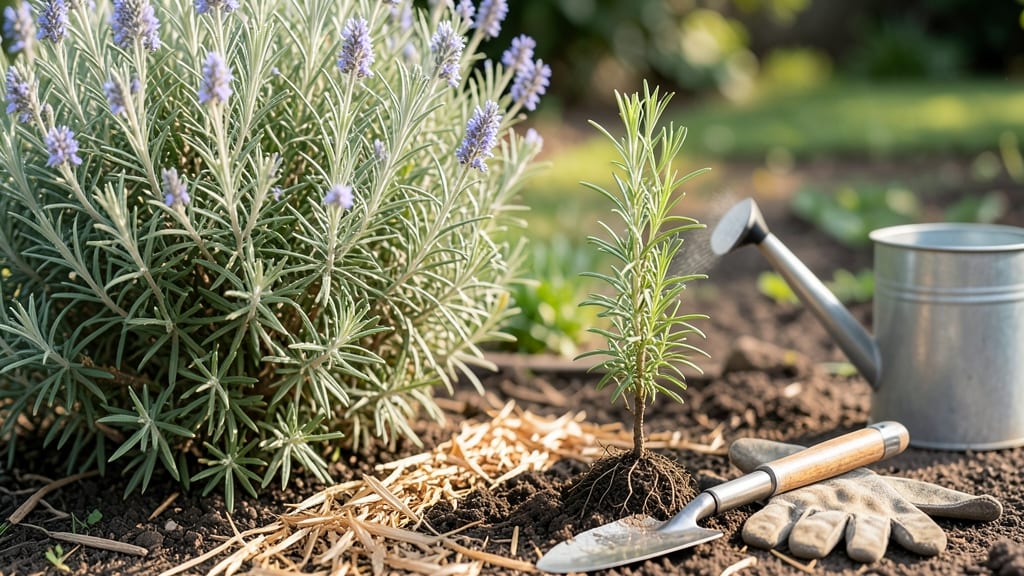
A rosemary planting guide is like inviting sunshine into your garden—this hardy herb thrives where others struggle, demanding only good drainage and full sun. 🌞 I've learned the hard way that soggy soil turns rosemary's roots into mush, but once established, it's the most resilient herb in my yard, surviving droughts and occasional neglect with its silvery-green needles still perky.
The secret starts with soil: mix equal parts native dirt, coarse sand, and compost to create a gritty, well-draining foundation. Rosemary loves heat and sun, so place it where it gets at least 6-8 hours of direct sunlight daily—think south-facing spots or containers that can follow the sun.
In cooler climates (zones 7-10), plant after the last frost when soil warms to 50°F.
Dig holes twice as wide as the root ball but no deeper, spacing plants 2-3 feet apart to prevent overcrowding. Water deeply after planting, then let the soil dry between waterings—rosemary hates soggy feet.
Within weeks, you'll see new growth, and by summer, your kitchen will smell like a Mediterranean vacation whenever you brush past it.
For beginners, the biggest mistake is overwatering—rosemary's roots rot faster than you can say "herb spiral." Prune lightly after planting to encourage bushiness, and avoid fertilizing unless your soil is truly poor.
In containers? Use a fast-draining mix and swap pots for larger ones every 2-3 years to keep roots happy.
📚 In This Guide
- What you need
- Instructions
- Tips and common mistakes
- Wrapping up and next steps
What you need
- ● Rosemary plants: 2–3 healthy nursery-grown plants (upright or prostrate varieties) or seeds (if starting from scratch).
- ● Well-draining potting mix: 1–2 bags (look for a blend labeled for herbs or succulents).
- ● Containers (if not planting in-ground): 1–2 pots per plant, at least 12 inches deep and wide (rosemary hates soggy roots!).
- ● Drainage holes (non-negotiable!)
- ○ Fertilizer (optional but helpful): A balanced 10-10-10 or low-nitrogen herb fertilizer (follow package rates).
- ● Garden trowel or hand shovel (for transplanting).
- ● Pruning shears (to trim woody stems and encourage bushiness).
- ● Watering can or hose with a gentle spray nozzle (rosemary dislikes wet foliage).
- ○ Gloves (optional, but handy for prickly stems!).
- ○ Mulch (optional): Gravel or pebbles (to improve drainage around the base).
- ● A sunny spot with 6+ hours of direct sunlight daily (rosemary is a sun-worshipper!).
- ● Well-drained soil (amend clay soil with sand or perlite if needed).
- ● Patience! Rosemary grows slowly but rewards you with years of lush, aromatic foliage.
Step-by-Step instructions for planting rosemary
Here's how to cultivate this fragrant, drought-tolerant perennial with minimal fuss.
🪴 Step 1: Select the Right Location and Prepare the Soil
Rosemary thrives in full sun—at least 6-8 hours daily. Choose a spot with well-drained soil, as it despises soggy roots. If your garden soil is heavy clay, amend it with 1-2 inches of coarse sand or perlite per square foot to improve drainage.
Test your soil's moisture retention by digging a small hole. If water pools after 30 minutes, you'll need to raise the plant in a mound or container. Rosemary's native Mediterranean habitat means it prefers lean, rocky soil—don't over-fertilize. A light application of compost mixed into the top 6 inches of soil provides enough nutrients without encouraging weak growth.
🌱 Step 2: Plant Rosemary at the Correct Depth and Spacing
For container-grown plants, dig a hole twice as wide as the root ball but no deeper. Gently remove the plant from its pot and loosen any circling roots with your fingers. Place it in the hole so the top of the root ball sits 1 inch below soil level—this prevents stem rot while allowing flexibility for future mulching.
Space plants 3-4 feet apart in the ground to give them room to spread. If planting from seed, sow seeds ¼ inch deep and 6 inches apart, though germination can be slow—expect 2-4 weeks in ideal conditions. Watch for first true leaves to appear before thinning seedlings to 12 inches apart.
☀️ Step 3: Water Deeply and Establish a Consistent Routine
Water newly planted rosemary deeply once a week during the first growing season. The goal is to encourage roots to grow downward rather than staying shallow. After the first year, rosemary becomes drought-tolerant—water only when the soil feels bone-dry 2-3 inches below the surface.
Never let water pool around the base. Use a soaker hose or drip irrigation to deliver moisture directly to the root zone. Overhead watering can lead to fungal issues, especially in humid climates. You'll know your watering is right when the soil around the plant feels dry to the touch at the surface but remains slightly moist deeper down.
✂️ Step 4: Prune for Shape and Encourage Bushiness
Prune rosemary in early spring or after flowering to maintain its shape and encourage dense growth. Use clean, sharp pruners to trim back one-third of the plant's height just above a set of leaves. Avoid cutting into old, woody stems—focus on new growth to keep the plant vibrant.
Regular pruning also stimulates new side shoots, creating a fuller bush. Harvest sprigs as needed for cooking, but never take more than one-third of the plant's foliage at once. This herb rewards patience—properly cared for, it can live for decades, growing into a sturdy, fragrant shrub.
Tips & tricks for perfect rosemary planting
These practical insights will help you cultivate thriving rosemary that stays healthy for years.
Sunlight Secret: The 6-8 hours of daily sunlight mentioned in Step 1 is non-negotiable for rosemary's health. If your garden receives less, consider placing plants in large containers that can be moved to sunny spots during peak hours. Morning sun is ideal—it helps prevent fungal issues that can develop from afternoon humidity. I've seen rosemary plants wilt dramatically when moved to shaded spots after being in full sun.
Soil Test Hack: That 30-minute soil moisture test in Step 1 is your best indicator of drainage needs. If water pools before 30 minutes, your soil is too dense. For containers, mix in 20-30% perlite or coarse sand by volume to replicate rosemary's Mediterranean rocky soil environment. I've had success using a 60/40 mix of garden soil and perlite for container plants.
Planting Depth Tip: The 1-inch below soil level placement in Step 2 prevents stem rot while allowing flexibility for mulching. When planting, use your finger to create a small depression where the root ball will sit—this ensures consistent depth. For container plants, consider using terracotta pots which naturally wick away excess moisture that rosemary dislikes.
Watering Wisdom: The once-weekly deep watering routine in Step 3 should be adjusted seasonally. In summer heat, you might need to water every 5-7 days, while winter watering can be reduced to every 2-3 weeks. Always check that soil is bone-dry 2-3 inches down before watering—this prevents the shallow root systems from developing rot.
Pro Tips for Rosemary Planting Guide
- These practical insights will help you cultivate thriving rosemary that stays healthy for years.
- Sunlight Secret: The 6-8 hours of daily sunlight mentioned in Step 1 is non-negotiable for rosemary's health.
- Soil Test Hack: That 30-minute soil moisture test in Step 1 is your best indicator of drainage needs.
Frequently asked questions
Got questions about growing rosemary? You’re not alone—this fragrant herb can be tricky for beginners! Here are answers to the most common queries to help you cultivate a thriving rosemary plant.
When is the best time to plant rosemary?
Plant rosemary in early spring (after the last frost) or early fall for ideal success. Avoid planting in summer’s scorching heat, which can stress young plants. If you’re in a mild climate, you can plant year-round, but spring or fall gives roots time to establish before extreme temperatures.
Can rosemary survive winter?
Rosemary is hardy in USDA zones 7–10, but it’s semi-evergreen—it may drop leaves in cold snaps. In colder zones, plant it in a protected spot or container you can move indoors. Mulch heavily with straw or pine needles to insulate roots. If leaves brown, don’t worry—it’s often just winter dormancy!
How often should I water rosemary?
Rosemary hates soggy soil—water only when the top 1–2 inches of soil are dry (about once a week in summer, less in winter). Overwatering causes root rot, while underwatering makes it woody. Drip irrigation or soaker hoses help deliver moisture evenly without wetting leaves.
Why is my rosemary turning yellow or brown?
Yellow leaves often mean overwatering or poor drainage, while brown tips can signal underwatering or sunburn (if suddenly exposed to intense heat). Check soil moisture and adjust watering. If leaves crisp in sun, provide light afternoon shade until the plant acclimates.
Can I grow rosemary indoors?
Yes! Choose a sunny windowsill (south-facing) or use a grow light for 6+ hours daily. Use a well-draining pot with cactus/succulent mix and water sparingly. Prune regularly to encourage bushiness, and fertilize lightly in spring with half-strength herb fertilizer.
Wrapping up and next steps
Planting rosemary is a rewarding journey—this hardy, fragrant herb thrives with just a little sunlight, well-drained soil, and patience. Whether you’re growing it for culinary delights, medicinal benefits, or simply to brighten your garden, the key is to start small, stay consistent, and enjoy the process.
Now that you’re armed with the right know-how, grab those shears and get planting! 🌱
Ready for more? Next, explore:
- How to harvest and preserve rosemary for year-round use.
- Creative ways to incorporate rosemary into your cooking or home decor.