
Planting
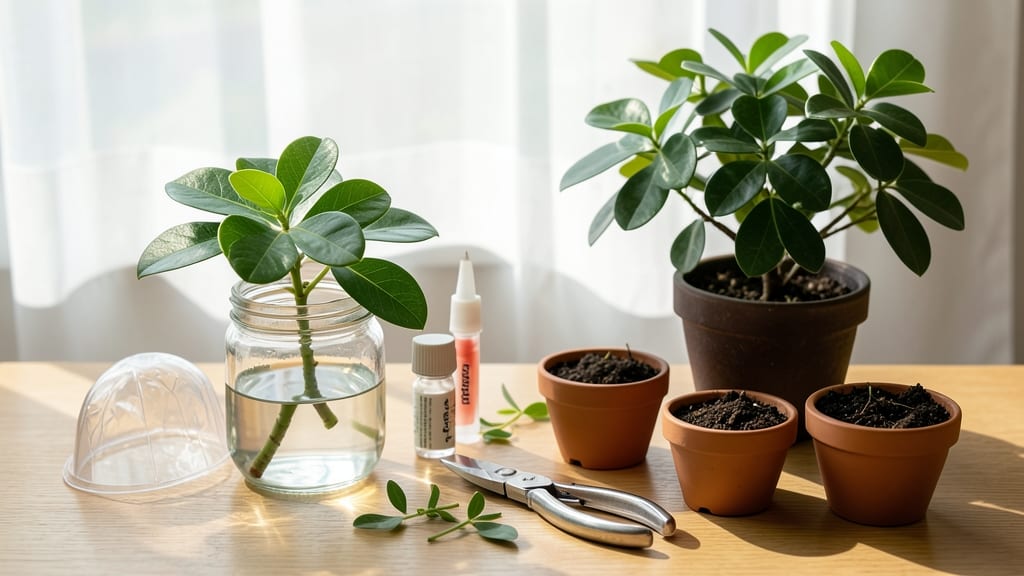
Rooting schefflera plant cuttings in water is the fastest way to multiply your collection—within 3-4 weeks, you’ll see roots ready for planting. 🌱 I’ve propagated schefflera this way for years, and the water method is foolproof, especially for beginners who worry about overwatering soil.
The key? Choosing the right cuttings and keeping them happy until roots form.
Start with 4-6 inch cuttings from healthy stems—look for new growth where leaves meet the stem, as these root best. Snip just below a leaf node with clean scissors, then strip the lower leaves to expose the stem for rooting.
Place the cutting in a jar of room-temperature water, ensuring only the lower half submerges. Change the water every 5-7 days to prevent bacteria, and keep the jar in bright, indirect light.
Within 2-3 weeks, you’ll spot tiny white roots forming at the base—this is your signal to prep for soil. Once roots reach 1-2 inches, transplant into a well-draining potting mix and keep the soil lightly moist.
The first few weeks after transplanting are critical: too much water causes rot, while too little slows growth. Expect new leaves within 4-6 weeks of repotting.
This method works year-round, but spring and summer give the fastest results. Avoid overcrowding cuttings in the jar, and never let them sit in stagnant water—both slow rooting.
With this approach, you’ll double your schefflera collection in just a few months, and each new plant will thrive with the right care.
📚 In This Guide
- What you need
- Instructions
- Tips and common mistakes
- Wrapping up and next steps
What you need
- ● Healthy Schefflera plant: Choose a mature stem with at least 3–4 leaves (avoid flowering branches—they root poorly!).
- ● Sharp pruning shears or scissors: Sterilize with rubbing alcohol to prevent disease. (1 pair)
- ● Clean glass or jar: A clear vessel (8–12 oz) for water—mason jars or recycled containers work great. (1–2 jars, depending on cuttings)
- ● Room-temperature water: Use filtered or distilled water to avoid chlorine/chemicals. (Enough to submerge 1–2 inches of the cutting)
- ○ Rooting hormone (optional but helpful): A gel or powder to speed up root growth. (Small bottle)
- ● Small pebbles or marbles: Place these in the jar to weigh down cuttings and keep them submerged. (Handful)
- ● Spray bottle with water: For misting leaves to prevent browning. (1)
- ● Well-draining potting mix: For transplanting later (e.g., 50% peat/perlite + 50% coconut coir). (Small bag)
- ● Small pots or seed trays: 3–4 inch pots with drainage holes. (2–4 pots)
- ● Hydrogen peroxide (3%): Add 1 tsp to water to prevent bacterial growth.
- ● Humidity dome or plastic bag: Creates a mini greenhouse for faster rooting.
- ● Grow lights or sunny windowsill: Bright, indirect light (6+ hours/day) speeds up growth.
- ● Labeling tags: Track cuttings by date and variety!
Step-by-step instructions for propagating schefflera cuttings in water
Here’s how to grow lush schefflera plants from cuttings—no green thumb required.
🌱 Step 1: Select and Prepare Healthy Cuttings
Choose stems with at least 3-4 leaf nodes and 4-6 inches long. Use clean, sharp scissors or pruners to make a 45-degree cut just below a node—this increases surface area for root growth. Avoid woody, thick stems; focus on younger, flexible growth for faster results.
Remove all leaves from the lower half of the cutting, leaving only the top 2-3 leaves. This reduces water loss and directs energy toward root development. Place the cuttings in a shaded spot for 2-3 hours to let the cut end callus over slightly—this prevents rot when submerged in water.
💧 Step 2: Submerge Cuttings in Water
Fill a clean glass or jar with room-temperature water, leaving enough space to submerge at least 2 inches of the stem. Add 1-2 drops of hydrogen peroxide to the water to prevent bacterial growth—this keeps the water fresh and clear for weeks. You’ll see bubbles form as the cutting releases air, which is normal.
Position the cuttings so only the lower half is submerged, and secure them with toothpicks if needed. Change the water every 3-5 days to avoid stagnation. Roots typically appear in 2-4 weeks, but some may take longer—patience is key. Watch for tiny white or brown tendrils emerging from the nodes.
☀️ Step 3: Provide Light and Monitor Growth
Place the jar in bright, indirect light—direct sun can scorch the leaves, while too little light slows rooting. A south- or east-facing windowsill works best. Rotate the jar quarter-turn daily to ensure even growth. You’ll notice new leaves forming on the top as the cutting adjusts to its new environment.
Once roots reach 1-2 inches long, they’re ready to transplant. Gently rinse the roots to remove debris before moving to soil. Overwatered roots will look mushy—if this happens, trim the damaged sections and let the cutting dry out for a day before replanting.
🪴 Step 4: Transplant Rooted Cuttings to Soil
Fill a 4-6 inch pot with well-draining potting mix—scheffleras hate soggy roots. Make a small hole in the center, place the cutting at the same depth it was in water, and firm the soil gently around the base. Water lightly until moisture drains from the bottom, then let the top inch of soil dry out before watering again.
Keep the newly potted schefflera in medium light for the first week to reduce stress. Yellowing leaves signal overwatering, while crispy edges mean it needs more humidity. After 4-6 weeks, fertilize lightly with a balanced houseplant fertilizer to encourage fuller growth.
Tips & tricks for fast schefflera propagation
Here's what I wish I knew when I first tried growing schefflera from cuttings—these tricks cut the learning curve dramatically.
Cutting Selection: Focus on stems with vibrant green leaves and a slight flexibility—they root fastest. I've found that cuttings from the current season's growth (not last year's wood) develop roots in as little as 2 weeks instead of the typical 2-4 weeks. Avoid stems with yellowing leaves or signs of pests, as these will struggle to root.
Callusing Secret: That 2-3 hour callusing step in Step 1 is non-negotiable for success. Place your cuttings in a shaded spot (like a bathroom cabinet) where humidity stays high—this mimics the tropical conditions scheffleras love. I've seen cuttings rot when skipped, so don't rush this step even if you're eager to see roots!
Water Quality Matters: While room-temperature water works, distilled or filtered water prevents mineral buildup that can clog the stem's pores. I add 1-2 drops of hydrogen peroxide not just for bacteria prevention, but also to oxygenate the water—this helps roots develop faster. Change the water every 3-5 days religiously, even if it looks clean.
Light Positioning: Bright indirect light is key, but don't overlook the importance of angle. Position your jar so light hits the leaves from the side rather than directly overhead—this prevents leaf scorch while still providing energy for root growth. I rotate my jars daily to ensure even exposure, and you'll notice new leaves forming faster when done correctly.
Pro Tips for Schefflera Plant Cuttings
- Here's what I wish I knew when I first tried growing schefflera from cuttings—these tricks cut the learning curve dramatically.
- Cutting Selection: Focus on stems with vibrant green leaves and a slight flexibility—they root fastest.
- Callusing Secret: That 2-3 hour callusing step in Step 1 is non-negotiable for success.
Frequently asked questions
Got questions about propagating Schefflera plant cuttings? You’re not alone! Here are answers to the most common queries to help you grow lush new plants with confidence.
How long does it take for Schefflera cuttings to root in water?
With patience and the right conditions, Schefflera cuttings typically root in 2–4 weeks. Keep the water fresh, avoid direct sunlight, and watch for tiny roots sprouting near the base. If no roots appear after 6 weeks, try adjusting water temperature (warm is ideal) or using a rooting hormone.
Can I propagate Schefflera from just a leaf or small stem?
No—Schefflera cuttings need at least 3–4 leaflets (or a small stem with leaves) to root successfully. A single leaf or tiny stem lacks the energy to support new growth. Aim for healthy, mature stems (4–6 inches long) for the best results.
Why are my Schefflera cuttings rotting in water?
Overwatering or bacteria are usually the culprits. Change the water every 3–5 days and use filtered or distilled water to prevent buildup. If the stem turns mushy or smells foul, trim the rotten part, rinse the cutting, and restart in fresh water. A drop of hydrogen peroxide (1 tsp per cup) can also help sterilize the water.
Should I move rooted cuttings straight to soil?
Yes, but gradually! Once roots are 1–2 inches long, transplant to well-draining soil. Water lightly for the first week to reduce shock. Avoid full sun initially—place in bright, indirect light while the plant adjusts. Overwatering at this stage can still cause root rot.
What’s the best time of year to take Schefflera cuttings?
The ideal window is spring or early summer when the plant is actively growing. Avoid winter dormancy (growth slows, and cuttings root poorly). If you must propagate in fall, use a grow light to supplement natural light and keep humidity high.
Wrapping up and next steps
Growing Schefflera plant cuttings in water is a rewarding, beginner-friendly way to propagate these stunning houseplants—no green thumb required! 🌱 With just a few simple steps and patience, you’ll soon have thriving new plants ready to brighten up your space.
Now that you’re armed with the know-how, give it a try and watch your Schefflera family grow!
Ready to take the next step? Share your progress with fellow plant lovers or explore more propagation tips to expand your indoor jungle. Happy planting! 🌿