
Pests and Diseases
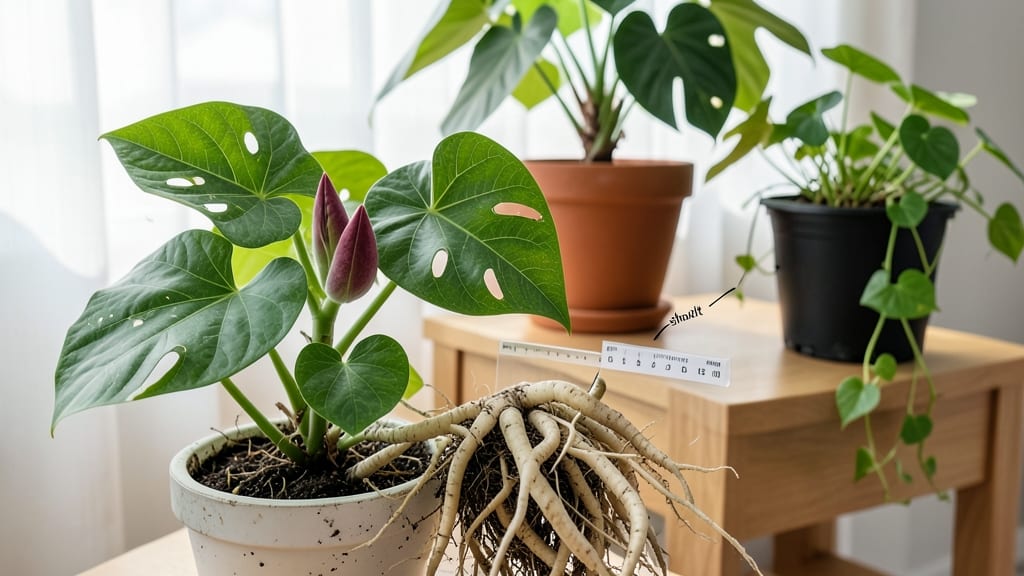
The shoot and root system is where every plant's success begins. 🌱 Understanding how these two parts work together transforms how you water, prune, and feed your plants—leading to stronger stems, deeper roots, and healthier growth than ever before.
Roots anchor plants while absorbing water and nutrients, while shoots (stems and leaves) drive photosynthesis and growth. When one system struggles, the other suffers too—dry soil stunts roots, which then limits shoot development.
The key is balance: rich, aerated soil for roots and proper light/water for shoots ensures both thrive together.
📚 In This Guide
- What you need
- Instructions
- Tips and common mistakes
- Wrapping up and next steps
What you need
- ● Plant cuttings or seedlings: 5–10 healthy stems (4–6 inches long) with at least 2–3 leaf nodes for propagation.
- ● Rooting hormone: 1 small bottle (e.g., Clonex or Dip ‘N Grow) to boost root development.
- ● Well-draining potting mix: 2–3 gallons of a blend like 50% peat moss, 30% perlite, and 20% vermiculite (or a pre-mixed seed-starting mix).
- ● Containers: Small pots (3–4 inches wide) for cuttings (1 per stem).
- ● Larger pots (6+ inches) for mature plants with balanced systems.
- ● Watering can or spray bottle: With a fine mist setting for gentle hydration.
- ○ Clear plastic domes or plastic wrap: To create a humidity tent (optional but helpful for cuttings).
- ● Pruning shears: Sharp, sterilized shears (clean with rubbing alcohol between uses).
- ● pH testing kit: To ensure soil pH is 5.8–6.2 (ideal for root health).
- ● Grow lights or sunny windowsill: 12–16 hours of light daily for optimal shoot/root growth.
- ● Fertilizer (balanced or root-specific): 1 bottle of 5-5-5 or 3-4-6 NPK (diluted to half-strength for young plants).
- ○ Thermometer/hygrometer (optional): To monitor temperature (65–75°F) and humidity (50–70%).
Step-by-Step guide to balancing your plant's shoot and root system
Here's how to nurture both above- and below-ground growth for plants that thrive from day one.
🌱 Step 1: Start with Proper Seedling Setup
Begin by planting seeds at the correct depth—typically twice the seed diameter—in well-draining potting mix. I like to use a sterile seed-starting mix to prevent damping-off disease, which attacks weak seedlings. Press the soil lightly around each seed to ensure good contact, but don't compact it too tightly. This ensures roots can push through easily while keeping the shoot upright and stable.
Place your seed trays in a warm location, ideally 70-75°F, to encourage strong root development before the shoot emerges. A seedling heat mat helps maintain this temperature consistently. You'll know it's working when you see the first cotyledons (seed leaves) push through the soil within 7-14 days. These early leaves signal that the root system has established enough to support above-ground growth.
💧 Step 2: Water with Precision
Water seedlings gently from below using a tray or by pouring water directly into the soil—never from above. This prevents disturbing the delicate shoot and ensures roots get the moisture they need without washing away. Keep the soil evenly moist but not soggy until the first true leaves appear. Overwatering at this stage can suffocate roots and cause the shoot to weaken.
After the first true leaves emerge, reduce watering slightly. Let the top inch of soil dry out between waterings to encourage deeper root growth. You'll notice stronger stems and healthier foliage as the roots expand downward in search of moisture. This balance is key—roots need oxygen, and soggy soil cuts off their air supply.
☀️ Step 3: Provide Balanced Light Exposure
Move seedlings to bright, indirect light as soon as they sprout. A south-facing window or grow light positioned 4-6 inches away works best. Too little light causes leggy shoots that stretch toward any available source, while too much can scorch young leaves. Rotate trays quarter-turn daily so plants grow straight rather than leaning.
Watch for dark green, compact leaves—this is your sign the shoot and roots are growing in harmony. If leaves turn pale or stems grow weak, the roots aren't getting enough energy from the shoot. Conversely, if roots outpace shoot growth (visible as slow leaf production), increase light slightly to boost photosynthesis.
🪴 Step 4: Transplant Carefully
When seedlings have 3-4 true leaves and roots fill the container, it's time to transplant. Handle plants by their leaves, never the stems, to avoid damaging the shoot. Gently loosen the root ball before placing it in the soil to minimize transplant shock. Bury stems slightly deeper than they were in the seedling tray—this encourages stronger root growth along the buried portion.
Water deeply after transplanting to help roots establish in their new location. Keep soil consistently moist for the first 2 weeks, then taper off to encourage deeper root development. You'll see new growth within 7-10 days if the transition was successful. Monitor for wilting or yellowing—these are signs the roots need more time to adjust.
✂️ Step 5: Maintain the Balance Long-Term
Prune leggy shoots to encourage bushier growth and stronger root systems. Pinch back the top set of leaves when the plant reaches 6-8 inches tall—this redirects energy downward. Fertilize lightly with a balanced, water-soluble fertilizer every 4-6 weeks during the growing season to support both shoot and root development.
Real talk: Over-fertilizing can lead to lush shoots with weak roots, while under-fertilizing stunts both systems. Adjust based on plant response—healthy growth means you're on the right track. Regularly check the soil moisture and leaf color to catch imbalances early. A thriving plant has a shoot that grows upward and a root system that spreads outward, working together seamlessly.
Tips & tricks for balanced plant growth
Here's what nobody tells you about nurturing both shoot and root harmony—these are the details that make all the difference.
Temperature Matters: That 70-75°F range isn't just arbitrary—it's the sweet spot where roots grow vigorously while shoots stay strong. If your seedlings emerge slower than the 7-14 day window, your space might be too cool. Try a seedling heat mat or move trays closer to a warm spot like near the fridge (not in direct sunlight). Cold soil slows root development, which directly weakens the shoot's ability to photosynthesize.
Lighting Secret: When you see those first dark green, compact leaves in Step 3, you're witnessing perfect shoot-root balance. But if leaves turn pale or stretch toward light, your seedlings need more intensity. I've found that grow lights positioned 4-6 inches away work better than windows alone—especially in cloudy weather. Rotate trays daily so plants don't lean, and watch for crisp edges on leaves as a sign of perfect light exposure.
Transplanting Technique: The 3-4 true leaves rule is your green light for transplanting, but timing matters even more. Check roots by gently squeezing the container—if they're filling the space, it's time. When burying stems deeper, create a small trench to prevent soil from smothering the shoot. This buried portion becomes a powerhouse for new root growth, supporting the shoot's upward expansion.
Fertilizer Wisdom: The 4-6 week schedule for balanced fertilizer is non-negotiable, but here's the pro move: Use half-strength solution initially. Young roots are delicate, and too much salt can burn them, which directly stunts shoot growth. After the first application, monitor leaves—if they darken or curl, flush the soil with water to remove excess salts.
Pro Tips for Shoot And Root System
- Here's what nobody tells you about nurturing both shoot and root harmony—these are the details that make all the diff...
- Temperature Matters: That 70-75°F range isn't just arbitrary—it's the sweet spot where roots grow vigorously while sh...
- Lighting Secret: When you see those first dark green, compact leaves in Step 3, you're witnessing perfect shoot-root ...
Frequently asked questions
Got questions about optimizing your plant’s shoot and root system? You’re not alone! Here are some of the most common queries—and their straightforward answers—to help you grow with confidence.
What’s the best time of year to focus on shoot vs. root growth?
The shoot system (leaves, stems, flowers) thrives in warm weather (spring/summer), while the root system grows best in cooler, moist conditions (fall/winter). For balanced growth, prioritize roots in early spring (before shoots spike) and shoots in late spring/summer. Adjust watering and nutrients to match the season’s needs!
Can I prune shoots to encourage stronger roots?
Pruning excessive shoots (especially leggy or weak ones) redirects energy to root development. Aim to remove 20–30% of new growth in early spring. Pair this with root-stimulating fertilizers (like mycorrhizal fungi) for best results. Just avoid over-pruning—keep at least 50% of the plant’s structure intact.
My plant’s roots are stunted—what could be wrong?
Stunted roots often signal overwatering, compacted soil, or nutrient deficiencies. Check for:
- Waterlogged soil (roots need oxygen—amend with perlite or sand).
- Hardpan (break up compacted soil with a fork).
- Lack of phosphorus/potassium (use a balanced fertilizer like 10-10-10).
Are there natural alternatives to synthetic root/shoot boosters?
Yes! Try these organic powerhouses:
- Compost tea (rich in microbes for roots).
- Fish emulsion (nitrogen for shoots).
- Seaweed extract (hormones to balance growth).
- Wood ash (potassium for root strength).
How do I know if my plant’s shoot-to-root ratio is healthy?
A balanced ratio is roughly 2:1 (shoots to roots), but this varies by plant type. For example:
Plant Type
Ideal Ratio
Leafy greens (lettuce, spinach)
3:1 (more shoots for harvest)
Fruit-bearing (tomatoes, peppers)
1.5:1 (strong roots for yield)
Herbs (basil, mint)
2:1 (compact growth)
Wrapping up and next steps
Mastering the shoot and root system is your ticket to healthier, more resilient plants—and the satisfaction of watching them thrive! 🌱 By balancing growth, diagnosing issues early, and using precision techniques, you’ve unlocked the secrets to vibrant foliage and strong roots.
Now, take that knowledge and put it into action—whether it’s experimenting with propagation methods or refining your care routine.
Ready for the next step? Start small:
- Try propagating a cutting this week—track its progress!
- Review your plants’ root health and adjust care as needed.
- Share your wins (or lessons!) with fellow gardeners for support.