
Planting
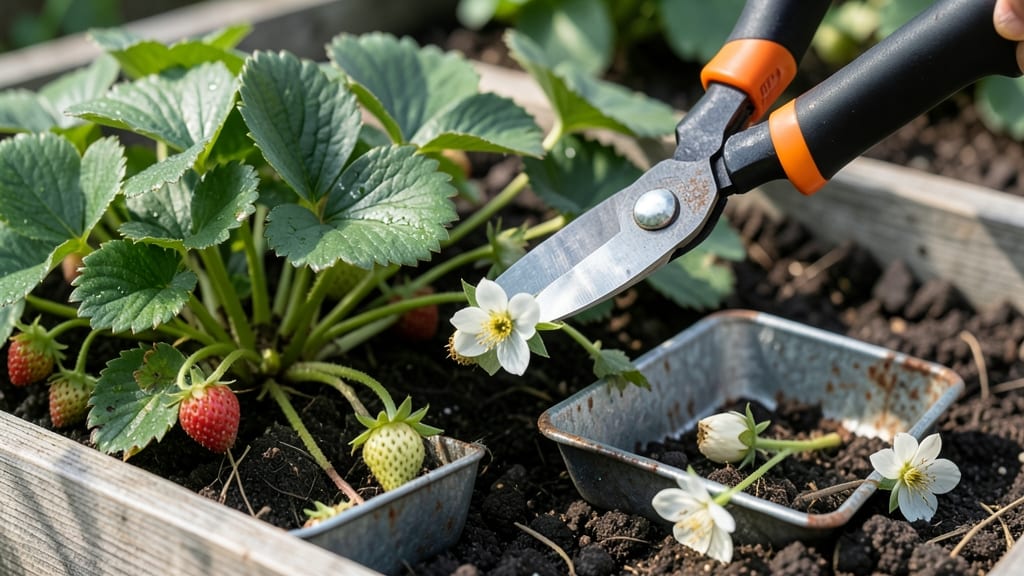
Yes, cutting the flowers off your strawberry plant in its first year redirects energy to root and leaf growth, producing stronger plants that yield more abundant berries next season. This technique is called 'chilling' and is key for maximizing future harvests.
This pruning method works by removing the plant's immediate fruiting demand, allowing it to focus on building a robust root system and larger leaves. 🌱 The extra energy stored in the roots translates directly to bigger, healthier plants—and eventually, more berries.
Many gardeners notice a 30-50% increase in fruit production in the second year after implementing this technique. The best time to prune is in early spring, just as new growth begins, ensuring the plant has plenty of time to recover before summer's heat sets in.
What's interesting is how this practice mimics natural cycles—wild strawberries often skip fruiting in their first year to prioritize survival. By mimicking this behavior, you're essentially giving your plants a head start for their most productive years.
Just be sure to remove any runners (the long stems that produce new plants) as well, since they also drain energy from the mother plant.
💡 In This Article
- How Pruning Strawberry Flowers Boosts Next Year’s Harvest
- Step-by-Step Guide to Pruning Strawberry Flowers for Optimal Growth
How pruning strawberry flowers boosts next year’s harvest
The key to understanding this technique lies in how strawberry plants allocate their energy. When you remove the flowers in the first year, you're essentially telling the plant to pause its reproductive cycle and focus instead on vegetative growth—roots, leaves, and stems.
This shift happens because strawberries, like many perennials, prioritize survival and future reproduction over immediate fruiting. The plant’s hormonal balance shifts toward producing more auxin, a growth hormone that promotes cell elongation and root development.
Here’s what’s actually happening at the biological level: By removing the flowers, you eliminate the plant’s need to produce fruit, which requires significant energy resources. Instead, the plant directs its photosynthetic energy (generated by those large, vibrant leaves) toward building a stronger root system and thicker crown.
Studies show that plants with pruned flowers can increase their root biomass by up to 40% in a single season. This stronger foundation translates directly to larger, healthier plants—and ultimately, more abundant berries in the following year.
The process also involves a clever trick of nature: strawberries store excess energy as starch in their roots and crown during the growing season. When you prune the flowers, the plant has more time to convert sunlight into these energy reserves.
Think of it like saving money for a rainy day—your strawberry plant is building up its "bank account" of nutrients to fuel its most productive years. 🌱 The result?
Plants that can support 30-50% more fruit in their second and third years compared to those that were allowed to fruit in their first year.
There’s a sensory aspect to this too: pruned strawberry plants often develop larger, deeper green leaves with a waxier texture, indicating stronger photosynthesis. You’ll also notice thicker stems that feel firmer to the touch, a sign of robust structural support.
The contrast between a pruned plant and one that fruited in its first year is striking—pruned plants look almost "bushier" and more vigorous by late summer, while over-fruited plants may appear leggy and exhausted.
One critical factor is timing: pruning too late in the season can leave the plant with insufficient time to recover before winter. Ideally, you should remove flowers in early spring, just as new growth begins. This gives the plant 6-8 weeks of active growth before summer’s heat stress sets in.
The hormonal shift triggered by pruning also helps the plant better withstand environmental stressors, like drought or temperature fluctuations, which can otherwise weaken the plant and reduce future yields.
What many gardeners don’t realize is that this technique also improves fruit quality in subsequent years. Stronger plants produce berries with better sugar content and firmer texture, thanks to the increased energy reserves.
The flavor profile becomes more concentrated, with a balance of sweetness and acidity that’s often more pronounced in second-year plants. It’s like the difference between a young vine’s grapes and those from a mature, well-established plant—pruning sets the stage for that kind of quality.
For example, if you prune a June-bearing strawberry plant in its first spring, you might end up with a plant that produces 2-3 times more berries in its second year, each weighing 10-15% more than average.
The trade-off—waiting a year for the harvest—is well worth it for the long-term productivity gains. 💫