
Planting
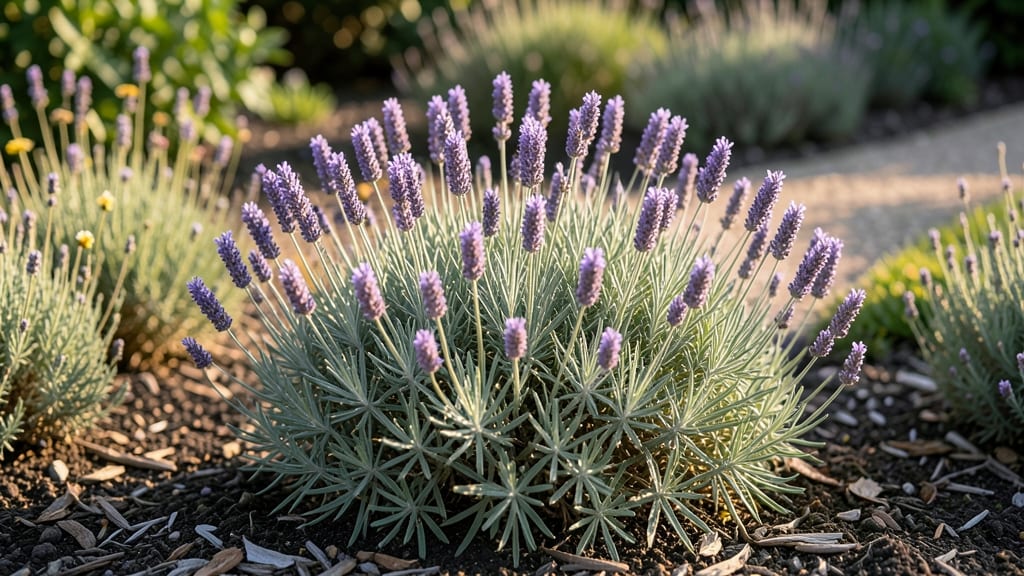
Spanish lavender grows best in USDA hardiness zones 7 through 10, where it handles winter temperatures down to 0°F (-18°C) but may suffer in extended freezes. Proper winter care can push its cold tolerance slightly in marginal zones.
Spanish lavender's hardiness hinges on its Mediterranean roots, which evolved to thrive in mild winters and hot summers. 🌡️ While it can survive brief dips to 0°F (-18°C), prolonged exposure to sub-zero temperatures often leads to dieback or stunted growth.
The key difference between zones 7-10 lies in how consistently the plant receives adequate winter chill without extreme cold snaps—something gardeners in zone 6 must actively manage through protective measures.
What makes this plant particularly interesting is its ability to rebound from cold damage when given proper care. Unlike many perennials, Spanish lavender often regrows from its root crown even after severe winter injury, making it a resilient choice for gardeners willing to invest in winter protection.
The trade-off? Without these precautions, it may struggle to establish strong roots in colder climates, affecting its long-term vigor.
💡 In This Article
- USDA Zone Limits for Spanish Lavender Growth
- Winter Care Strategies for Zone 6 and Colder Gardens
USDA zone limits for Spanish lavender growth
Spanish lavender's hardiness stems from its Mediterranean heritage, where summers reach 95-105°F (35-40°C) and winters rarely drop below 32°F (0°C). The USDA zones 7-10 reflect this ideal climate range, where the plant experiences 2,000-3,000 winter chill hours (32-45°F/0-7°C) without prolonged extreme cold.
Zone 7's average winter low of 0-10°F (-18 to -12°C) marks the upper limit of its natural tolerance, while zone 10's mild winters (25-35°F/-4 to 2°C) provide perfect conditions for robust growth.
The critical threshold occurs when temperatures remain below 20°F (-7°C) for more than 24 hours—this triggers cellular damage in the woody stems and buds. Spanish lavender's leaves, which contain essential oils, are particularly frost-sensitive and will blacken at 28°F (-2°C).
What's fascinating is how microclimates within zones can shift these boundaries: a south-facing slope in zone 6 might reach 15°F (-9°C) while a sheltered garden bed stays above 25°F (-4°C), creating localized growing pockets.
Soil drainage plays an equally vital role in cold survival. Spanish lavender's roots require well-draining soil to prevent rot during winter thaws—poor drainage combined with freezing temperatures creates a deadly combination.
In zone 8, where winters average 10-20°F (-12 to -7°C), plants often survive because the soil remains frozen but dry, unlike heavier clay soils that retain moisture and promote rot.
This is why gardeners in marginal zones must amend soil with gravel or sand to mimic its native Mediterranean conditions.
Wind exposure compounds cold stress by accelerating moisture loss from leaves. A 10 mph (16 km/h) wind can drop the effective temperature by 10-15°F (-12 to -9°C), turning a survivable 25°F (-4°C) night into a lethal 10°F (-12°C) experience.
This explains why Spanish lavender often thrives in coastal zone 9 gardens (mild winters with 30-40°F/-1 to 4°C lows) but struggles in exposed inland zone 7 locations where wind chills push temperatures 10°F lower than official records.
What most gardeners overlook is how Spanish lavender's growth cycle affects its cold hardiness. Plants established for 3+ years develop thicker, more insulating stems that better withstand winter temperatures.
Young plants (1 year old) with 1/4-inch (6mm) stems are far more vulnerable than mature specimens with 1/2-inch (12mm) diameter stems, which can survive 5°F lower temperatures.
This biological adaptation explains why many zone 7 gardeners report success after giving their lavender 2 full growing seasons to mature.
For visual reference, compare Spanish lavender's zone range to its close relative, English lavender (Lavandula angustifolia), which thrives in zones 5-9 thanks to its 20% thicker stems and higher wax content on leaves.
While both share similar fragrance profiles, Spanish lavender's delicate structure makes it more sensitive to cold—like comparing a paper lantern to a thick ceramic vase in a winter storm.