
Planting
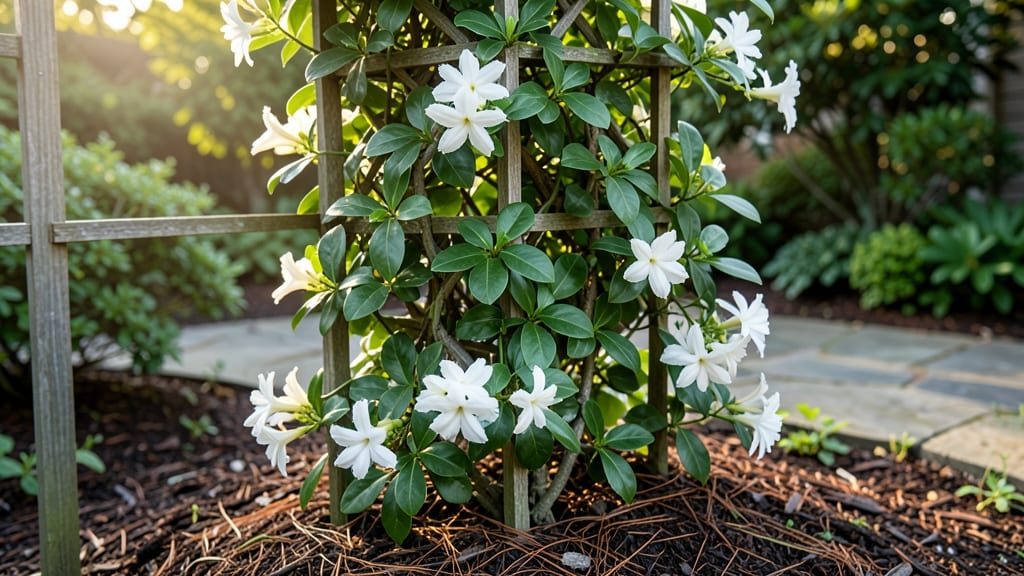
Star jasmine plants thrive best in USDA zones 7 through 11, where they handle mild winters but need shelter from frost. Their cold tolerance spans 10°F to 40°F (-12°C to 4°C), making them perfect for warm coastal climates and frost-free regions.
This evergreen vine loves warm climates but can adapt with the right care. 🌿 In zones 7-9, it often survives winters unprotected, though young plants benefit from mulch or frost blankets. Beyond zone 7, container growing with winter indoor storage becomes essential—just keep the soil slightly moist and avoid drafts.
I've seen star jasmine thrive in Southern California's coastal fog zones and even urban heat islands where summer temps stay mild.
What sets star jasmine apart is its ability to handle seasonal changes differently than annuals. The woody vines can endure brief cold snaps better than their herbaceous growth, but roots still need consistent moisture.
For gardeners in marginal zones, a microclimate near south-facing walls or under eaves can push the plant's limits by adding 2-3°F of protection.
💡 In This Article
- Understanding Star Jasmine’s Cold Tolerance and Climate Needs
- Best Regions and Microclimates for Growing Star Jasmine Outdoors
Understanding star jasmine’s cold tolerance and climate needs
Star jasmine's cold tolerance stems from its semi-woody vines and evergreen foliage, which store moisture and nutrients differently than annual plants. The plant's growth habit shifts seasonally: new shoots emerge in spring from dormant buds on mature wood, while roots maintain a shallow but extensive network just below the surface.
This structure allows it to absorb warmth from the soil during cool nights, a trait common in Mediterranean climates where it naturally thrives. 🌱 The key difference from tropical vines is its ability to undergo partial dormancy—leaves may yellow but the woody framework remains viable down to 10°F (-12°C), unlike herbaceous plants that die back completely.
Temperature extremes beyond 40°F (4°C) trigger stress responses in star jasmine. Prolonged exposure to freezing temperatures causes cellular damage through ice crystal formation in leaf tissues, while root systems suffer from moisture loss in frozen soil.
What's fascinating is how the plant's waxy leaf coating helps prevent water loss during mild cold snaps, similar to how olive trees survive Mediterranean winters.
However, when temperatures drop below 20°F (-7°C) for more than 4-6 hours, even mature plants begin to decline—this is why zone 7 represents the practical northern limit for outdoor planting.
Seasonal dormancy plays a crucial role in star jasmine's survival strategy. Unlike deciduous plants that completely shed foliage, star jasmine enters a semi-dormant state where growth slows but photosynthesis continues at reduced rates.
This allows it to maintain energy reserves through winter, though the process requires consistent soil moisture levels above 30% to prevent desiccation.
Gardeners in marginal zones often see the most success by combining winter watering with protective measures like mulch—3-4 inches of organic mulch can raise soil temperatures by 2-3°F, making a significant difference during cold snaps.
What most gardeners don't realize is how humidity levels interact with cold tolerance. Star jasmine actually handles dry conditions better than many tropical plants, but winter humidity below 40% accelerates moisture loss from leaves.
This is why coastal regions with moderate winters (like zone 9b in Southern California) provide ideal conditions—the combination of mild temperatures and consistent marine layer humidity creates near-perfect growing conditions. In contrast, continental climates with wide temperature swings pose greater challenges, even within the same USDA zone.
For those pushing the limits in zone 6, the secret lies in microclimate selection. Planting near south-facing walls can add 5-10°F of protection during winter, while container growing allows for winter indoor storage where temperatures stay above 45°F (7°C).
The plant's ability to recover from pruning means even damaged vines can regrow from the base when spring arrives—this resilience makes it more adaptable than many gardeners assume. 🌿 The trade-off is slower initial growth in cooler climates, as the plant focuses energy on establishing a robust root system before producing flowers.
Understanding these mechanisms helps explain why star jasmine thrives in zone 10 but struggles in zone 5—it's not just about the average winter low, but the cumulative stress from temperature fluctuations, soil conditions, and seasonal transitions.
The plant's natural range in East Asia includes regions with similar climate patterns to Southern California and Florida, where warm winters and mild summers create optimal conditions for both growth and flowering.