
Planting
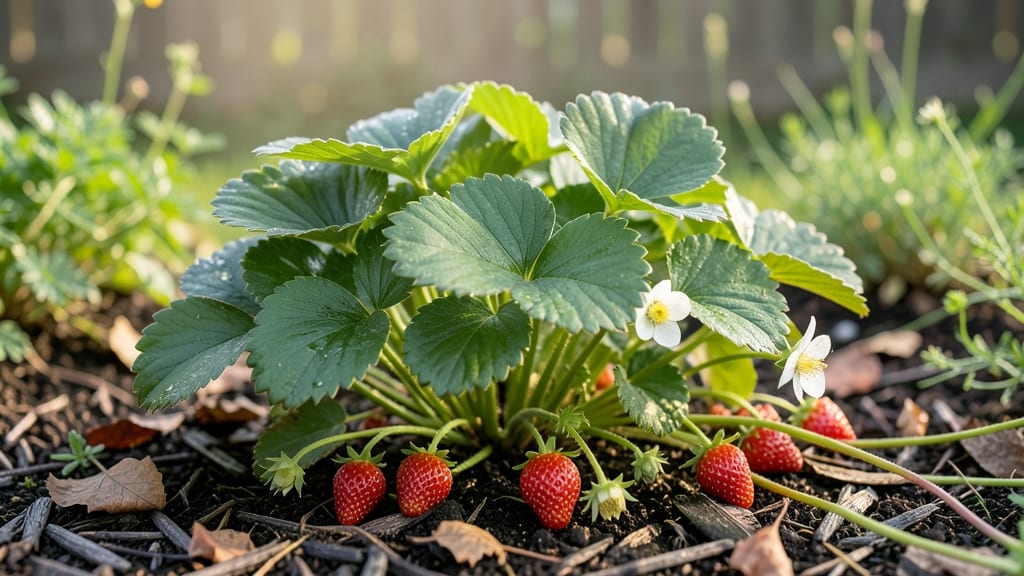
A strawberry-looking plant typically features trifoliate leaves with serrated edges, elongated runners (stolons), and small white flowers that develop into red berries. Common varieties include wild strawberries and duchesa strawberries, though some look-alikes like mock strawberries or false strawberries differ in fruit texture and growth habits.
A strawberry-like plant's most distinctive traits are its three-lobed leaves and horizontal runners that spread across the soil. 🌱 These stolons help the plant reproduce, creating new plants at each node, while the flowers bloom in clusters and transform into the familiar red berries.
The key difference between true strawberries and their mimics lies in the fruit's internal structure—strawberries have tiny achenes (seeds) on the outside, while impostors like mock strawberries have smooth, fleshy fruits.
If you're growing these plants, focus on well-draining soil and full sun exposure for best results. Strawberries thrive in cooler climates but can adapt to warmer regions with proper care.
Removing runners during the first year helps the plant establish a strong root system before allowing them to spread naturally. 🌿 The flavor of true strawberries develops fully when harvested just before ripening, so timing is everything for that sweet, juicy taste we all love.
💡 In This Article
- Identifying True Strawberry Plants by Leaf and Runner Features
- Caring for Strawberry-Like Plants: Growth and Harvest Tips
Identifying true strawberry plants by leaf and runner features
The trifoliate leaves of a genuine strawberry plant are its most reliable identifier. Each leaf consists of three oval-shaped leaflets with jagged, serrated edges that create a saw-tooth pattern along the perimeter.
These leaflets typically measure between 1-3 inches long and ½-1½ inches wide, with the middle leaflet slightly larger than the two side leaflets. The texture is slightly waxy and leathery, providing natural protection against pests and moisture loss. 🌿
Runner length and structure offer another key distinction. True strawberry runners (stolons) grow horizontally along the soil surface and typically reach 6-12 inches in length before rooting at the nodes.
What sets them apart from look-alikes is their hairy appearance—the runners have fine, downy hairs along their stems, while mock strawberry runners appear smoother. The rooting nodes form at 45-90 degree angles from the main runner, creating a distinctive zigzag pattern as they spread outward.
The flower structure provides a third layer of identification. Genuine strawberry flowers bloom in clusters of 3-5 white, five-petaled blooms that emerge from the leaf axils. Each flower has 20-30 stamens (the yellow pollen-producing parts) that create a dense center.
After pollination, these flowers develop into the iconic red berries, which are actually aggregate fruits composed of hundreds of tiny achenes (seeds) fused together on the outside. This external seed pattern is absent in false strawberries, which have smooth, fleshy fruits.
Root system differences reveal the final clue. When you gently dig up a strawberry plant, you'll find a shallow, fibrous root system that spreads horizontally. The roots typically grow to 6-12 inches deep but can extend much wider than they do deep.
In contrast, mock strawberry roots grow more vertically and lack the same fibrous network. This shallow root system explains why strawberries thrive in well-draining soil—they need to spread laterally to access moisture and nutrients efficiently.
Consider these visual comparisons when identifying plants:
- True Strawberry: Trifoliate leaves with serrated edges, hairy runners, white flowers with dense stamens, and red berries with external achenes
- Mock Strawberry: Single, smooth-edged leaves, smooth runners, white flowers with fewer stamens, and yellow-orange berries with no external seeds
- False Strawberry: Whorled leaves (more than three leaflets), smooth runners, and small red fruits that grow directly from the stem without flowers
For the most accurate identification, examine all three features together—the combination of leaf shape, runner characteristics, and flower structure creates a unique fingerprint that distinguishes true strawberries from their imposters. This multi-factor approach ensures you're growing the plant that will produce those sweet, juicy berries we all love. 🍓