
Planting
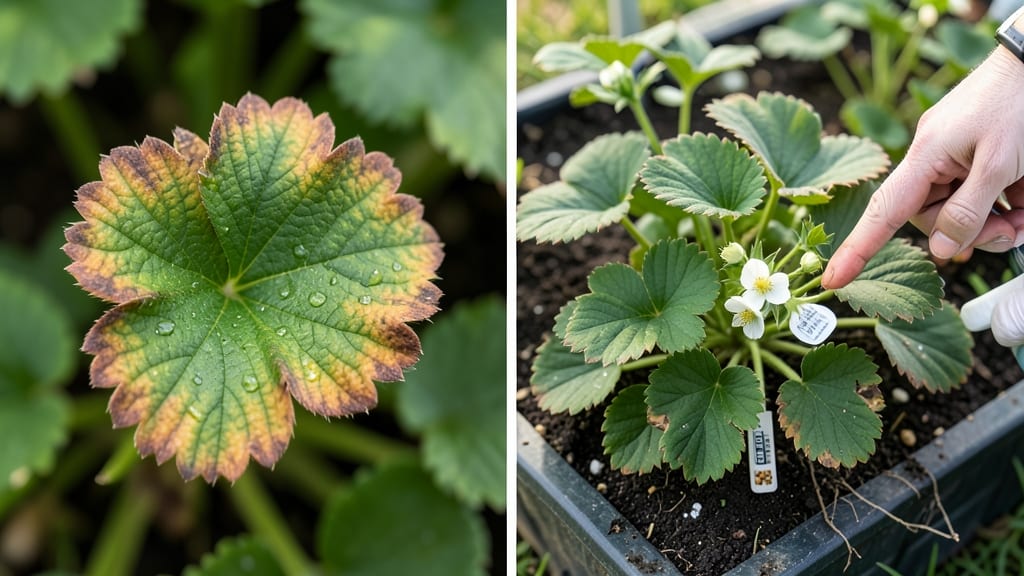
Strawberry plant leaves with brown edges are like a silent scream for help from your berry patch. 🌱 I’ve seen this happen after a sudden heatwave, when soil moisture drops too fast or when winter winds dry out the foliage overnight.
The good news? It’s almost always fixable with a few targeted adjustments.
Most often, brown edges mean your plants are thirsty—or drowning. Too little water causes crispy edges, while soggy soil leads to yellowing and browning as roots suffocate.
Nutrient imbalances, especially low magnesium or potassium, can also trigger this stress signal. Don’t panic—strawberries bounce back faster than you’d expect when you address the root cause.
Here’s the game-changer: water deeply 1-2 times per week (depending on your climate) and mulch heavily to lock in moisture. A balanced fertilizer with extra magnesium (like Epsom salt) works wonders for recovery.
Within 7-10 days, you’ll see fresh green growth pushing out from the center of those crispy leaves.
Prevention is even simpler: keep soil consistently moist (not soggy), avoid late-season nitrogen spikes, and protect plants from harsh winds. Your strawberries will reward you with juicier berries and lusher foliage all season—no more brown-edged surprises.
Root Causes Of Leaf Damage
Understanding why your strawberry plant’s leaves develop brown edges is the first step toward reviving them. These issues often stem from environmental stress, improper care, or underlying health problems.
Below, we break down the most common culprits—each with a clear scientific explanation and actionable insights to help you diagnose the problem accurately.
When strawberry plants sit in soggy soil for too long, their roots struggle to absorb oxygen, leading to root rot (a fungal infection caused by Phytophthora or Pythium).
As roots suffocate, the plant can’t transport water and nutrients efficiently, causing leaves to develop crispy, brown edges—a classic sign of marginal scorch.
Why it happens:
- Waterlogged soil disrupts cellular respiration in roots, triggering oxidative stress.
- Excess moisture encourages fungal growth, clogging root tissues and blocking nutrient uptake.
- Symptoms worsen in cooler temperatures (50–65°F), where fungi thrive.
Actionable fix:
- Test your soil’s drainage by digging a 6-inch hole, filling it with water, and timing how long it takes to drain. Ideal: 30–60 minutes.
- Amend heavy clay soil with perlite, coarse sand, or compost (20–30% by volume) to improve aeration.
- Water deeply but less frequently—strawberries prefer 1–1.5 inches per week, including rainfall. Use drip irrigation to avoid wetting foliage.
Strawberry leaves are sensitive to intense sunlight, especially in hot, dry climates. When temperatures exceed 90°F (32°C), leaves may develop brown, papery edges due to desiccation (water loss) or sun scald (cell membrane damage from UV radiation).
Why it happens:
- Transpiration exceeds water absorption, causing leaf edges to dry out faster than the center.
- High light intensity generates reactive oxygen species (ROS), which damage chloroplasts and cell walls.
- Young, tender leaves are most vulnerable, as their waxy cuticle isn’t fully developed.
Actionable fix:
- Provide afternoon shade (30–50% shade cloth) during peak heat (12 PM–4 PM).
- Mulch heavily (2–3 inches of straw or wood chips) to retain soil moisture and cool roots.
- Avoid overhead watering—use soaker hoses at dawn to reduce evaporation.
Brown edges can signal mineral deficiencies, particularly potassium (K), calcium (Ca), or magnesium (Mg), which are critical for osmotic regulation and cell wall integrity. A lack of these nutrients disrupts the plant’s ability to retain water, leading to necrotic (dead) tissue along leaf margins.
| Nutrient | Role in Plant Health | Deficiency Symptoms | Quick Fix |
|---|---|---|---|
| Potassium (K) | Regulates water balance & enzyme function | Brown, curled edges (especially older leaves) | Apply potassium sulfate (1 tsp/gallon water) or banana peel tea |
| Calcium (Ca) | Strengthens cell walls & membrane stability | Brown edges with yellowing between veins (blossom end rot in fruit) | Sprinkle crushed eggshells or use lime (per package instructions) |
| Magnesium (Mg) | Central to chlorophyll production | Interveinal chlorosis (yellowing between veins) + brown edges | Use Epsom salt (1 tbsp/gallon water, spray or soil drench) |
Why it happens:
- Over-fertilizing with nitrogen (N) without balancing K or Ca creates an imbalance, starving roots of other essential minerals.
- Acidic soil (pH < 5.5) locks out calcium and magnesium, even if they’re present.
- Competition from weeds or poor root zone exploration (common in container-grown plants) limits nutrient uptake.
Actionable fix:
- Test your soil’s pH (ideal: 5.5–6.8 for strawberries). Adjust with pelletized lime (to raise pH) or sulfur (to lower it).
- Fertilize with a balanced formula (e.g., 10-10-10) every 4–6 weeks during growing season.
- Use compost tea (1:10 ratio) as a foliar spray to boost micronutrients like boron and zinc, which aid calcium absorption.
While less common than environmental factors, pests and diseases can cause brown edges by sapping sap, clogging stomata, or injecting toxins.
Common culprits include: - Spider mites (tiny arachnids that suck cell fluids, causing stippling + brown speckling). - Aphids (cluster on undersides, excrete honeydew that fosters sooty mold, darkening edges). - Fungal leaf spots (Botrytis cinerea or Ramularia) create brown, irregular patches with yellow halos.
Why it happens:
- Pests disrupt phloem transport, starving leaves of sugars and nutrients.
- Fungi block stomata (pores), preventing gas exchange and leading to oxidative damage.
- Stressed plants (from drought or poor soil) are more susceptible to infestations.
Actionable fix:
- Inspect leaves daily—look for webbing (mites), sticky residue (aphids), or fuzzy growth (mold).
- Blast pests off with a strong spray of water (10 AM–4 PM to avoid evening moisture).
- Apply neem oil (1 tsp/gallon water) or insecticidal soap (repeat every 5–7 days).
- Remove infected leaves and sterilize pruners with 70% isopropyl alcohol to prevent spread.
Newly planted strawberries or those disturbed during dividing/relocating may develop brown edges due to root trauma. When roots are pruned or handled roughly, the plant can’t replenish lost cells quickly, leading to marginal necrosis.
Why it happens:
- Root hairs (absorptive cells) are severed, reducing water uptake by 30–50% for weeks.
- Ethylene gas (released during stress) accelerates cell death in leaves.
- Cold soil (<50°F) slows root regrowth, worsening symptoms.
Actionable fix:
- Water deeply for 10–14 days post-transplant to encourage root recovery.
- Avoid fertilizing for 2–3 weeks—let roots establish first.
- Use a rooting hormone (like mycorrhizal fungi) when dividing to speed regrowth.
- Mulch heavily to insulate roots and prevent temperature fluctuations.
Revive Your Strawberries Now
Brown edges on strawberry leaves don’t have to mean the end of your harvest—with the right care, your plants can bounce back! Below are targeted fixes for the most common causes, plus prevention tips to keep your strawberries thriving. Let’s get your plants back to vibrant green in no time.
If your strawberry leaves have brown, crispy edges but the soil feels soggy, root rot or waterlogging is likely the culprit. Here’s how to rescue your plants:
🔥 Step 1: Check the Soil
- Gently dig around the base of the plant (1–2 inches deep). If the soil smells musty or feels compacted, drainage is the issue.
- Pro Tip: 💡 Stick your finger in the soil—if water drips out immediately, your plants are drowning.
🍳 Step 2: Improve Drainage
- For containers: Add a layer of perlite or coarse sand to the bottom before repotting, or drill drainage holes if missing.
- For garden beds: Amend the soil with compost or organic matter to loosen it up. Avoid heavy clay soils.
- For soggy spots: Raise the plant slightly by mounding soil or using a small platform (like a brick or pot shard).
👨🍳 Step 3: Adjust Watering
- Water deeply but less often—strawberries prefer 1–1.5 inches of water per week, including rainfall.
- Water at the base of the plant (not overhead) to prevent fungal issues.
- Morning watering is best—it gives leaves time to dry before evening.
⏰ Prevention for Next Time
- Use well-draining pots with saucers (empty excess water after 30 minutes).
- Plant strawberries in raised beds if your soil drains poorly.
- Mulch around plants (with straw or shredded leaves) to retain moisture without waterlogging.
If brown edges appear after hot, dry days—especially on young leaves or those near the soil—heat stress or sun scorch may be to blame.
🌡️ Step 1: Provide Shade
- Install light shade cloth (30–50%) over plants during peak sun (11 AM–3 PM).
- Use drip irrigation to keep leaves cool and hydrated.
💦 Step 2: Boost Hydration
- Water early in the morning to reduce evaporation.
- Mist leaves lightly on extremely hot days (but avoid soggy soil).
🌱 Step 3: Protect Young Plants
- Avoid transplanting in midday heat—do it in early morning or late afternoon.
- Use row covers for young strawberries until they’re established.
✨ Prevention Tips
- Choose heat-tolerant varieties like ‘Seascape’ or ‘Chandler’ for hot climates.
- Space plants 18–24 inches apart for better airflow and less stress.
Brown, crinkly edges with yellowing or powdery spots? Fungal diseases like leaf spot or powdery mildew could be attacking. Here’s how to stop them:
🔪 Step 1: Prune Infected Leaves
- Remove and destroy (don’t compost!) leaves with brown spots to prevent spread.
- Use sterilized pruners (wipe with rubbing alcohol between cuts).
💪 Step 2: Treat with Fungicides
- Baking soda spray: Mix 1 tsp baking soda + 1 tsp oil + 1 tsp mild soap per quart of water. Spray undersides of leaves weekly.
- Neem oil or copper fungicide: Apply every 7–10 days for prevention.
🌿 Step 3: Improve Airflow
- Space plants wider (18–24 inches apart).
- Thin out mulch if it’s blocking airflow.
- Avoid overhead watering—use drip irrigation instead.
🎯 Prevention for Long-Term Health
- Rotate crops—don’t plant strawberries in the same spot yearly.
- Water in the morning so leaves dry quickly.
- Choose disease-resistant varieties like ‘Fort Laramie’ or ‘Jewel’.
If brown edges appear on older leaves first (with yellowing between veins), your strawberries may be nutrient-deficient, especially in calcium, magnesium, or potassium.
📊 Step 1: Test Your Soil
- Use a DIY soil test kit (available at garden centers) or send a sample to a local extension office.
- Quick fix: If soil is alkaline (pH > 7), add sulfur or peat moss to lower pH.
💪 Step 2: Fertilize Smartly
- For calcium deficiency (blossom end rot-like symptoms):
- Sprinkle
- Apply
- Use a
🍎 Step 3: Boost Organic Matter
- Mix compost or well-rotted manure into the soil before planting.
- Top-dress with compost in early spring for a slow-release nutrient boost.
🌱 Prevention Tips
- Fertilize in stages: Apply half the recommended dose in early spring, then again after fruiting.
- Avoid over-fertilizing—too much salt can burn roots.
- Mulch with compost to slowly release nutrients.
With these fixes, your strawberry leaves should green up within 1–2 weeks. Monitor your plants closely, and don’t hesitate to adjust care as needed. Happy growing! 🌱🍓
Frequently asked questions
Why do strawberry leaves get brown edges first on older leaves?
Older leaves develop brown edges first because they act as nutrient sinks, absorbing minerals from younger growth. When there’s a potassium or magnesium deficiency, older leaves show symptoms first. This is your plant’s way of protecting new leaves that hold more growth potential. Try a foliar spray with Epsom salt or banana peel tea to replenish these nutrients.
Can I save my strawberry plant if most leaves have brown edges?
Yes! Even if many leaves are affected, strawberries are resilient. Focus on fixing the root cause—whether it’s watering issues, nutrient imbalances, or pests. Prune severely damaged leaves to redirect energy to healthy growth. With proper care, new leaves will emerge within 1-2 weeks. Just avoid fertilizing until you see fresh green growth.
Is it okay to water strawberries every day to prevent brown edges?
No—daily watering can actually worsen the problem by promoting root rot or fungal diseases. Strawberries prefer 1-1.5 inches of water per week, delivered deeply at the base. Water in the morning to allow leaves to dry before evening. Use drip irrigation or soaker hoses to keep foliage dry and soil consistently moist without waterlogging.
Why do my strawberry leaves get brown edges in winter?
Winter brown edges often result from cold stress, low humidity, or freeze-thaw cycles damaging cell walls. Protect plants with 2-3 inches of mulch and consider row covers in freezing temperatures. Everbearing varieties are more cold-tolerant than June-bearing types. If leaves are crispy but still attached, they’ll likely regrow in spring.
How do I tell if brown edges are from pests vs. environmental stress?
Check the undersides of leaves for tiny webs (mites), sticky residue (aphids), or fuzzy growth (mold). Environmental stress causes uniform browning along edges without visible pests. For pests, blast leaves with water first, then apply neem oil. If no pests are present, focus on watering, shade, or nutrient adjustments instead.