
Planting
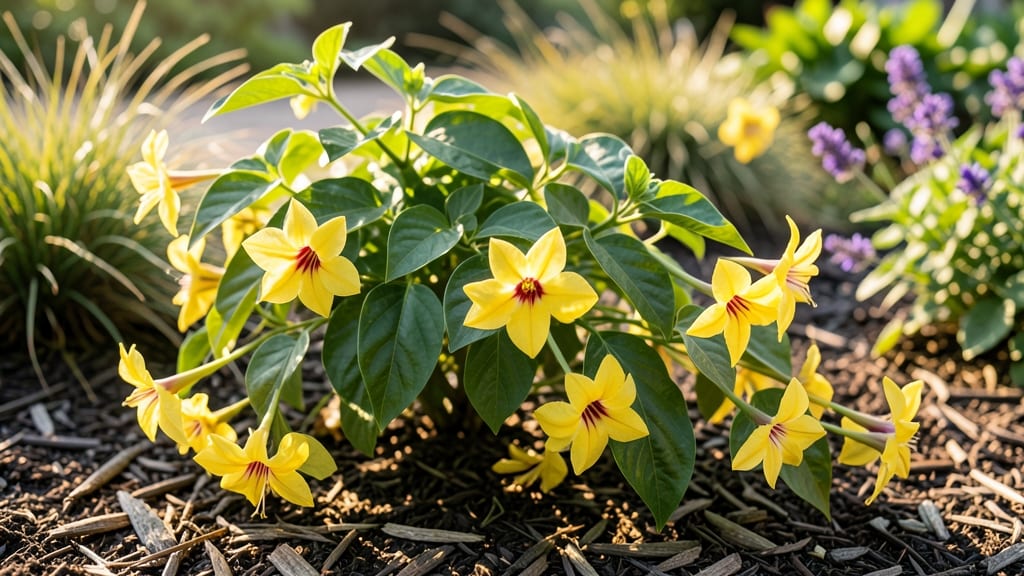
Waking up to clusters of bright yellow star-shaped blooms from the Thunbergia lemon star plant is like having sunshine spilled across your balcony every morning. 🌟 This tropical vine thrives in warm climates but can also be grown as an annual in cooler zones—just give it the right conditions, and it’ll reward you with months of nonstop blooms from summer through fall.
Start with well-draining potting mix in a container at least 10 inches deep, and place it where it gets full sun to partial shade—morning sun and afternoon shade works best in hotter regions.
Water when the top inch of soil feels dry, but avoid soggy roots, which can rot the plant. A trellis, arbor, or sturdy stake will give its vines something to climb, and pruning spent blooms encourages even more flowers.
What you’ll love most is how effortlessly it spreads—just pinch back leggy growth in early summer to keep it bushy. With the right care, your Lemon Star will become the showstopper of your garden, drawing hummingbirds and butterflies to its nectar-rich blooms.
The best part? It’s beginner-friendly and forgiving if you forget a watering day or two.
For cooler climates, treat it as an annual and bring it indoors before frost, or overwinter it in a bright, cool spot. If you live in USDA zones 10-11, it might even return year after year with proper winter protection. Here’s how to keep it thriving all season long!
📚 In This Guide
- What you need
- Instructions
- Tips and common mistakes
- Wrapping up and next steps
What you need
- ● Thunbergia Lemon Star Seeds or Seedlings: 1–3 seeds (if starting from seed) or 1–2 healthy seedlings (for faster growth).
- ● Pro tip: Seeds need light to germinate—don’t bury them deeply!
- ● Well-Draining Potting Mix: 1–2 gallons of light, airy soil (e.g., cactus/succulent mix or regular potting soil amended with perlite/vermiculite).
- ○ Optional: Add a handful of orchid bark or coconut coir for extra aeration.
- ● Container or Garden Space: For containers: 5–7 gallon pot with drainage holes (or larger if growing multiple plants).
- ● For gardens: A sunny spot with a trellis, fence, or pergola (vines can reach 10–15 feet!).
- ● Basic Gardening Tools: Trowel or small shovel
- ○ Gloves (optional but handy!)
- ● Watering can or hose with a gentle spray nozzle
- ● Support Structures (if needed): Trellis, bamboo stakes, or a sturdy mesh fence for climbing.
- ● Fun fact: This vine twines clockwise—install supports early!
- ○ Fertilizer (Optional but Helpful): Balanced 10-10-10 fertilizer or a low-nitrogen, high-phosphorus blend (e.g., 5-10-10) for blooms.
- ● Apply every 4–6 weeks during growing season.
- ○ Mulch (Optional): 2–3 inches of organic mulch (e.g., shredded bark) to retain moisture and suppress weeds.
- ● Climate: Thrives in USDA Zones 10–11 (outdoors). In colder zones, grow as an annual or overwinter indoors.
- ● Sunlight: Full sun (6+ hours/day) for best blooms. Partial shade is tolerable but may reduce flowers.
- ● Watering: Keep soil evenly moist but not soggy. Drought-tolerant once established!
How to grow and care for Thunbergia Lemon Star climbing vine
This sun-loving beauty thrives with the right balance of warmth, support, and patience—here's how to coax those star-shaped blooms.
🌱 Step 1: Choose the Right Location and Prepare the Soil
Thunbergia Lemon Star needs full sun—at least 6-8 hours daily—to produce its vibrant blooms. A south-facing window or outdoor spot with afternoon sun works best. I always test the location first by placing a seedling there for a day; if it wilts or looks stressed, move it to a sunnier spot.
Use well-draining soil with a slightly acidic to neutral pH (around 6.0-7.0). If planting outdoors, amend heavy clay soil with 2-3 inches of compost or a 50/50 mix of garden soil and perlite. Lemon Star hates soggy roots, so raised beds or containers with drainage holes are ideal for containers.
🪴 Step 2: Plant Seeds or Transplants at the Right Time
Start seeds indoors 8-10 weeks before your last frost date, as Lemon Star is sensitive to cold. Plant seeds ¼ inch deep in small pots filled with seed-starting mix. Keep the soil consistently moist (not soggy) and place the pots in a warm spot (70-75°F) until germination, which takes 10-20 days.
For faster results, buy established plants from a nursery in spring after all frost risk has passed. Transplant outdoors only after the soil has warmed to at least 60°F. Bury the roots slightly deeper than they were in the pot—this encourages stronger growth. Water deeply right after planting to settle the soil around the roots.
☀️ Step 3: Provide Support and Encourage Climbing
Lemon Star is a vigorous climber and needs a sturdy trellis, arbor, or fence to grow on. Install support before planting—I use a 6-foot tall metal trellis for mine, buried 1 foot deep in the ground for stability. The vines will twine around the structure naturally, but you can gently guide them with soft ties if needed.
Pinch back the tips of young plants to encourage bushier growth and more blooms. I do this when the vines reach 6 inches tall, snipping just above a set of leaves. This might seem counterintuitive, but it triggers the plant to produce more side shoots, leading to a fuller, more productive vine.
💧 Step 4: Water and Feed for Continuous Blooms
Water Lemon Star when the top 1-2 inches of soil feel dry. This plant loves moisture but despises soggy roots, so always water at the base and avoid wetting the leaves to prevent fungal issues. In containers, you may need to water daily during hot, dry spells—just check the soil moisture first.
Feed with a balanced liquid fertilizer (10-10-10) every 4-6 weeks during the growing season. I switch to a low-phosphorus fertilizer (5-10-10) when buds form to promote more flowers instead of foliage. Stop fertilizing in late summer to allow the plant to prepare for dormancy.
✂️ Step 5: Prune and Overwinter for Next Year’s Growth
Deadhead spent blooms regularly to encourage more flowers. I use clean pruning shears to snip just above a leaf node, which also prevents the plant from seeding itself aggressively. Prune back leggy or overgrown vines in early spring to shape the plant and remove any dead or diseased growth.
Lemon Star is tender and dies back in cold climates. In fall, cut the vines back to 6 inches tall and dig up container plants or mulch heavily around in-ground plants. Bring potted plants indoors to a cool, bright spot (50-60°F) for the winter. Resume care in spring when you see new growth.
Tips & tricks for thriving Thunbergia Lemon Star vines
Here's what nobody tells you about keeping this sun-loving vine happy and blooming year after year.
Sunlight Secret: Those 6-8 hours of sunlight are non-negotiable, but here's the thing—morning sun is more important than afternoon. I've found that vines in full morning sun with afternoon shade produce more blooms and handle heat better. If you're growing in containers, rotate them weekly so all sides get equal light exposure. This prevents lopsided growth and ensures even blooming.
Soil Test Trick: Before planting, do a simple pH test on your soil—Lemon Star thrives in that 6.0-7.0 range. If your soil is too alkaline, mix in 1-2 tablespoons of sulfur per square foot 2-3 months before planting. I've seen plants struggle in heavy clay soil until I amended it with that 50/50 mix of garden soil and perlite—it makes all the difference for drainage.
Germination Hack: When starting seeds indoors, place the pots on a heating mat set to 75°F—this mimics tropical conditions and speeds up germination from 10-20 days to as little as 7 days. I cover my seed trays with plastic wrap to maintain humidity, but remove it as soon as sprouts appear to prevent damping off. Keep the soil consistently moist but never soggy—this is where most seed-starting failures happen.
Support System: That 6-foot trellis I mentioned? Bury it deeper than you think—1 foot deep gives maximum stability, especially in windy conditions. For extra security, tie the base to stakes driven into the ground. And here's a pro move: Install a secondary support wire about halfway up the trellis. This helps distribute the vine's weight and prevents the main structure from bending under the weight of flowers.
Pro Tips for Thunbergia Lemon Star Plant
- Here's what nobody tells you about keeping this sun-loving vine happy and blooming year after year.
- Sunlight Secret: Those 6-8 hours of sunlight are non-negotiable, but here's the thing—morning sun is more important t...
- Soil Test Trick: Before planting, do a simple pH test on your soil—Lemon Star thrives in that 6.0-7.0 range. If your ...
Frequently asked questions
Got questions about your Thunbergia Lemon Star plant? You’re not alone!
Here are answers to the most common queries—from care tips to troubleshooting—so you can keep those vibrant star-shaped blooms thriving.
How fast does Thunbergia Lemon Star grow, and how tall can it get?
The Thunbergia Lemon Star is a fast grower, often climbing 10–20 feet per season with proper support (like a trellis or fence). In ideal conditions, it can reach 20–30 feet with trailing vines. Prune regularly to manage growth and encourage bushier blooms!
When is the best time to plant Thunbergia Lemon Star?
Plant after the last frost when soil temperatures are at least 60°F (15°C). In warmer climates (zones 9–11), you can plant in early spring. If growing as an annual, start seeds indoors 8–10 weeks before the last frost for a head start.
How do I keep my Thunbergia Lemon Star blooming all season?
For continuous blooms, ensure full sun (6+ hours daily) and well-draining soil. Deadhead spent flowers regularly and fertilize lightly with a balanced, water-soluble fertilizer every 4–6 weeks. Mulch to retain moisture and prevent stress.
Why aren’t my Thunbergia Lemon Star leaves turning yellow?
Yellow leaves often signal overwatering, poor drainage, or nutrient deficiencies. Check soil moisture—it should be dry to the touch 1–2 inches down. Amend heavy soil with compost and ensure pots have drainage holes. Yellowing on older leaves may also indicate nitrogen deficiency.
Can I grow Thunbergia Lemon Star in containers, and what’s the best pot size?
Use a container at least 12–18 inches wide and deep with drainage holes. Opt for fabric or plastic pots to prevent root rot. Trail the vine over the container’s edge or train it up a small trellis. Repot every 2–3 years to refresh soil.
Is Thunbergia Lemon Star frost-hardy, or do I need to protect it?
This tropical vine is not frost-tolerant—even a light freeze will kill it. In colder climates, grow it as an annual or bring potted plants indoors before temperatures drop below 40°F (4°C). In zones 9–11, mulch heavily to protect roots.
Wrapping up and next steps
The Thunbergia Lemon Star is a true gem for gardeners seeking vibrant, low-maintenance beauty! With its bright yellow star-shaped blooms and easy-care nature, it’s perfect for adding a pop of color to trellises, containers, or hanging baskets.
Whether you’re a seasoned plant parent or just starting out, this climbing vine promises effortless elegance and a burst of sunshine to any space.
Ready to bring home your own? Start by gathering your supplies—then pick a sunny spot and watch your garden transform! 🌿✨ Check out our full guide to get planting today.