
Planting
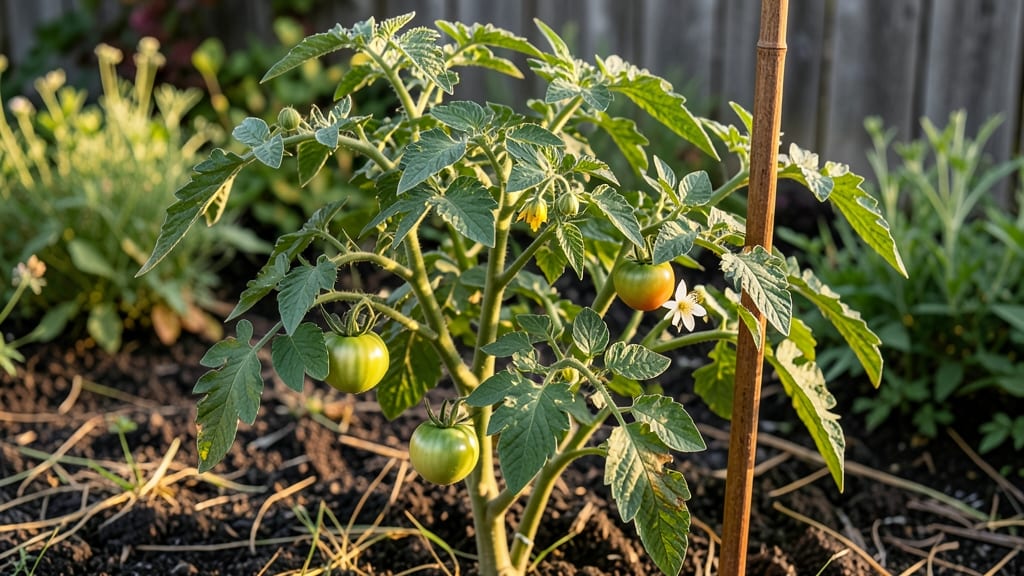
Your tomato plant leaves pointing up? That upward curl is a classic sign your plants are screaming for help—usually from a nutrient imbalance, viral infection, or environmental stress. 🌱 I’ve seen this happen after heavy rain, sudden heatwaves, or when plants get too much nitrogen without enough phosphorus.
The good news: most cases are fixable with the right approach, and you don’t need a degree in horticulture to turn things around.
First, check the soil—if it’s dry or waterlogged, that’s your culprit. Yellowing leaves with upward curls often mean too much nitrogen (think lush foliage but no fruit), while stunted growth with crispy edges signals phosphorus or potassium deficiency.
Viral infections like tomato leaf curl virus show up with distorted leaves and stunted stems, but they’re less common than stress-related issues. Grab a soil test kit or dig a sample to see what’s missing.
Here’s the fix: balance matters. For nutrient issues, side-dress with compost or a 5-10-10 fertilizer (that’s nitrogen-phosphorus-potassium ratio) and water deeply. If pests like aphids are hitching a ride, blast them off with soapy water or introduce ladybugs.
For viral cases, isolate the plant—there’s no cure, but you can save the rest of your garden. Within 2-3 weeks, you’ll see leaves flattening out if the cause was environmental.
Prevention is easier than cleanup: mulch to retain moisture, avoid over-fertilizing, and monitor for pests weekly. If you catch the curl early, your tomatoes can still rebound—just give them consistent care.
And if all else fails? Sometimes it’s better to pull and replant than watch a plant struggle. Your next harvest will thank you.
Root Causes Behind Upward Leaves
Understanding why your tomato plant’s leaves are pointing upward—often called "cuppping" or "leaf rolling"—starts with identifying the stress signals your plant is sending. Here’s a breakdown of the most common culprits, explained in clear, actionable terms:
When tomato plants experience intense heat or direct sunlight, their leaves may curl upward as a protective response. This is the plant’s way of reducing surface area to minimize water loss through transpiration (evaporation).
- Why it happens:
- High temperatures (>90°F/32°C) or scorching afternoon sun cause rapid moisture evaporation.
- Thin or underwatered leaves lose turgor (rigidity), leading to curling.
- Young, tender leaves are most vulnerable—they lack the waxy cuticle of mature foliage.
- Actionable fix:
- Provide afternoon shade (use shade cloth or dappled sunlight).
- Water deeply at the base (not overhead) to keep roots cool.
- Mulch heavily (straw or wood chips) to retain soil moisture and regulate temperature.
While underwatering is a common issue, overwatering can also trigger upward-pointing leaves—especially if roots are suffocating from soggy soil.
- Why it happens:
- Compacted or waterlogged soil cuts off oxygen to roots, leading to root rot and nutrient uptake failure.
- Excess moisture forces leaves to curl upward as a survival mechanism to conserve energy.
- Yellowing leaves + mushy stems often accompany this issue.
- Actionable fix:
- Test soil moisture with your finger—if the top 1–2 inches are damp, wait before watering.
- Improve drainage by amending soil with perlite, sand, or compost.
- Ensure pots have drainage holes and elevate containers to prevent water pooling.
Pests like spider mites, aphids, or whiteflies suck sap from leaves, causing them to curl, pucker, or point upward. Fungal diseases (e.g., early blight) can also trigger similar symptoms.
- Why it happens:
- Sap-sucking insects inject toxins that disrupt plant hormones (like ethylene), leading to abnormal growth.
- Fungal infections (common in humid conditions) clog stomata (leaf pores), reducing gas exchange and causing curling.
- Viral infections (spread by pests) can also deform leaves.
- Actionable fix:
- Inspect leaves for webbing, sticky residue (honeydew), or tiny bugs—spray with neem oil or insecticidal soap.
- Remove severely infected leaves and dispose of them (don’t compost).
- Improve airflow by pruning dense foliage and spacing plants properly.
Tomatoes are heavy feeders, and deficiencies—especially in potassium, nitrogen, or magnesium—can cause leaves to curl or point upward.
- Why it happens:
- Low potassium (common in sandy soils) weakens cell walls, leading to edge curling and upward leaf tips.
- Nitrogen deficiency causes yellowing between leaf veins (chlorosis) and stunted growth.
- Magnesium deficiency (often in acidic soils) leads to interveinal yellowing and distorted leaves.
- Actionable fix:
- Test soil pH (ideal: 6.0–6.8) and amend with lime (for acidity) or sulfur (for alkalinity).
- Fertilize with a balanced NPK (e.g., 10-10-10) or potassium-rich compost.
- Use Epsom salt (magnesium sulfate) for a quick fix—1 tbsp per gallon of water, applied every 2 weeks.
Strong winds or rough handling (e.g., moving pots frequently) can cause leaves to curl upward as a protective reflex.
- Why it happens:
- Mechanical damage to leaf cells triggers a stress response, causing curling.
- Transplant shock (even after repotting) can lead to temporary leaf distortion.
- Drought stress from wind increases evaporation, mimicking underwatering symptoms.
- Actionable fix:
- Stake or cage tomato plants to prevent wind damage.
- Avoid moving plants once established—transplant only when seedlings are 3–4 inches tall.
- Use windbreaks (e.g., burlap screens) in exposed garden areas.
Some tomato varieties (especially cherry tomatoes or heirlooms) naturally have cupped leaves, while others may adapt to stress by altering leaf structure.
- Why it happens:
- Breeding traits (e.g., compact growth habits) can lead to upward-pointing leaves.
- High humidity or low light may cause leaves to stretch and curl as the plant seeks more energy.
- Older leaves naturally senesce (curl upward) as they age.
- Actionable fix:
- Observe the pattern—if only new growth is affected, it may be environmental (adjust care accordingly).
- Prune older, curled leaves to redirect energy to productive growth.
- Provide consistent light (6–8 hours of sun daily) to prevent stretching.
Quick Fixes for Curling Tomato Leaves
Now that you know why your tomato plant’s leaves are pointing upward, it’s time to take action! The good news? Most of these issues are reversible with a few simple adjustments. Below, we’ve broken down practical solutions for each common cause—plus tips to keep your plants thriving long-term.
If your leaves are curling upward due to soggy roots or waterlogged soil, act now to prevent root rot.
🔥 Step 1: Check the Soil Moisture Stick your finger 1-2 inches deep into the soil. If it feels damp or mushy, your plant is getting too much water.
👨🍳 Step 2: Adjust Your Watering Routine
- Water deeply but less frequently—aim for 1-1.5 inches per week, depending on your climate.
- Water at the base (not the leaves) to avoid fungal diseases.
- Use well-draining soil—mix in perlite or compost to improve aeration.
🌱 Step 3: Improve Drainage If your pots lack drainage holes, repot your tomato into a container with drainage. For in-ground plants, consider raising beds or adding sand/gravel to heavy clay soil.
✨ Prevention Tip:
- Mulch around the base to retain moisture without over-saturating roots.
- Avoid watering at night—wet leaves in cool temperatures encourage disease.
If your leaves are curling upward due to scorching heat or intense sunlight, your plant is essentially sweating in discomfort.
🔥 Step 1: Provide Shade (Temporarily)
- Use shade cloth (30-50%) or move potted tomatoes to a slightly shaded spot for a few days.
- Avoid midday sun—if possible, relocate plants to an east-facing window or dappled sunlight area.
🍳 Step 2: Water More Frequently (But Smartly)
- Morning watering helps leaves dry quickly, reducing heat stress.
- Mist leaves lightly on very hot days (but avoid evening misting to prevent fungal growth).
🌡️ Step 3: Boost Humidity (If Needed)
- Place a tray of water near the plant or use a humidifier in dry indoor environments.
- Group plants together to create a microclimate with higher humidity.
🎯 Prevention Tip:
- Choose heat-tolerant varieties like ‘Solar Fire’ or ‘Heatmaster’ if you live in a hot climate.
- Use reflective mulch (like white gravel) to bounce back sunlight and keep roots cooler.
If tiny critters like aphids, spider mites, or whiteflies are sucking the life out of your leaves, they’ll cause curling—and fast.
🔪 Step 1: Inspect & Identify the Pests
- Check undersides of leaves with a magnifying glass.
- Common culprits:
- Aphids (tiny green/black bugs)
- Spider mites (tiny webs + speckled leaves)
- Whiteflies (tiny white moths that flutter when disturbed)
⏰ Step 2: Remove Pests Manually or Naturally
- Blast them off with a strong spray of water (early morning works best).
- Neem oil spray (mix 1 tbsp neem oil + 1 tsp mild soap + 1 quart water) – spray every 5-7 days.
- Introduce beneficial insects like ladybugs or lacewings (they eat pests naturally).
💡 Prevention Tip:
- Encourage natural predators by planting marigolds, basil, or dill nearby.
- Inspect new plants before bringing them home to avoid spreading infestations.
If your tomato leaves are curling due to lack of nitrogen, potassium, or magnesium, a quick nutrient boost can turn things around.
📊 Step 1: Test Your Soil (Optional but Helpful)
- Use a DIY soil test kit (available at garden centers) to check pH and nutrient levels.
- Ideal pH for tomatoes: 6.0–6.8
💪 Step 2: Fertilize Correctly
- For nitrogen deficiency (yellowing lower leaves):
- Use a balanced fertilizer (10-10-10) or compost tea.
- Avoid over-fertilizing—too much nitrogen = fewer flowers/fruit.
- For potassium deficiency (weak stems, curling edges):
- Apply potassium-rich fertilizer (like banana peel tea or wood ash).
- For magnesium deficiency (yellow patches between veins):
- Epsom salt soak (1 tbsp per gallon of water, applied every 2 weeks).
🥗 Step 3: Improve Soil Health Long-Term
- Add compost to the soil before planting.
- Rotate crops—don’t plant tomatoes in the same spot yearly.
- Use organic mulch (straw or grass clippings) to slowly release nutrients.
✨ Prevention Tip:
- Side-dress plants with compost halfway through the growing season for a nutrient boost.
- Avoid synthetic fertilizers if possible—they can burn roots; opt for slow-release organic options.
If your plant is severely stressed, don’t panic—pruning can help it focus energy on recovery.
🔪 Step 1: Trim Damaged Leaves
- Remove only the worst curling leaves (never more than 1/3 of the plant).
- Use clean, sharp scissors to avoid tearing.
🌿 Step 2: Encourage New Growth
- Pinch off suckers (side shoots) to redirect energy to existing leaves.
- Stake or cage your tomato to improve airflow and reduce stress.
🌱 Step 3: Monitor & Adjust
- Keep a plant journal to track watering, sunlight, and fertilizer changes.
- Watch for improvement in 5-7 days—if not, reassess the cause.
- Morning care is key—water, fertilize, and inspect plants in the early hours to prevent stress.
- Rotate pots occasionally so all sides get even sunlight.
- Harvest regularly—ripe tomatoes signal the plant to produce more!
With these fixes, your tomato leaves should flatten out and thrive in no time. 🍅✨ Happy gardening!
Frequently asked questions
Why do my tomato leaves curl upward only in the afternoon?
This is classic heat stress—your plant is protecting itself from scorching afternoon sun by reducing surface area. The leaves curl to minimize water loss through evaporation. Try providing afternoon shade with shade cloth (30-50%) or relocating potted plants to a more sheltered spot. Water deeply in the morning to help leaves stay hydrated through the heat.
Can I fix tomato leaf curl caused by pests without chemicals?
Start by blasting pests like aphids or spider mites off with a strong spray of water in the early morning. For persistent infestations, mix 1 tbsp neem oil + 1 tsp mild soap + 1 quart water and spray every 5-7 days. Introduce natural predators like ladybugs or lacewings to your garden—they'll eat the pests for you while keeping your plants safe.
How do I know if my tomato leaves curling is from too much water or not enough?
Check the soil—if it's damp 1-2 inches deep, you're overwatering (roots may be suffocating). If the top inch is bone dry, it's underwatering. For overwatered plants, improve drainage by adding perlite to soil and water only when the top inch feels dry. For underwatered plants, water deeply at the base until it runs out drainage holes.
Will my tomato plant recover if the leaves are already curled?
Yes, but faster if you act quickly! Prune only the most severely curled leaves (never more than 1/3 of the plant) to redirect energy. Address the root cause (water, heat, pests, or nutrients) and you'll typically see improvement in 5-7 days. For viral infections (like tomato leaf curl virus), unfortunately, there's no cure—but you can save other plants by isolating the infected one immediately.
Can I use Epsom salt for tomato leaf curl?
Only if the curl is caused by magnesium deficiency (look for yellow patches between leaf veins). Mix 1 tbsp Epsom salt per gallon of water and apply as a foliar spray or soil drench every 2 weeks. For other causes, Epsom salt won't help—focus on fixing water, heat, or pest issues first. Test your soil pH (ideal 6.0-6.8) to confirm nutrient deficiencies before treating.