
Plants
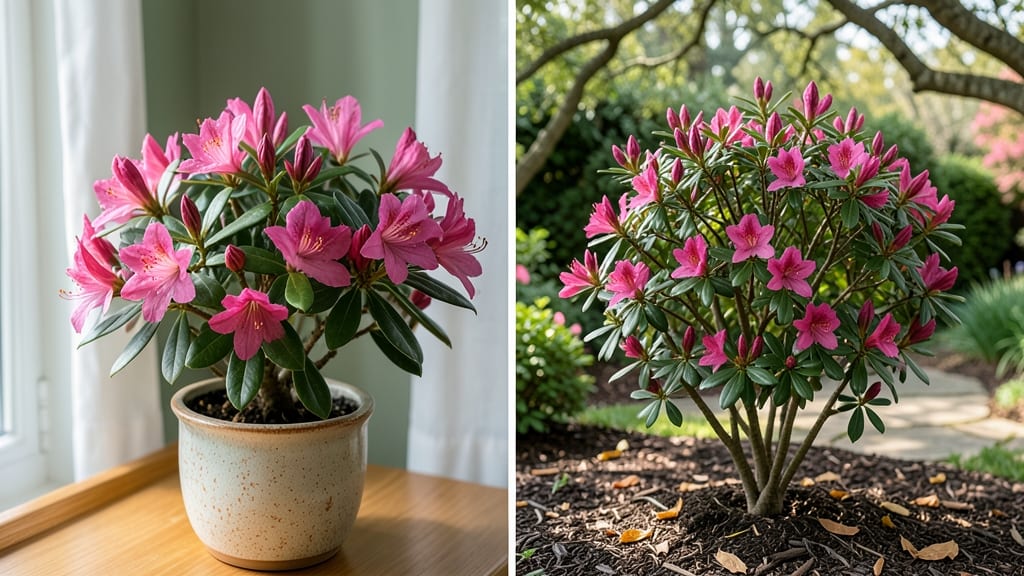
Deciding between indoor or outdoor azalea plants depends on your climate and care capacity: outdoor azaleas thrive in partial shade with acidic soil and consistent moisture, while indoor azaleas need bright, indirect light, humidity control, and regular misting. Outdoor varieties typically produce more abundant blooms but require winter protection in colder regions.
Outdoor azaleas love the natural environment they evolved in—think dappled sunlight under trees and well-draining, acidic soil (pH 4.5-6.0). 🌿 The key is mimicking their native habitat: consistent moisture without waterlogging, and protection from harsh afternoon sun.
For indoor azaleas, the challenge shifts to replicating these conditions artificially, which often means using grow lights, humidity trays, and careful watering schedules to prevent root rot. Many gardeners find that indoor azaleas bloom less dramatically but offer year-round beauty without seasonal risks.
One critical difference is temperature tolerance: outdoor azaleas can handle seasonal changes, while indoor varieties often struggle with dry winter air and inconsistent light.
I’ve seen indoor azaleas thrive with a simple setup—a south-facing window, a pebble tray with water, and occasional misting—but they demand more attention than their outdoor counterparts. The trade-off? Indoor azaleas let you enjoy their vibrant flowers even in apartments or urban settings where outdoor planting isn’t possible.
💡 In This Article
- Climate and Soil Needs for Outdoor Azaleas
- Indoor Azalea Care Tips for Year-Round Blooms
Climate and soil needs for outdoor azaleas
Outdoor azaleas flourish because they’re adapted to mimic their natural forest-floor habitat, where they receive dappled sunlight (about 3-6 hours of morning sun) and high humidity.
The ideal temperature range for active growth is 60-75°F, but they can tolerate brief dips to 20°F if acclimated—though most varieties need winter protection below 10°F. The real magic happens in the soil: azaleas demand acidic conditions (pH 4.5-6.0), which mimics their native peaty, well-draining substrates.
Without this acidity, nutrients like iron and manganese become locked away, causing yellowing leaves—a classic sign of chlorosis.
Humidity is another critical factor. In their native southeastern U.S. and Asian habitats, azaleas experience 60-80% relative humidity year-round. When grown outdoors, mulching with pine needles or oak leaves helps retain moisture and slowly acidify the soil.
The soil itself should be a mix of 50% organic matter (peat moss or composted leaves) and 50% mineral soil, amended with sulfur to maintain that crucial pH. 🌧️ What most gardeners overlook is drainage—waterlogged roots lead to root rot, so raised beds or slopes are ideal for preventing soggy conditions.
Seasonal adjustments are key for frost-sensitive varieties like Rhododendron 'Girard’s Pink'. In zones 6-8, these plants need winter mulch (6-8 inches of straw or leaves) to insulate roots. In colder zones (5 or below), container-grown azaleas should be moved to sheltered spots or wrapped in burlap.
The goal is to protect the cambium layer (the growth layer under the bark), which is especially vulnerable to freeze-thaw cycles that can split stems.
One common misconception is that azaleas need "shady" spots—while they avoid harsh afternoon sun, they still require bright, indirect light to fuel photosynthesis. A location with morning sun and afternoon shade (like under deciduous trees) is perfect.
Evergreens, however, can cast too much shade, stunting growth. For container-grown outdoor azaleas, rotate pots quarter-turns weekly to ensure even light exposure, preventing lopsided growth.
Soil testing is non-negotiable. A simple home pH test kit (costing $10-$15) can reveal if your soil is too alkaline.
If the pH is above 6.0, amend with elemental sulfur or aluminum sulfate—but apply these 6-12 months before planting, as they take time to acidify the soil. Overdoing it can harm beneficial microbes and make the soil toxic to plants.
Here’s what happens when conditions go wrong: Too much sun causes leaf scorch (brown edges), while too little light leads to weak stems and sparse blooms. Overwatering (especially in heavy clay soils) drowns roots, whereas underwatering causes buds to drop before opening.
The key is consistency—azaleas hate "feast or famine" watering. A 3-inch-deep soil moisture check (stick your finger in—if it’s dry, water deeply) works better than a schedule.