
Plants
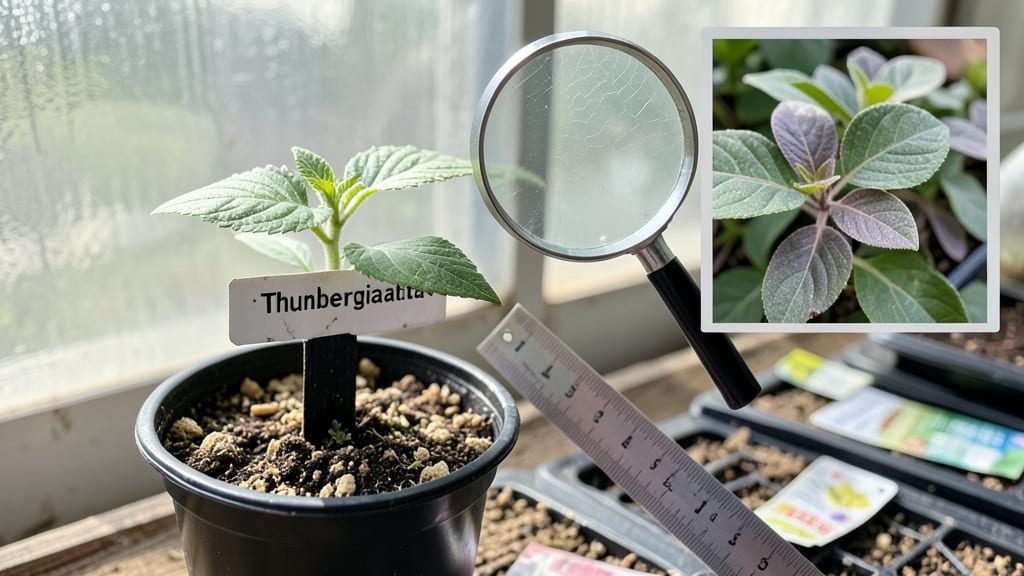
Mastering Black-Eyed Susan vine seedling identification starts with those heart-shaped leaves—the first clue that separates them from impatiens or coneflowers. 🌱 I’ve spent years watching these seedlings emerge, and the key is in the deep green, velvety texture paired with hairy stems that cling like tiny vines.
Rudbeckia seedlings, by contrast, have jagged edges and stand upright, while Thunbergia (the true vine) sends out trailing stems almost immediately.
The real game-changer? Leaf arrangement—true Black-Eyed Susan vines (Thunbergia alata) have leaves growing in opposite pairs along the stem, while Rudbeckia’s leaves alternate randomly. If your seedlings are sprawling (not upright) with slightly fuzzy stems, you’re likely dealing with the vine variety.
These traits show up within 2-3 weeks of germination, so act fast to confirm before transplanting.
Once you spot these signs, you’ll know whether to train them up a trellis or let them cascade in containers. The first true leaves are your best bet—ignore the initial seedling’s cotyledons (those look identical across species).
By the time they’re 3-4 inches tall, the differences become unmistakable, and you’ll avoid the heartbreak of nurturing the wrong plant.
For gardeners in Zones 10-11, this matters most—Thunbergia thrives as an annual or tender perennial, while Rudbeckia (the "false" Black-Eyed Susan) is a hardy perennial that self-seeds aggressively. A quick check now saves hours of confusion later. Trust the leaves, not the name on the packet.
Mistakes That Confuse Seedlings
Black-eyed Susan vine seedlings (Thunbergia alata) can be mistaken for other plants—especially in their early growth stages—due to a mix of natural variations and common gardening oversights.
Understanding the why behind these misidentifications helps gardeners spot the real deal faster. Below, we break down the most frequent causes, backed by science and actionable insights.
Young Black-eyed Susan vine seedlings often have broad, rounded leaves with smooth edges, which can easily be confused with morning glory (Ipomoea spp.) or sweet potato vine (Ipomoea batatas). Here’s why this happens:
- Leaf Development Phases: In their first 4–6 weeks, Black-eyed Susan seedlings prioritize root and stem growth over leaf specialization. Their leaves start simple and unlobed, mimicking other vines that retain this trait (like morning glory). As they mature, the leaves develop three distinct lobes or a heart-shaped base, but early on? They’re nearly identical to impostors.
- Environmental Stress: Poor lighting or overcrowding can stunt leaf complexity. Seedlings grown in low-light conditions (e.g., under dense canopy) may never fully lob their leaves, staying "trapped" in the early-stage look.
- Species Hybrids: Some cultivated varieties (like the ‘Safari Sunset’ cultivar) have thicker, glossier leaves as seedlings, further blurring lines with plants like blue dawn flower (Ipomoea indica).
💡 Pro Tip: Check the leaf arrangement—Black-eyed Susan seedlings grow in a spiral pattern (alternate phyllotaxis), while morning glory leaves often appear opposite or whorled. Snap a photo and compare!
Black-eyed Susan vines are slow starters compared to aggressive climbers like passionflower (Passiflora) or jasmine (Jasminum). This sluggishness leads gardeners to dismiss them as "failed seedlings" or mislabel them as:
- Genetic Dormancy: The seeds contain hard seed coats that delay germination. Even after sprouting, the vine’s fibrous root system takes time to establish, slowing above-ground growth. In contrast, morning glory seeds germinate in 3–7 days and shoot up quickly.
- Temperature Sensitivity: Black-eyed Susan thrives in warm soil (70–85°F). Planting too early (before last frost) or in cooler climates (<60°F) triggers dormancy-like growth, making seedlings look stunted or "sickly."
- Competition for Resources: If sown too closely, seedlings compete for nitrogen and sunlight, resulting in small, pale leaves that resemble dwarf morning glory (Ipomoea purpurea).
🌡️ Actionable Fix: Use a seedling heat mat (75°F+) to jumpstart growth, or transplant into individual pots to reduce competition. Monitor for true leaves (not cotyledons)—Black-eyed Susan’s first real leaves appear oval with a slight point, unlike the round cotyledons.
The purple, yellow, or orange blooms of mature Black-eyed Susan vines are iconic, but seedlings don’t produce flowers for 8–12 weeks. Before then, their stems and leaves can be mistaken for:
- Lack of Pigment: Young leaves are light green to chartreuse, while other vines (like cypress vine (Ipomoea quamoclit)) may have reddish or maroon stems from anthocyanins. Black-eyed Susan seedlings rarely develop red tones until stressed.
- Variegation Misreads: Some cultivars (e.g., ‘Peach Cream’) have cream-edged leaves as seedlings, which can be confused with coleus or begonia seedlings. However, Black-eyed Susan’s variegation is uniform along the leaf edge, not speckled.
- Fungal Mimicry: Overwatered seedlings may develop yellowing or brown spots, resembling diseased plants rather than healthy (but slow-growing) vines.
🔍 Key ID Trick: Look for tiny white flowers (yes, even on seedlings!). Black-eyed Susan produces miniature trumpet-shaped blooms as early as 6 weeks, while impostors like morning glory wait until they’re much larger.
Environmental factors can alter a seedling’s appearance enough to fool even experienced gardeners:
| Condition | Effect on Seedling | Misidentified As |
|---|---|---|
| Low Light | Leaves grow larger, thinner, and lighter green (etiolation). Stems elongate and weaken. | Spider plant (Chlorophytum comosum) seedlings |
| High Nitrogen | Leaves become dark green and glossy, with rapid but weak growth. | Sweet potato vine (healthier-looking but similar leaf shape) |
| Drought Stress | Leaves curl inward and develop a silvery-blue cast (due to wax buildup). | Drought-tolerant succulents (e.g., Sedum spp.) |
| Compacted Soil | Roots struggle, leading to stunted, bushy growth with small, dark leaves. | Baby’s breath (Gypsophila) or statice seedlings |
✨ Expert Hack: Grow a control seedling in ideal conditions (well-draining soil, 6+ hours of sun) side-by-side with your mystery plant. Compare leaf shape, stem hairiness (Black-eyed Susan has sparse, fine hairs), and growth rate.
Quick Fixes for Seedling Confusion
Identifying black-eyed Susan vine seedlings can feel like solving a puzzle—especially when they resemble other plants or struggle to thrive. Below are practical, step-by-step solutions tailored to common challenges, from misidentification to growth hiccups. Each fix includes prevention tips to keep your seedlings healthy and easy to recognize.
Problem: Your vine looks like a black-eyed Susan but isn’t—or you’re comparing it to invasive lookalikes (like morning glories or sweet potatoes).
How to Fix It:
- 📏 Compare Leaf Shapes Black-eyed Susan vine (Thunbergia alata) seedlings have heart-shaped or slightly lobed leaves with smooth edges and a velvety texture. Use a magnifying glass for close-ups if needed.
- Fix: Sketch or photograph the leaf shape and compare it to [this guide](https://www.gardeningknowhow.com/ornamental/vines/thunbergia/identifying-black-eyed-susan-vines.htm).
- Prevention: Label seedlings with toothpicks and tags as soon as they sprout to avoid mix-ups later.
- 🌱 Check the Growth Pattern - Black-eyed Susan vine: Vines are trailing or climbing, with leaves alternating along the stem.
Flowers appear late summer to fall (orange, yellow, or purple with a dark "eye"). - Morning glory: Leaves are arrowhead-shaped, and flowers open early morning (blue/purple). - Sweet potato vine: Leaves are deeply lobed (like a maple), and stems are thicker and more rigid. - Fix: Wait 4–6 weeks for flowers to emerge if unsure—this is the tell-tale sign for black-eyed Susan.
- 🌿 Use a Soil Test Kit If seedlings are stunted or yellowing, they may be nutrient-deficient. Black-eyed Susan vines prefer well-draining, slightly acidic soil (pH 6.0–6.5). - Fix: Test your soil with a $10 kit from a garden center.
Amend with compost if pH is off. - Prevention: Mix 1 part compost to 3 parts native soil before planting seeds.
Problem: Seeds take too long to sprout or rot in the soil.
How to Fix It:
- 🌡️ Adjust Temperature & Moisture Black-eyed Susan seeds need warmth (70–75°F) and consistent moisture to germinate.
- Fix:
- Indoor start: Use a seedling heat mat ($15–$20) or place pots on top of a fridge.
- Outdoor start: Sow seeds after the last frost when soil is warm (test with a soil thermometer).
- Keep soil moist but not soggy—water from the bottom to avoid displacing seeds.
- Prevention: Soak seeds in lukewarm water for 24 hours before planting to speed up germination.
- Fix:
- ⏳ Be Patient (But Not Too Patient!) Germination can take 10–21 days.
If nothing sprouts after 3 weeks, the seeds may be old or stored improperly. - Fix: Try fresh seeds from a reputable supplier (e.g., Baker Creek or Burpee). - Prevention: Store seeds in a cool, dry place (like a sealed jar in the fridge) for up to 2 years.
Problem: Stems stretch tall and thin, or leaves turn pale/yellow.
How to Fix It:
- ☀️ Provide the Right Light Black-eyed Susan seedlings need bright, indirect light (6+ hours/day). Leggy growth = not enough light.
- Fix:
- Indoors: Place near a south-facing window or use a grow light ($20–$50) 6 inches above seedlings.
- Outdoors: Transplant when seedlings are 2–3 inches tall and have 2–3 true leaves (not just the initial seed leaves).
- Prevention: Rotate seedlings quarter-turn daily to prevent leaning.
- Fix:
- 💧 Water Wisely Overwatering causes root rot, while underwatering stresses seedlings.
- Fix:
- Water only when the top inch of soil is dry (stick your finger in to check).
- Use a spray bottle for gentle watering to avoid disturbing soil.
- Prevention: Use well-draining pots with drainage holes and a mix of 50% potting soil + 50% perlite.
- Fix:
- 🍽️ Fertilize Lightly Too much fertilizer burns young roots. Seedlings need minimal nutrients at first.
- Fix: Use a balanced, water-soluble fertilizer (like 10-10-10) diluted to half-strength every 2–3 weeks.
- Prevention: Start with fish emulsion (mild and organic) if seedlings look weak.
Problem: Tiny holes in leaves, wilting, or moldy stems.
How to Fix It:
- 🐜 Identify the Culprit Common pests: Aphids, spider mites, or slugs.
- Fix:
- Aphids: Spray with soapy water (1 tsp mild soap + 1 quart water).
- Slugs: Set up a beer trap (bury a cup filled with beer) or use diatomaceous earth (food-grade only).
- Fungal issues (e.g., powdery mildew): Improve airflow by spacing seedlings 6 inches apart and spray with baking soda solution (1 tsp baking soda + 1 quart water + a drop of dish soap).
- Fix:
- 🌿 Boost Seedling Resilience
- Prevention:
- Neem oil spray (1 tbsp neem oil + 1 quart water + drop of soap) weekly as a preventative.
- Interplant with herbs like basil or mint to repel pests naturally.
- Prevention:
- 📅 Plant at the Right Time: Wait until after the last frost and soil is at least 60°F for direct sowing.
- 🌿 Thin Seedlings: If you sowed multiple seeds per pot, snip weaker seedlings at soil level to give strong ones space.
- 🔄 Transplant Carefully: Harden off seedlings (acclimate to outdoor temps) for 1 week before moving them outside.
- 📸 Document Growth: Take weekly photos to track progress and spot issues early.
By tackling these common issues head-on, your black-eyed Susan vine seedlings will thrive—and stay easy to identify from day one. Happy gardening! 🌸
Frequently asked questions
How do I tell if my seedling is a true Black-Eyed Susan vine vs. a coneflower?
Look at the leaf arrangement—Black-Eyed Susan vines (Thunbergia alata) have opposite leaves (pairs at each node), while coneflowers (Rudbeckia) have alternate leaves along the stem. Also, true vines develop trailing or climbing stems early, while coneflowers grow upright. Check for tiny trumpet-shaped flowers by 6 weeks—a dead giveaway for Black-Eyed Susan!
Why do my seedlings look like impatiens instead of Black-Eyed Susan?
Impatiens have smooth, oval leaves with jagged edges, while Black-Eyed Susan seedlings show heart-shaped or slightly lobed leaves with a velvety texture. Impatiens also grow upright and bushy, whereas Black-Eyed Susan vines trail or climb from the start. If your seedlings are 3+ inches tall with no climbing tendency, they’re likely not the vine variety.
Can I identify Black-Eyed Susan vines by their stems alone?
Yes! True Black-Eyed Susan vines have hairy stems with sparse, fine hairs, while impostors like morning glory have smooth or waxy stems. Also, Black-Eyed Susan stems are slender and flexible, perfect for trellising, whereas sweet potato vines are thicker and more rigid. Run your fingers along the stem—hairs are the key clue!
What should I do if my seedlings are too small to identify?
Wait for the first true leaves (not the initial seed leaves) to appear—these show up within 2-3 weeks. Focus on leaf shape and arrangement, and avoid transplanting until you’re confident. If unsure, grow a control seedling in ideal conditions (warm soil, full sun) side-by-side for comparison. Patience here prevents costly mistakes!