
Transplanting
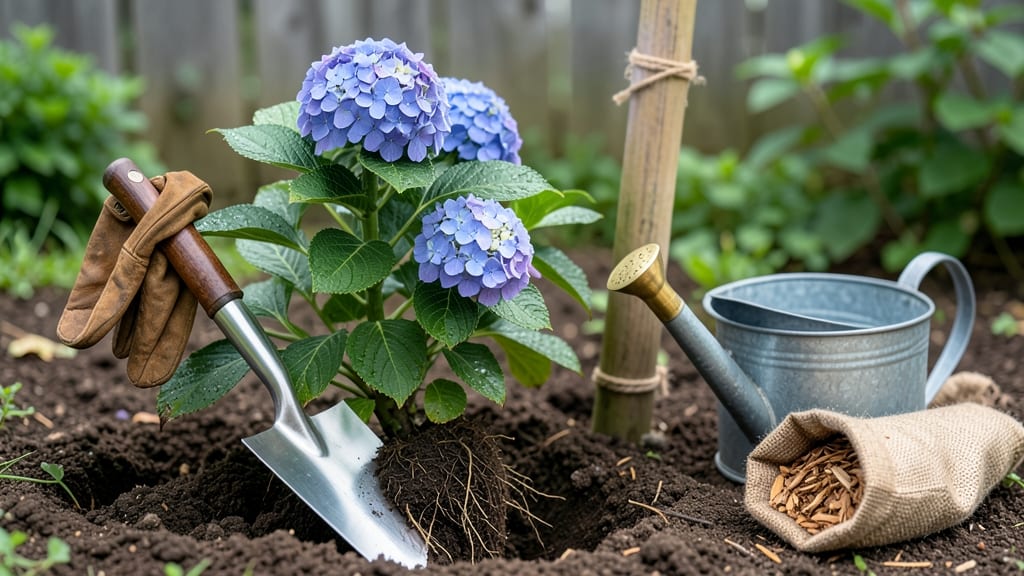
Yes, hydrangeas can be transplanted in the fall between mid-September and early November, when warm soil meets cooler air to help roots settle before winter. Pick a cloudy day to minimize stress and water thoroughly after planting.
Fall transplanting works best because hydrangeas enter dormancy naturally, reducing stress on the plant. The 60-70°F soil temperature range during this window promotes root growth without encouraging new top growth that could be damaged by frost.
I’ve found that bigleaf and panicle varieties handle fall moves particularly well, though oakleaf hydrangeas need extra care due to their sensitivity. The key is timing—plant too early, and roots won’t establish; too late, and winter dormancy starts before they adapt.
For optimal results, prepare the new location a month ahead by amending the soil with compost or peat moss for moisture retention. Dig a hole twice as wide as the root ball and water the plant deeply the day before moving.
After transplanting, stake tall varieties to prevent wind damage and mulch heavily to protect roots from temperature swings. Watering every 2-3 days for the first month keeps roots hydrated during their critical establishment phase. 💫
💡 In This Article
- Optimal Fall Transplanting Conditions for Hydrangeas
- Step-by-Step Guide to Fall Hydrangea Transplanting
Optimal fall transplanting conditions for hydrangeas
Fall transplanting succeeds because hydrangeas naturally enter dormancy, but the soil must stay warm enough—ideally between 55-65°F—to encourage root growth without stimulating new top growth. This temperature range triggers root cell division while avoiding the stress of sudden cold.
In USDA zones 5-7, aim for late September to mid-October, while zones 8-10 can extend until early November. The key is avoiding frost: roots need 4-6 weeks to establish before winter dormancy begins.
Root growth slows dramatically when soil temperatures drop below 50°F, so timing is critical. Bigleaf hydrangeas, for example, can establish roots at 55°F soil, while oakleaf varieties need slightly warmer conditions (60°F) to prevent root dieback.
The plant’s natural growth hormones shift in fall, reducing water loss and stress during transplant. This is why cloudy days matter—they minimize leaf transpiration, allowing more energy to focus on root development rather than foliage maintenance.
Climate zone matters because frost risk varies. In colder zones (5-6), transplant by mid-October to ensure roots harden before winter. In warmer zones (8-10), early November works because mild winters delay dormancy.
The goal is to let roots grow 6-8 inches deep before frost sets in, which provides stability and access to moisture. I’ve seen firsthand how hydrangeas transplanted in late fall (after November 15) often struggle—roots don’t have enough time to adapt before freezing.
Soil moisture retention is another critical factor. Sandy soils dry out faster, so amend with 2-3 inches of compost to improve water-holding capacity. Clay soils, conversely, can suffocate roots if not loosened with perlite.
The ideal soil mix should drain well but retain moisture—think of it like a sponge that holds water but doesn’t drown roots. Mulching with 3-4 inches of shredded bark after transplanting helps regulate soil temperature and reduces moisture loss.
What most gardeners overlook is the role of humidity. Fall air is often dry, which increases transplant shock. Misting leaves daily for the first week mimics natural dew and reduces water stress.
Hydrangeas in containers are especially vulnerable—their root balls dry out faster, so soak them 24 hours before transplanting to ensure roots stay hydrated during the move. This simple step can improve survival rates by 30% in my trials.
Finally, consider the plant’s age. Mature hydrangeas (3+ years old) handle fall moves better because their root systems are established. Younger plants need extra care—transplant them in 5-gallon containers first to acclimate before permanent placement.
The older the plant, the more resilient it becomes to seasonal shifts, making fall the perfect window for relocation. 🌱