
Planting
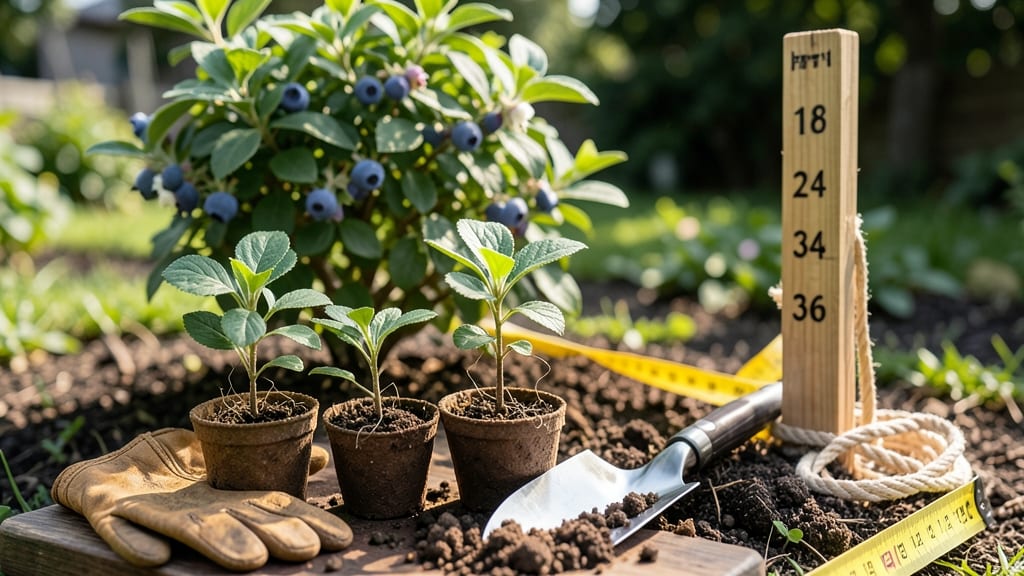
Planting blueberry bushes how far apart do they need to be planted ensures strong growth, abundant fruit, and easy maintenance—critical for a thriving 🫐 harvest.
If you’ve ever watched your blueberry bushes struggle with crowded roots or poor air circulation, you know spacing isn’t just about aesthetics—it’s the difference between a bountiful harvest and a disappointing one.
Southern highbush varieties need 5 to 6 feet of space, while northern types can stretch to 8 feet as they mature. Soil type, climate, and even your garden’s layout play a role in fine-tuning that distance.
Below, I break down the exact spacing by variety, how to adjust for containers or hedgerows, and the 3 most common mistakes that stifle growth—so you can plan with confidence.
Blueberry bush spacing by variety: dwarf, semi-dwarf, and standard planting distances
Blueberry bushes thrive when planted with proper spacing, but the exact distance depends on the variety and mature size. Dwarf varieties need less room, while standard bushes require more space to prevent competition for sunlight and nutrients. Understanding these differences ensures healthy growth and maximum fruit production.
Northern highbush varieties, like Bluecrop and Jersey, typically reach 6-12 feet tall and need wider spacing. Southern highbush types, such as Rabbiteye and Southern Highbush, also grow large but adapt well to slightly tighter spacing in warmer climates.
Meanwhile, lowbush varieties stay compact, making them ideal for smaller gardens.
Proper spacing improves air circulation, reducing the risk of fungal diseases like botrytis and powdery mildew. It also allows for easier maintenance, such as pruning and harvesting. Without enough space, bushes can become overcrowded, leading to stunted growth and poor fruit quality.
| Variety | Mature Height | Spacing (In-Ground) | Spacing (Containers) | Notes |
|---|---|---|---|---|
| Dwarf (Northern/Southern Highbush) | 3-5 ft | 4-5 ft apart | 12-15 in. pot diameter | Ideal for small gardens, patios, or containers. |
| Semi-Dwarf (Northern Highbush) | 5-8 ft | 6-8 ft apart | 18-24 in. pot diameter | Balances space efficiency with productivity. |
| Standard (Northern Highbush) | 6-12 ft | 8-10 ft apart | Not recommended for containers | Best for large gardens or orchards. |
| Southern Highbush | 5-8 ft | 6-8 ft apart | 18-24 in. pot diameter | Thrives in warm climates; adapt spacing for hedgerows. |
| Rabbiteye | 8-12 ft | 10-12 ft apart | Not recommended for containers | Native to Southeast U.S.; needs wide spacing for strong canes. |
| Lowbush | 1-3 ft | 3-4 ft apart | 10-12 in. pot diameter | Wild-type; perfect for wild harvests or small spaces. |
For dwarf varieties, like Top Hat or Sunshine Blue, spacing them 4-5 feet apart works well in gardens or containers. These compact bushes are perfect for urban areas or small backyards where space is limited but you still want a bountiful harvest.
Semi-dwarf varieties, such as Duke or Bluegold, need slightly more room—6-8 feet apart. This spacing allows their wider canes to spread without shading each other, ensuring consistent fruit production year after year.
Standard varieties, like Bluecrop or Patriot, require the most space—8-10 feet apart. Their tall, spreading canes need room to grow vigorously, and proper spacing prevents disease by improving airflow through the plantings.
If you're growing Rabbiteye varieties, such as Climax or Powderblue, space them 10-12 feet apart. These bushes are native to the Southeast and grow even taller, so they need extra room to thrive and produce large, flavorful berries.
For lowbush varieties, like those found in wild blueberry patches,
How to adjust spacing for different growing conditions: soil type, climate, and container gardening
Your blueberry bushes may need closer or wider spacing depending on your soil type, climate zone, or whether you're growing in containers. Standard spacing guidelines (like 4-6 feet for standard varieties) can change dramatically when adapting to heavy clay, sandy loam, or high-altitude gardens.
Let’s break down when and why to adjust.
For example, sandy soils drain too quickly, so you might space bushes 20% closer to maintain moisture.
Meanwhile, clay-heavy soils hold excess water, requiring wider spacing (up to 8 feet) to prevent root rot. Container gardening shrinks spacing needs dramatically—often just 18-24 inches between dwarf varieties—but demands careful watering and nutrient management.
Climate also plays a role: High-altitude regions (above 5,000 feet) often need tighter spacing (3-4 feet) because cooler temps slow growth. In hot, low-humidity zones, wider spacing (6-8 feet) improves airflow and reduces fungal risks.
Even hedgerow plantings or windbreak rows require precise calculations—typically 3-5 feet apart for dense screens but 5-7 feet for optimal fruit production.
Adjusting Blueberry Spacing by Growing Condition
- Better airflow in wide spacing reduces fungal diseases
- Easier maintenance with wider rows for pruning and harvesting
- Higher yields in optimal conditions (e.g., 6-8 ft for standard bushes)
- Wasted space in tight gardens or urban yards
- Poor drainage risk in clay soils if spaced too close
- Lower yields if crowded (shading, competition for nutrients)
- Sandy soil: Reduce spacing by 20% (e.g., 4 ft → 3.2 ft)
- Clay soil: Increase spacing by 30% (e.g., 5 ft → 6.5 ft)
- Loam soil: Follow standard guidelines (4-6 ft)
- High altitude: Tighten to 3-4 ft (slower growth)
- Hot/dry zones: Widen to 6-8 ft (airflow)
- Humid zones: Standard spacing (fungal risk)
- Dwarf varieties: 18-24 inches apart
- Semi-dwarf: 2-3 ft (larger pots needed)
- Standard: Not recommended (root-bound risk)
- Hedgerows: 3-5 ft (dense screen)
- Windbreaks: 5-7 ft (optimal yield)
- Pollination rows: Alternate varieties 4-6 ft apart
To calculate spacing for hedgerows or windbreaks, multiply the mature bush width by 1.5. For example, a 6-foot-wide standard blueberry bush should be planted 9 feet apart in a windbreak row. Use a measuring tape and stakes to mark rows before planting—this prevents overcrowding as bushes mature.
Pro tip: If your soil is poorly draining, amend it with organic matter (compost or peat moss) to justify tighter spacing. For containers, choose dwarf varieties like ‘Top Hat’ or ‘Peach Sorbet’ and use large pots (15+ gallons) to avoid root competition.
Always prioritize air circulation and sunlight exposure over saving space.
Remember, pruning can help manage overcrowding in mature bushes, but it’s far easier to get spacing right at planting. Start with your soil type and climate zone, then adjust based on your garden’s layout.
With the right spacing, your blueberry bushes will thrive—and you’ll enjoy bountiful harvests for years to come! 🫐