
Planting
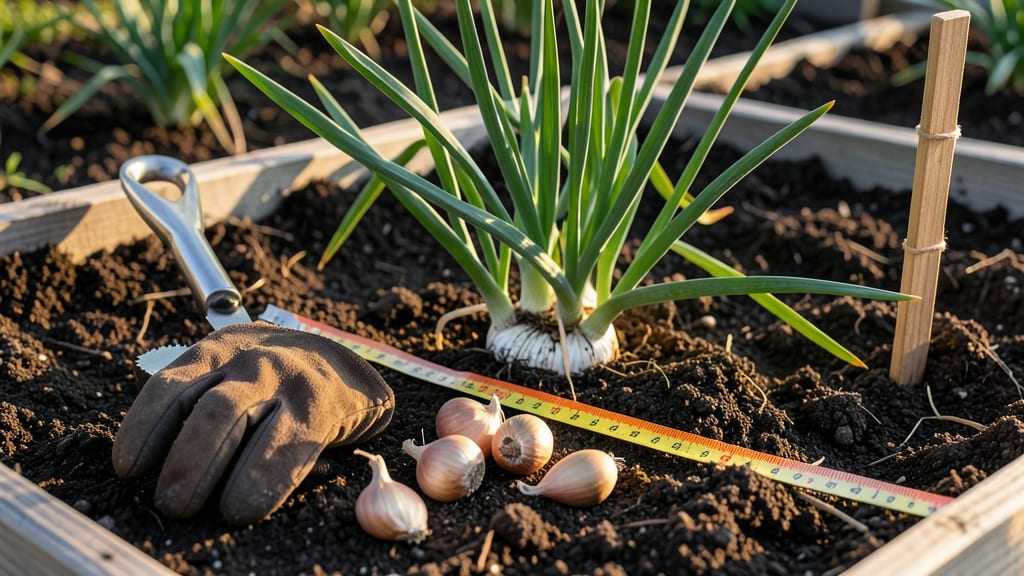
Planting garlic bulbs 4 to 6 inches apart is the key to avoiding tangled clumps and maximizing your harvest 🧄.
If you’ve ever dug up a messy pile of garlic instead of neat, plump bulbs, you know how frustrating proper spacing can be. Too close, and you’ll battle overcrowding; too far, and you’ll waste garden space.
The right distance ensures each bulb gets the nutrients and airflow it needs to grow strong.
But spacing isn’t one-size-fits-all—it depends on your garlic variety, soil type, and even your climate. Hardneck garlic, for example, needs slightly more room than softneck, while rocky or heavy soil may require adjustments. Below, I’ll break down the science-backed spacing rules to help you plan like a pro.
You’ll also discover how to fix common mistakes, optimize space with creative planting techniques, and troubleshoot issues before they ruin your harvest. Let’s get those cloves in the ground the right way!

Optimal garlic bulb spacing by variety type (softneck vs hardneck vs elephant)
Not all garlic is created equal—and neither are their spacing needs! The three main types—softneck, hardneck, and elephant garlic—each demand slightly different spacing to thrive. Why? Because their bulb sizes, growth habits, and disease resistance vary.
Get this wrong, and you’ll end up with stunted bulbs, fungal issues, or wasted garden real estate. Let’s break down the science so you can plant like a pro.
First, let’s clarify: spacing isn’t just about how far apart you plant cloves in a row. It’s also about row-to-row distances, bulb size, and even soil fertility. For example, hardneck garlic grows taller and produces smaller bulbs, while elephant garlic forms massive, single-clove bulbs.
These differences mean your plant-to-plant spacing should adjust accordingly to avoid competition for nutrients and sunlight.
Here’s the golden rule: smaller bulbs need tighter spacing, larger bulbs need more room. But there’s more to it than that. Hardneck varieties, for instance, benefit from wider spacing to reduce disease risk (like white rot), while softneck garlic can handle closer spacing because it’s more compact.
And elephant garlic? It’s the gentle giant of the bunch—spread it out like you’re planting potatoes.
Now, let’s dive into the exact spacing guidelines for each type, including row distances, plant-to-plant gaps, and why these matter. Below, you’ll find a side-by-side comparison to help you visualize the best setup for your garden layout.
Notice how elephant garlic gets the most space? That’s because its single, massive cloves can reach the size of a softball. Crowd it, and you’ll end up with smaller, misshapen bulbs.
Meanwhile, softneck garlic thrives in tighter quarters because it’s bred for high-density planting—ideal for braiding and storage.
But spacing isn’t just about the numbers—it’s also about soil health and drainage. If your soil is heavy or clay-like, increase spacing by 20-30% to prevent waterlogging, which can rot bulbs.
Conversely, sandy soil allows for slightly tighter spacing because it drains faster. Always amend your soil with compost before planting to ensure nutrients aren’t the limiting factor.
Pro tip: Use a string and stakes to mark your rows before planting. This ensures consistent spacing and makes it easier to visualize the layout. For hardnecks, I like to plant in a grid pattern—this improves airflow and reduces disease risk.
For softnecks, a staggered row layout works well to maximize space in small gardens.
One mistake I see often is planting garlic cloves too close together in rows and then forgetting about row spacing. The result? Overcrowded plants that compete for sunlight and nutrients, leading to smaller bulbs and higher disease risk.
Always measure both plant-to-plant and row-to-row distances—your future harvest will thank you.
Finally, remember that garlic spacing affects more than just bulb size. Proper spacing reduces fungal diseases like white rot and basal rot by improving airflow. It also makes harvesting easier—no more digging through tangled roots!
With the right spacing, you’ll enjoy plump, easy-to-peel bulbs and a garden that looks as good as it performs.
Ready to plant? Grab your garlic cloves, a tape measure, and a notepad—then follow the chart above to transform your garlic game. Happy growing! 🧄
Common spacing mistakes that ruin garlic harvests (and how to fix them)
Even experienced gardeners often make spacing mistakes when planting garlic, leading to stunted growth, disease, or wasted space. I’ve seen overcrowded rows produce tiny bulbs and overly spaced plants leave empty garden beds.
The key is finding that sweet spot where garlic has room to breathe but isn’t isolated. Let’s fix these common errors before your next planting season.
First, let’s tackle the biggest mistake: planting garlic cloves too close together. When bulbs compete for nutrients and sunlight, they’ll produce small, weak harvests. I’ve had seasons where garlic plants grew so close they fused at the base, making harvesting nearly impossible.
The fix? Space cloves 4-6 inches apart in rows that are 12-18 inches apart—this gives roots room to spread without crowding.
⚠️ callout warning ⚠️
Clove spacing: 4-6 inches apart in rows
Row spacing: 12-18 inches apart
Planting depth: 2 inches (pointy end up)
Soil prep: Loose, well-draining soil with compost mixed in
❌ Too close: Stunted bulbs, disease risk
✅ Just right: Plump, easy-to-harvest cloves
❌ Too far: Wasted garden space
Another frequent error is ignoring soil fertility before planting. Poor soil leads to weak plants that can’t compete even with proper spacing. I always test my soil’s pH and add compost or aged manure before planting.
Aim for a pH between 6.0-7.0—garlic thrives in slightly acidic to neutral soil. If your soil is compacted, consider adding sand or perlite to improve drainage.
Many gardeners also make the mistake of planting garlic too deep. While garlic needs good soil coverage, burying cloves deeper than 2 inches can suffocate the plant. I’ve seen cloves planted at 3 inches deep struggle to emerge, leading to patchy growth.
Always plant with the pointy end up and cover with just enough soil to hold them in place.
For container gardeners, overestimating space in pots is a common pitfall. Garlic needs at least 6 inches of depth and 4-6 inches between cloves in containers. I’ve tried squeezing too many cloves into small pots, and the results were always disappointing.
Use containers with at least 12-inch diameters for 3-4 cloves, and ensure they have drainage holes to prevent rot.
Finally, don’t forget to rotate your garlic planting locations every year. Planting garlic in the same spot repeatedly can deplete soil nutrients and increase disease risk. I’ve seen gardens where garlic was planted in the same bed for years, leading to white rot and other fungal issues.
Rotate with legumes or leafy greens to restore soil health between garlic plantings.
To avoid these mistakes, use this quick garlic spacing checklist before planting: ☑️ Test soil pH and amend if needed ☑️ Loosen soil to 6-8 inches deep ☑️ Space cloves 4-6 inches apart ☑️ Keep rows 12-18 inches apart ☑️ Plant cloves 2 inches deep, pointy end up ☑️ Water gently after planting ☑️ Mark rows for easy harvesting 🌱