
Planting
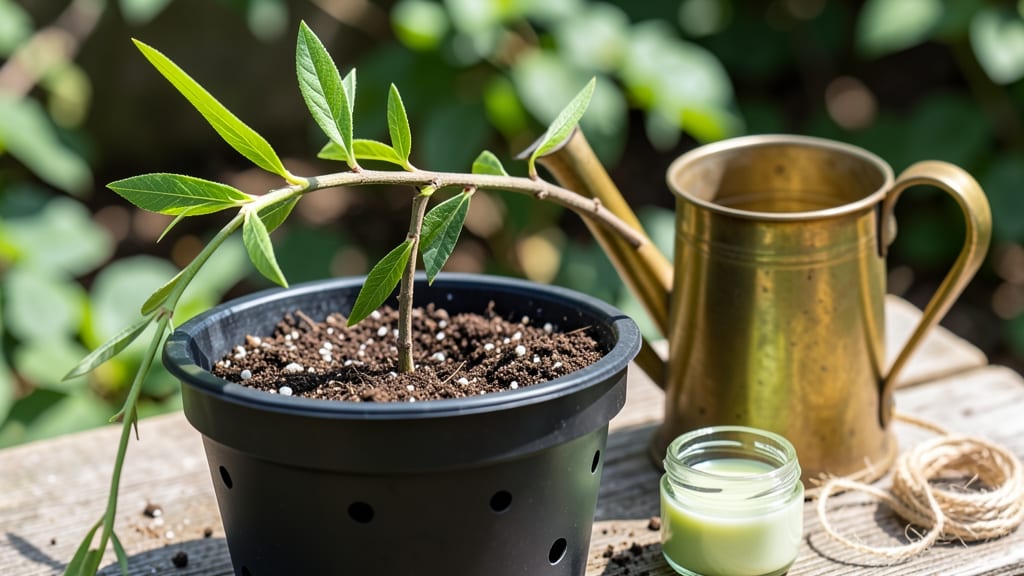
Planting a willow branch in water first gives you a head start on a tree that could grow 10 feet in a single season. 🌿 I’ve rooted willows this way for years, and the secret isn’t complicated—just patience and the right timing.
Start with a healthy branch, and within weeks, you’ll see roots forming, ready to transplant into soil where it’ll thrive.
The magic happens in a simple jar of water. Cut your branch at a 45-degree angle just below a node (that little bump where leaves grow), strip the lower leaves, and place it in water deep enough to cover the cut end.
Change the water every few days to keep it fresh—this prevents rot and encourages roots to sprout in as little as 2-4 weeks.
Once roots are 2-3 inches long, it’s time to plant. Choose a moist, sunny spot with well-draining soil—willows love water but hate soggy roots. Dig a hole twice as wide as the root ball, set your rooted branch in place, and water deeply.
Within a year, you could have a 15-foot-tall tree shading your yard.
Pro tip: Willow branches root easily but grow fast—prune early to shape them or control their spread. Avoid planting near foundations or pipes, as their roots can get aggressive. Now grab that branch and let’s get growing!
📚 In This Guide
- What you need
- Instructions
- Tips and common mistakes
- Wrapping up and next steps
What you need
- ● Willow branch: A healthy, flexible, green (not dried) willow branch, about 1–3 feet long and ½–1 inch in diameter. Look for branches with small buds or leaves—these root best!
- ● Water: Clean, room-temperature water (enough to submerge 1/3 to 1/2 of the branch). Use a jar, vase, or bucket with a wide mouth for easy access.
- ● Pruning shears or sharp knife: To make a clean 45-degree cut at the base of the branch (avoid jagged edges).
- ○ Rooting hormone (optional but helpful): A powder or gel to encourage faster root growth. Brands like Rootone or Dip ‘N Grow work well.
- ● Pot or container: A 6–12 inch diameter pot with drainage holes (or a black plastic bag filled with moist soil for a low-cost alternative).
- ● Well-draining potting mix: A blend of 50% peat moss, 30% perlite, and 20% sand (or a pre-mixed seed-starting mix).
- ● Small shovel or trowel: For gently planting the rooted branch in soil.
- ● Mulch or plastic wrap: To retain moisture around the base of the plant (especially in dry climates).
- ● A humidity dome or plastic bag to create a greenhouse effect while rooting.
- ● Fertilizer (low-dose): A balanced liquid fertilizer (5-5-5) once roots appear (after ~4–6 weeks).
- ● Grow lights or sunny windowsill: If rooting indoors, ensure bright, indirect light (6+ hours/day).
- ● Label or marker: To track planting dates and varieties (willows like Weeping Willow or Crack Willow root differently!).
Step-by-Step instructions for planting a willow branch
Here's the simple method I use every spring to grow willow cuttings into sturdy new plants.
🌱 Step 1: Select and Prepare Your Willow Branch
Choose a healthy, pencil-thick willow branch that's about 12-18 inches long and has several leaf nodes (those little bumps where leaves grow). The best time is early spring when sap is rising. I look for branches that bend slightly without snapping—this means they're flexible and full of life.
Trim the bottom end at a 45-degree angle using clean pruners. This angled cut gives you more surface area for roots to form. Remove any leaves from the lower 6 inches of the branch—these will just rot in the water. Keep the top leaves intact so the plant can still photosynthesize while developing roots.
💧 Step 2: Root the Branch in Water
Fill a clean glass or jar with room-temperature water until it covers the bottom 2-3 inches of your willow branch. I use a clear container so I can watch the roots grow—it's like a little science experiment! Place the branch in the water and set it where it will get bright, indirect light (like a sunny windowsill).
Change the water every 3-4 days to prevent bacteria and algae buildup. You'll see tiny white roots sprouting from the cut end in about 2-3 weeks. Once the roots reach 2-3 inches long, your cutting is ready for planting. Don't wait too long—roots that get too long can break easily when you transplant.
🪴 Step 3: Plant the Rooted Branch in Soil
Dig a hole in your garden bed that's about twice as wide as your rooted branch but only as deep as the root system. I like to plant willows along water features or in moist soil because they love water. Gently place the branch in the hole and cover the roots with soil, pressing lightly to remove air pockets.
Water the soil thoroughly until it's evenly moist to 6 inches deep. You'll know it's right when water runs out the bottom of the hole but doesn't pool on top. Mulch around the base with 2-3 inches of organic mulch to help retain moisture and protect new roots. Keep the soil consistently moist (not soggy) for the first 4-6 weeks—this is when your cutting establishes its root system.
☀️ Step 4: Provide Ongoing Care for Healthy Growth
Willows grow fast once established, so give them plenty of full sun (at least 6-8 hours daily). You'll see new leaves emerge along the branch within 2-3 weeks of planting. This is your signal that the cutting has successfully taken root and is growing strong.
Water deeply once a week during dry spells, aiming for 1-2 inches of water per week. You can tell it's enough when the top 2 inches of soil feel moist but not wet. Avoid overhead watering once the plant is established—water at the base instead to prevent fungal diseases. In the first growing season, you might see 3-4 feet of new growth if conditions are right!
Tips & tricks for planting willow branches
Here's what nobody tells you about growing willow cuttings—these little details make all the difference between a thriving plant and a sad, wilted branch.
Selection Tip: Look for branches that bend like a bow rather than snapping like a twig. This flexibility means the branch has plenty of stored energy to grow roots. I've found that branches with at least 3-4 leaf nodes (those little bumps) produce the most vigorous root systems. If you're unsure, test by gently bending the branch—it should bend without breaking.
Rooting Secret: The 2-3 inch water level in Step 2 is perfect for encouraging root growth, but here's the trick: use filtered or rainwater if possible. Tap water often contains chlorine and minerals that can inhibit root development. If you must use tap water, let it sit out for 24 hours before using to allow chlorine to evaporate. Watch for tiny white roots sprouting in about 2-3 weeks—this is your reward for patience!
Planting Wisdom: When you're ready to plant in Step 3, don't rush the hole preparation. The hole should be twice as wide as your rooted branch to prevent root crowding, but only as deep as the root system itself. I like to loosen the soil around the edges of the hole with my fingers to create better root contact. Pressing too firmly can compact the soil and restrict root growth.
Ongoing Care: That first 4-6 weeks after planting is critical for establishing roots. I've learned that willows actually prefer slightly wetter soil than most plants—think of them like aquatic plants that just happen to grow on land. If your area gets hot and dry, consider creating a small water feature nearby or using soaker hoses to keep the soil consistently moist during this crucial period.
Pro Tips for Plant A Willow Branch
- Here's what nobody tells you about growing willow cuttings—these little details make all the difference between a thriving plant and a sad, wilted branch.
- Selection Tip: Look for branches that bend like a bow rather than snapping like a twig.
- Rooting Secret: The 2-3 inch water level in Step 2 is perfect for encouraging root growth, but here's the trick: use filtered or rainwater if possible.
Frequently asked questions
Got questions about planting a willow branch? You’re not alone! Here are answers to the most common ones to help you grow a thriving willow from a cutting.
Can I plant a willow branch directly in soil without rooting it in water first?
While willows can root directly in moist soil, success rates drop significantly. Root cuttings in water first (4–6 weeks) for stronger roots before transplanting. The water method mimics their natural riparian habitat and boosts survival chances!
How long does it take for a willow branch to root in water?
Most willow cuttings sprout roots in 3–6 weeks, but some may take up to 8 weeks. Check weekly—roots should be at least 1–2 inches long before planting. Patience pays off for a sturdy start!
What if my willow cutting rots in water instead of rooting?
Rot happens when water stales or the cutting sits too long. To fix it:
- Refresh the water every 3–4 days.
- Use clean, room-temperature water (chlorine-free if possible).
- Trim any mushy, blackened ends and replant.
Can I grow a willow from a branch I found on the ground?
Yes! Ground branches often root easily, but choose green, flexible shoots (not dried wood). Rinse off dirt, trim to 18–24 inches, and follow the water-rooting steps. Avoid branches with disease or pests—inspect closely first!
Are there willow varieties that root faster or easier?
Some willows are rooting superstars! Try:
- Weeping Willow (Salix babylonica) – Fast and dramatic.
- Pussy Willow (Salix discolor) – Roots quickly; great for fluffy branches.
- Crack Willow (Salix fragilis) – Hardy and resilient.
What’s the best time of year to plant a rooted willow cutting?
Spring (after last frost) or early fall are ideal. Willows thrive in cool but not freezing temps. Avoid planting in summer heat—it stresses young roots. If you root in winter, keep cuttings indoors near a sunny window until spring!
Wrapping up and next steps
Planting a willow branch is a rewarding way to grow a graceful tree with minimal effort! By rooting your cutting in water first, you’ll give it the best chance to thrive before transplanting it into soil.
Whether you’re a beginner or a seasoned gardener, this method is simple and effective—so grab that branch and get growing! 🌱
Now that you’re ready, why not share your progress with fellow plant enthusiasts? Snap a photo of your rooted willow branch and tag us—we’d love to see your green thumbs in action! 🌿