
Planting
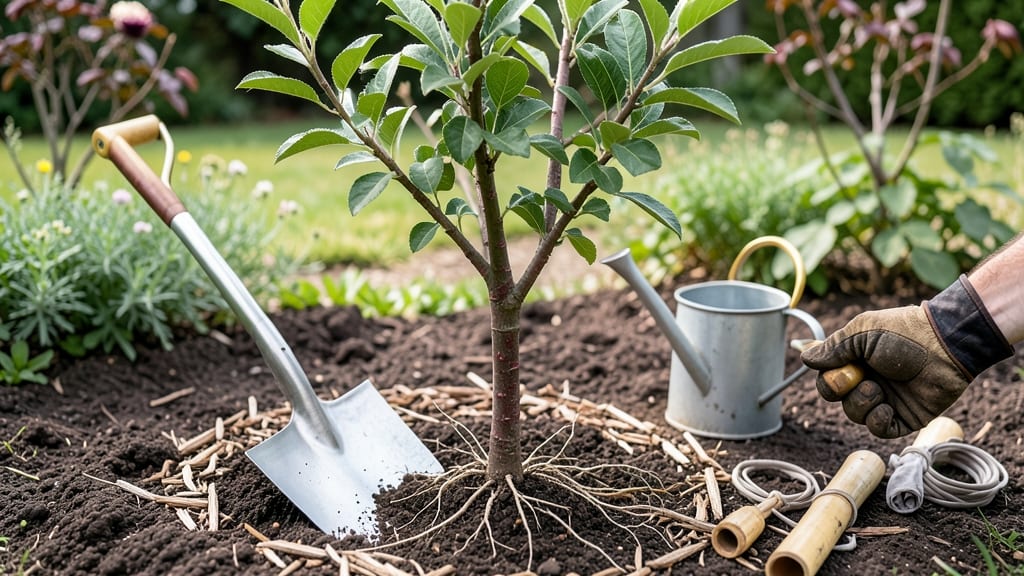
Planting nectarines means sweet rewards with less fuss than you’d expect—these trees thrive when you follow a few key rules about sunlight, soil, and spacing. 🌞 I’ve planted mine in late winter when the ground is workable but frost isn’t lurking, and the difference in early fruit production is night and day.
The secret isn’t complicated: well-draining soil, a sunny spot, and patience while roots establish.
Start with a hole twice as wide as the root ball but only as deep—sitting nectarines too low invites rot. Amend heavy clay with compost or sand, and avoid fresh manure (it burns roots).
Most nurseries sell bare-root trees in winter, but container-grown ones work year-round if you water deeply before planting. Spacing matters too: give mature trees 15-20 feet between them for airflow and easy harvesting.
Water immediately after planting to settle the soil, then keep it consistently moist for the first 6-8 weeks—no soggy roots, no drought stress. A 3-inch layer of mulch (wood chips or straw) locks in moisture and keeps weeds at bay.
By summer, you’ll see new growth, and within 2-3 years, those first juicy fruits will be within reach. The payoff? Trees that produce reliably with almost no fuss.
For year-round success, time planting outside your last frost date if you’re in Zones 5-8, or plant in early spring in warmer climates. Just avoid extreme heat or cold—nectarines hate both.
Prune lightly in late winter to shape the tree, and watch for peach leaf curl (spray copper fungicide preventatively). With these steps, your nectarine will outperform store-bought fruit every season.
📚 In This Guide
- What you need
- Instructions
- Tips and common mistakes
- Wrapping up and next steps
What you need
- ● Nectarine tree: 1 bare-root sapling (1-2 years old) or container-grown tree (3-5 gallons).
- ● Pro tip: Choose a self-pollinating variety (like ‘Summer Grand’ or ‘Fantasia’) for hassle-free fruit!
- ● Planting site: Full sun (6+ hours of direct sunlight daily).
- ● Well-draining soil (pH 6.0–7.0). Test your soil or amend with compost if needed.
- ● Tools: Shovel or trowel (for digging).
- ● Garden gloves (to protect your hands).
- ● Watering can or hose (with a gentle spray nozzle).
- ● Pruning shears (for trimming dead branches post-planting).
- ● Soil amendments: 5–10 lbs of organic compost or well-rotted manure.
- ● 1 cup of balanced fertilizer (10-10-10 or similar) mixed into the planting hole.
- ● Mulch (2–3 inches of wood chips or straw to retain moisture and suppress weeds).
- ● Tree stakes (if your nectarine is young or in a windy area).
- ● Drip irrigation system (for consistent watering, especially in hot climates).
- ● Fruit tree spray (like neem oil or copper fungicide) to prevent pests/diseases.
- ● Epsom salt (1 tbsp per hole) for magnesium boost in clay-heavy soils.
- ● Check your last frost date—nectarines thrive in USDA Zones 5–9. Plant after the last frost in spring or in late fall/winter (with protection).
- ● Space out trees 15–20 feet apart (or 25+ feet for dwarf varieties) to avoid overcrowding.
- ● Ensure no other fruit trees (especially peaches) are nearby to prevent cross-pollination issues.
Step-by-Step instructions for planting nectarine trees
Planting nectarines is simpler than you think—just follow these steps for strong, productive trees.
🪴 Step 1: Choose the Right Location and Prepare the Soil
Nectarines need full sun—at least 6-8 hours daily—and well-draining soil. I always test the spot by digging a 12-inch hole—if water pools instead of draining within 30 minutes, amend the soil with 3-4 inches of compost mixed into the top 12 inches. Avoid low areas where cold air settles, as nectarines are sensitive to late frosts.
Loosen the soil around the planting area with a shovel or garden fork to encourage root growth. If your soil is heavy clay, mix in equal parts sand or perlite to improve drainage. The goal is soil that feels slightly gritty when moist but holds together when squeezed—not sticky or powdery. This prevents root rot while keeping nutrients accessible.
🌱 Step 2: Plant Bare-Root or Container-Grown Trees at the Right Time
For bare-root trees, plant in late winter or early spring before buds swell—this gives roots time to establish before summer heat. If using container-grown trees, plant anytime the ground isn’t frozen. Dig a hole twice as wide as the root ball but only as deep—the top of the root ball should sit 1-2 inches above ground level to prevent waterlogging.
Gently loosen the roots of bare-root trees (don’t trim them) and spread them outward in the hole. For container-grown trees, tease the roots away from the pot’s edges. Place a stake in the hole now—you’ll secure the tree later. Fill the hole halfway with native soil, then water deeply to settle it. This ensures no air pockets trap roots.
⏰ Step 3: Backfill, Stake, and Water Thoroughly
Finish filling the hole with soil, tamping lightly as you go to eliminate gaps. The tree should stand upright with no leaning. Drive the stake 3-4 inches away from the trunk (not too close—it can girdle the tree as it grows) and tie it loosely with soft tree ties or strips of old T-shirt fabric. Too-tight ties strangle the trunk as it thickens.
Water deeply—about 10 gallons for a mature-sized hole—until the soil 6 inches down feels damp. Mulch the base with 2-3 inches of wood chips or straw, keeping mulch 6 inches away from the trunk to prevent rot. This conserves moisture and regulates soil temperature. Avoid synthetic mulches like black plastic, which can overheat roots.
☀️ Step 4: Monitor and Care for the First Critical Months
Water once a week for the first month (more in extreme heat) to encourage root establishment. You’ll know it’s enough when the soil 4 inches down stays consistently moist but not soggy. After that, water deeply every 2 weeks unless rainfall provides 1 inch of moisture. Overwatering is the #1 killer of young trees—roots need oxygen too.
Watch for new growth—this signals the tree is settling in. If leaves yellow or wilt, it’s usually underwatering (check soil moisture) or overwatering (roots suffocating). Prune only to remove broken branches in the first year. Avoid heavy pruning now; it stresses the tree when it’s still building roots.
✂️ Step 5: Plan for Long-Term Success
After the first year, fertilize in early spring with a balanced 10-10-10 formula (follow package rates). Nectarines are heavy feeders but don’t need extra nitrogen after year 2—too much promotes leafy growth at the expense of fruit. Thin fruit in late spring when it’s golf-ball sized, leaving 6-8 inches between fruits to avoid overburdening branches.
Prune in late winter before buds swell, removing dead, crossing, or inward-growing branches. Aim for an open center that lets sunlight and air circulate. This prevents fungal diseases and makes harvesting easier. With proper care, your nectarine will bear fruit in 3-5 years—and with minimal effort after that.
Tips & tricks for planting nectarine trees
Here's what nobody tells you about planting nectarines that'll make all the difference in your tree's long-term health.
Location is Everything: That 6-8 hours of full sun isn't just a suggestion—it's non-negotiable for nectarines. I've seen trees in partial shade produce half the fruit, and the quality suffers too. Pay special attention to late frosts in your area. If you're in a frost-prone zone, plant on a south-facing slope where warm air collects. This gives your tree a head start in spring and protects blossoms from late cold snaps.
Soil Test Before Planting: The 30-minute drainage test in Step 1 is your best friend. If you're unsure about your soil, grab a simple soil test kit from your local garden center. Nectarines hate soggy feet—amending with compost and sand/perlite isn't just about drainage, it's about creating the perfect air-to-water ratio for roots. Think of it like breathing room for your tree's underground system.
Root Handling Matters: When loosening bare-root tree roots in Step 2, be gentle—don't force them apart. The roots should spread naturally when placed in the hole. I've seen people trim roots "to encourage branching," but this actually stresses the tree. The goal is to preserve as much root structure as possible while allowing them to fan out naturally in their new home. This gives them the best chance to establish quickly.
Watering Wisdom: That first 10-gallon watering in Step 3 isn't just about filling the hole—it's about settling the soil around the roots. I like to water in stages: pour half, let it soak for 5 minutes, then add the rest. This prevents air pockets from forming. After planting, water deeply every 3-4 days for the first two weeks, even if it hasn't rained. This helps the roots establish before they have to rely on natural rainfall.
Pro Tips for Plant Nectarine
- Here's what nobody tells you about planting nectarines that'll make all the difference in your tree's long-term health.
- Location is Everything: That 6-8 hours of full sun isn't just a suggestion—it's non-negotiable for nectarines.
- Soil Test Before Planting: The 30-minute drainage test in Step 1 is your best friend.
Frequently asked questions
Got questions about growing nectarines? You’re not alone! Here are answers to the most common concerns—so you can plant with confidence and enjoy juicy rewards.
When is the best time to plant a nectarine tree?
Plant nectarine trees in early spring (after the last frost) or late fall (6–8 weeks before your first frost). This gives roots time to establish before extreme heat or cold. Avoid planting in summer—high temps stress young trees. If you’re in a mild climate, spring is ideal!
Can I plant a nectarine tree in a container or do I need a yard?
While nectarines thrive in full sun with deep soil, they can grow in containers if you choose a dwarf variety (like ‘Fantasy’ or ‘Redhaven’). Use a 5-gallon pot minimum, well-draining soil, and repot every 2–3 years. Just know they’ll need more frequent watering and may produce fewer fruits than in-ground trees.
Why are my nectarine leaves turning yellow or curling?
Yellow leaves often signal overwatering or nutrient deficiencies (like nitrogen or iron). Curling could mean pests (aphids, mites) or drought stress. Check soil moisture, inspect undersides of leaves, and fertilize with a balanced fruit-tree formula in early spring. If pests are the issue, use neem oil or insecticidal soap.
How long does it take for a nectarine tree to bear fruit?
Patience is key! Dwarf varieties may fruit in 2–3 years, while standard trees take 4–6 years. Young trees focus on root growth first—don’t prune heavily or expect harvests early. For faster results, choose a self-pollinating variety (like ‘Summer Grand’) and ensure full sun (6+ hours/day).
Do nectarine trees need a pollinator, or can they grow alone?
Most nectarines are self-pollinating, but planting two compatible varieties (even 20–30 feet apart) can boost fruit production by 20–30%. Check your tree’s label—some (like ‘Starking Delight’) need a partner. Bees love nectarines, so avoid pesticides during bloom ( Pro tip: Plant pollinator-friendly flowers nearby!).
What’s the secret to avoiding brown rot or other nectarine diseases?
Brown rot (a fungal disease) thrives in wet, humid conditions. Prevent it by:
Resistant varieties like ‘Sanguine’ or ‘Crimson Snow’ can also help!
Wrapping up and next steps
Planting a nectarine tree is a rewarding journey that combines patience with the joy of nurturing life—and yes, you’ve got this! 🌱 With the right location, soil prep, and care, your tree will soon reward you with delicious, sun-kissed fruit.
Now that you’re armed with the know-how, take the next step: visit a local nursery to pick out your tree and start digging in!
Remember, every expert gardener started as a beginner. Happy planting—and may your nectarines be plentiful! 🍑✨