
Planting
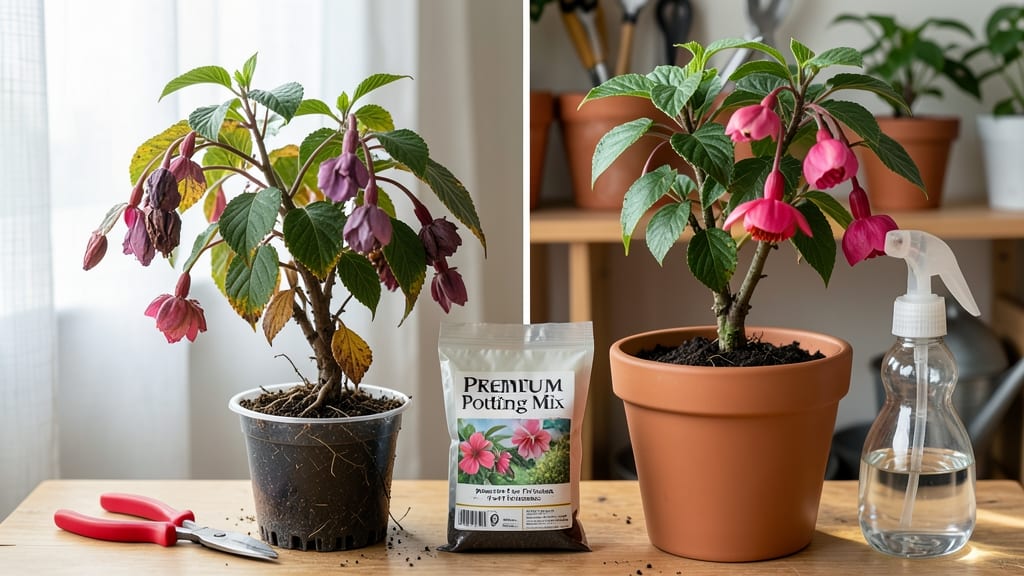
Reviving a fuchsia plant starts with a simple truth: most droopy, sparse fuchsias aren’t beyond saving. 🌿 I’ve nursed back plants with crispy edges and bare stems—even ones that looked like they’d given up—by focusing on three key fixes: pruning dead growth, adjusting water habits, and giving them the right light.
The results? Within weeks, you’ll see fresh green leaves and those signature trailing blooms returning. The first step is cutting away the damage—literally. Snip off any blackened stems, yellowing leaves, or leggy growth that’s crowding the center.
Fuchsias bloom best when they’re open and airy, so don’t be shy with the shears. After pruning, check the roots: if they’re mushy or smell rotten, it’s time to repot with fresh, well-draining soil. This alone can turn a struggling plant around in just 2-3 weeks.
What you’ll end up with is a bushier, healthier plant that blooms longer and more vibrantly. The secret? Consistent moisture (keep soil damp but never soggy) and morning sun with afternoon shade. Once you see new growth, switch to a balanced fertilizer every 4-6 weeks to keep those flowers coming.
Works for both hanging baskets and patio pots—just adjust watering based on container size. Here’s how to do it without losing another plant to neglect.
📚 In This Guide
- What you need
- Instructions
- Tips and common mistakes
- Wrapping up and next steps
What you need
- ● Pruning shears or sharp scissors: Clean, sterilized shears (alcohol wipe recommended) to avoid spreading disease. Size: Small, precise blades (2-4 inches).
- ● Well-draining potting mix: A high-quality blend for fuchsias, ideally with peat moss, perlite, and compost. Quantity: Enough to refill the pot (2-3 gallons, depending on pot size).
- ● Watering can or spray bottle: A can with a narrow spout for targeted hydration or a spray bottle for misting. Tip: Avoid overhead watering to prevent fungal issues.
- ● Balanced liquid fertilizer: A 10-10-10 or 20-20-20 formula, diluted to half-strength. Quantity: Follow label instructions (typically 1-2 tbsp per gallon of water).
- ○ Rooting hormone (optional but helpful): A gel or powder to encourage growth on cuttings. Brand suggestion: Clonex or similar.
- ● Hydrogen peroxide (3%) or cinnamon powder: For sterilizing cuts and preventing infection.
- ● Clear plastic bag or humidity dome: To create a mini greenhouse for cuttings or newly repotted plants.
- ● Grow lights or sunny windowsill: If your fuchsia needs extra light (6+ hours of indirect sunlight daily).
- ● Mulch (e.g., bark chips or coconut coir): To retain moisture and regulate soil temperature.
Step-by-Step instructions for reviving a fuchsia plant
Here's how I bring fuchsias back from the brink—with pruning, hydration, and a little TLC.
🌿 Step 1: Assess the Plant for Damage and Disease
Start by examining your fuchsia from all sides. Look for yellowing leaves, blackened stems, or mushy growth—these are red flags. I gently tug on stems to check for root rot; if they pull away easily, the roots are dead. Healthy roots should resist slight tugging and feel firm, not mushy or hollow.
Next, inspect the leaves for pests like spider mites or aphids. Hold a white piece of paper under the plant and shake gently—tiny moving specks mean you’ve got pests. Don’t panic yet; most fuchsias can bounce back if you catch issues early. If the plant is severely wilted or has no leaves at all, it might need more drastic measures (like repotting).
💧 Step 2: Adjust Watering and Check Soil Conditions
Fuchsias hate soggy roots, so the first thing I do is let the soil dry out completely. Stick your finger 1-2 inches deep—if it feels damp, wait another day. Overwatering is the #1 killer of fuchsias, and it’s often the culprit when leaves yellow or drop. Once the soil is dry, water deeply until it drains from the bottom of the pot.
I like to water in the morning so excess moisture evaporates by evening. If your fuchsia is in a heavy clay pot, switch to a terracotta one—it breathes better and prevents root rot. Avoid letting the plant sit in saucers of water; always empty them after watering. You’ll know you’ve got the right balance when new growth appears within 2-3 weeks.
✂️ Step 3: Prune Dead or Damaged Growth
Using clean, sharp pruners (or scissors), snip off any blackened, mushy, or hollow stems at a 45-degree angle, about ¼ inch above a leaf node. This encourages new growth from healthy buds. If the plant is leggy, trim back 1/3 of the longest stems to promote bushier growth—just avoid cutting into old wood (woody stems won’t regrow).
Remove any yellow or brown leaves by pinching them at the base. Don’t worry if it looks drastic; fuchsias are resilient. After pruning, give the plant a light misting to reduce stress. You’ll see fresh, vibrant leaves emerging from the nodes within 3-4 weeks if the roots are still healthy. If no new growth appears after 6 weeks, the plant may be beyond revival.
☀️ Step 4: Optimize Light and Fertilize for Recovery
Fuchsias need bright, indirect light—think east or north-facing windows, or a spot with dappled sunlight. Direct afternoon sun scorches their leaves, while too little light makes them stretch and lose color. If your plant is indoors, rotate it quarter-turn weekly so it grows evenly. You’ll know the light is right when leaves stay a rich, deep green without browning edges.
Once new growth appears, feed your fuchsia with a balanced liquid fertilizer (like 10-10-10) diluted to half-strength. I apply it every 2-3 weeks during the growing season (spring to fall). Avoid fertilizing in winter—the plant is dormant and doesn’t need extra nutrients. Within 4-6 weeks, you should see stronger stems and the first signs of those signature trailing blooms.
🪴 Step 5: Repot if Necessary and Monitor Progress
If the roots are circling the pot or the soil is compacted, it’s time to repot. Choose a container just 1-2 inches larger than the current one—fuchsias prefer being slightly root-bound. Fill the bottom with fresh well-draining potting mix (avoid garden soil—it’s too dense). Gently remove the plant, loosen the roots if they’re tangled, and place it in the new pot, covering the roots with soil.
After repotting, water lightly and place the plant in a shaded spot for 3-5 days to reduce stress. Watch for new leaves and buds—these are your best indicators of recovery. If the plant stays dormant or continues to decline, it may be time to propagate healthy cuttings or start fresh. With the right care, your fuchsia should be blooming beautifully within 8-12 weeks.
Tips & tricks for reviving a fuchsia plant
Here’s what I’ve learned from years of nursing fuchsias back to health—these are the little details that make all the difference.
Root Rot Rescue: If you suspect root rot during Step 1, don’t rush to repot yet. Instead, trim away all mushy roots with sterilized scissors, then soak the remaining healthy roots in a 1:10 hydrogen peroxide-to-water solution for 10 minutes to kill lingering pathogens. This gives the plant a fighting chance before repotting. The key is acting fast—once roots turn completely black, it’s too late.
Pruning Like a Pro: In Step 3, when cutting back leggy stems, focus on making your cuts just above a leaf node where new growth can sprout. I like to use a magnifying glass to spot these tiny buds—sometimes they’re hidden under fuzzy leaves. Also, avoid pruning on rainy days; fresh cuts are vulnerable to fungal infections when damp. A light misting after pruning is fine, but keep the plant in a dry, shaded spot for 24 hours afterward.
Lighting Hacks: For Step 4’s bright indirect light, I’ve found that placing fuchsias near a north-facing window with a sheer curtain works best. If you only have south-facing windows, use a white sheer curtain to diffuse the harsh afternoon sun. You’ll notice the leaves stay a vibrant green instead of turning yellow or crispy at the edges. And if your home is dim, consider adding a grow light for 12-14 hours per day to supplement natural light.
Fertilizer Timing: When you see those first signs of new growth in Step 4, that’s your cue to start fertilizing. I wait until I see 2-3 fresh leaves before applying the diluted fertilizer. Too soon, and you risk burning tender new growth. Also, always water your fuchsia first—this prevents fertilizer from sitting too concentrated in the soil and scalding the roots. Think of it like giving your plant a drink before offering dessert!
Pro Tips for Revive A Fuchsia Plant
- Here’s what I’ve learned from years of nursing fuchsias back to health—these are the little details that make all the difference.
- Root Rot Rescue: If you suspect root rot during Step 1, don’t rush to repot yet.
- Pruning Like a Pro: In Step 3, when cutting back leggy stems, focus on making your cuts just above a leaf node where new growth can sprout.
Frequently asked questions
Got questions about reviving your fuchsia plant? You’re not alone!
Here are answers to the most common concerns—so you can get your drooping beauty back to blooming brilliance in no time.
Can I revive a fuchsia plant that’s completely wilted or mushy?
If the stems are still firm but droopy, prune them back by one-third and focus on hydration and shade. However, if the stems are mushy or blackened (a sign of rot), it’s likely too far gone—consider propagating healthy cuttings instead. Start fresh with healthy stems to save the day!
How long does it take to revive a fuchsia plant?
With proper care—pruning, consistent watering, and the right light—you’ll see new growth in 2–4 weeks. Full recovery (including blooms) may take 6–8 weeks, depending on the plant’s health and season. Patience is key—think of it as a slow-motion comeback!
Should I water a fuchsia plant more or less when reviving it?
Fuchsias hate soggy roots, so water deeply but infrequently: let the top inch of soil dry out between waterings. Overwatering causes rot, while underwatering stresses the plant. Aim for 1–2 times per week (adjust for climate)—and always use well-draining soil to prevent waterlogged roots.
Can I revive a fuchsia plant that’s been in direct sunlight?
Yes, but you’ll need to gradually acclimate it to shade. Move it to morning sun or dappled light first, then slowly increase exposure over 1–2 weeks. Sudden shade changes can shock the plant, so take it slow—like easing into a new workout routine!
What if my fuchsia plant keeps dying after revival?
If your fuchsia keeps struggling, check for pests (aphids, spider mites), poor drainage, or nutrient deficiencies. Try:
- Repotting in fresh, moisture-retentive soil with perlite.
- Fertilizing lightly with a balanced liquid fertilizer (half-strength).
- Inspecting leaves for signs of pests and treating with neem oil if needed.
Wrapping up and next steps
Reviving a struggling fuchsia plant is totally doable with the right care—whether it’s pruning back dead growth, adjusting watering habits, or boosting its light and nutrients. 🌿 Remember, patience and consistency are key; these beauties bounce back stronger once their needs are met!
Now that you’ve got the know-how, grab your shears and give your fuchsia the TLC it deserves—your garden (and those stunning blooms!) will thank you.
Next step? Monitor progress weekly and tweak your approach as needed. Before you know it, your fuchsia will be thriving—and ready to steal the show in your outdoor space! 🌸