
Planting
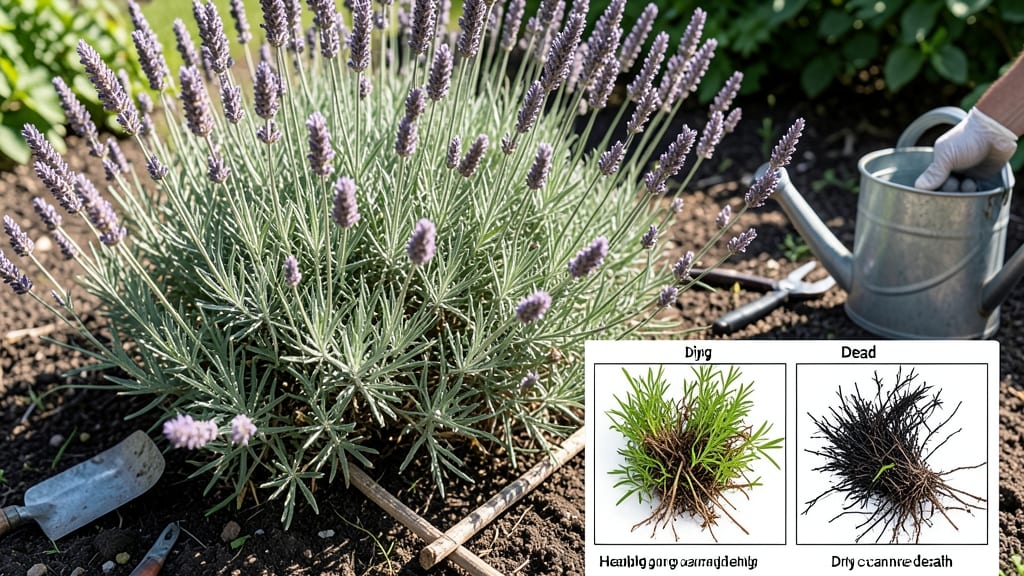
Telling if a lavender plant is dead isn’t always as obvious as you’d think, especially when it looks wilted or dormant.
Your lavender might look like it’s struggling—but is it truly dead, or just in survival mode? Before you dig it up, learn how to diagnose its health with these expert-approved signs and save your prized shrub.
Lavender 🌿 thrives in dry conditions, so wilting or brown stems don’t always mean the end. The key is checking for life in the roots and stems, not just the leaves.
A simple snap test or a quick soil check can reveal whether your plant is beyond saving—or just taking a break.
In this guide, I’ll walk you through the three clear signs of a dead lavender plant, how to test for life, and what to do next—whether that means pruning back dead growth or giving it a second chance with fresh soil.

3 Clear signs your lavender plant is actually dead (not just dormant)
Lavender plants have a unique way of looking lifeless during winter dormancy, which can fool even experienced gardeners into thinking they're dead. But before you pull it out, check these 3 definitive signs to determine if your lavender has truly died or is just resting.
Knowing the difference can save your plant—and your patience!
Many gardeners confuse dormant lavender with dead lavender because both look similar: woody stems, no leaves, and a generally sad appearance. The key difference lies in the stem condition, root health, and how the plant responds to touch.
Let’s break down what to look for so you can make an accurate diagnosis.
-
Sign #1: The Stem Snap Test
Grab a woody stem near the base and bend it. If it snaps cleanly (like dry kindling), your lavender is dead. If it bends slightly or feels slightly flexible, it’s dormant. -
Sign #2: Foliage Condition
Check for any green buds or tiny leaves hidden under the stems. If you see even one green shoot, your plant is alive. If all stems are completely brown and brittle, it’s likely dead. -
Sign #3: Root Inspection
Dig 1-2 inches deep around the base. Healthy roots should be white or tan and firm. If roots are black, mushy, or smell rotten, your lavender is dead. No roots at all? It’s gone.
One of the most reliable ways to test for life is the stem snap test. Lavender stems become brittle when dead but retain a slight flexibility when dormant.
I’ve seen many gardeners give up on lavender too soon because they didn’t perform this simple test. A quick bend can tell you everything you need to know!
Don’t overlook hidden green shoots—they’re your plant’s secret signal for life. Even if 90% of your lavender looks dead, those tiny green buds might be all it takes to revive it.
I once thought my lavender was a lost cause, but after spotting a few hidden shoots, I gave it a chance—and it bloomed beautifully the next spring!
If you’re still unsure, the root inspection is your final answer. Healthy roots are the last line of defense for a dying lavender plant. If the roots are intact, your plant can often bounce back with proper care.
But if they’re rotted or nonexistent, it’s time to replace it. Remember, lavender is drought-tolerant, so overwatering is often the culprit behind root rot.
Seasonal dormancy is a natural process for lavender, especially in USDA Zones 6a and below. During winter, lavender sheds its leaves and conserves energy, making it look like it’s given up.
But with the right care—like minimal watering and protection from frost—it’ll bounce back in spring. Don’t throw in the towel just yet!
If your lavender fails all three tests, it’s time to replace it. But if it passes even one, there’s still hope! Prune back the dead stems, give it a light fertilizer in spring, and watch it come back to life.
Lavender is resilient—don’t let a little dormancy fool you into thinking it’s gone for good.
Pro tip: Mark the location of your lavender plant so you don’t accidentally dig it up next year. I’ve done it myself—only to realize too late that I’d removed a plant I thought was dead but was actually just waiting for spring! 🌿
How to test for life: the stem snap and root check method
When your lavender plant looks lifeless, don’t rush to dig it up—perform these two definitive tests first. The stem snap test and root inspection reveal whether your plant is truly dead or just dormant. I’ve used these methods to save several lavender shrubs that appeared beyond hope!
Start with the stem snap test—it’s the quickest way to check for life. Grab a healthy-looking stem (or the main one if all look dead) and bend it firmly.
If it snaps cleanly or bends slightly without breaking, roots may still be alive. A dry, brittle snap usually means the plant is dead.
For a more accurate diagnosis, move to the root inspection. This requires digging carefully around the base of the plant—use a small trowel or your hands if the soil is loose.
Look for white or light tan roots with a slight springiness. Dark, mushy, or completely absent roots confirm death.
Step-by-Step: Stem Snap & Root Check
- Step 1: Choose a stem (healthy or main) and hold it near the base.
- Step 2: Bend the stem firmly—listen for a clean snap (dead) or slight bend (alive).
- Step 3: If unsure, dig 1-2 inches around the base with a trowel.
- Step 4: Check for white/tan roots—if present, the plant may revive with proper care.
- Step 5: If roots are dark/mushy, the plant is dead—remove it to prevent disease.
✂️ Pro Tip: Test multiple stems for accuracy—some may still hold life!
Timing matters! Perform these tests in spring or early fall, when lavender is most active. Avoid testing after a hard frost or during extreme drought, as these can mimic death. If roots are alive but stems are brittle, prune back 1/3 of the plant to encourage new growth.
Remember, lavender is drought-tolerant—it may look dead after weeks without water, but roots often survive. If you find life, reduce watering immediately (overwatering kills more lavender than drought!). For container-grown lavender, gently remove it from the pot to inspect roots without damaging the soil.
When in doubt, wait 2-3 weeks and retest. Sometimes, lavender revives after a false alarm. If all tests confirm death, replace it—lavender spreads easily from cuttings, so you can propagate a new plant from healthy stems! 🌱