
Planting
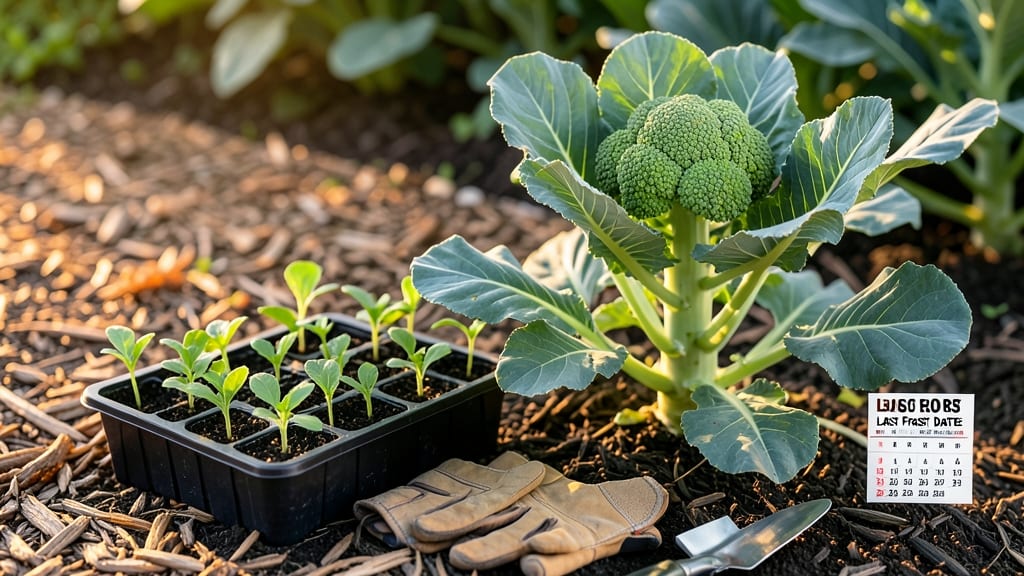
Is it too late to plant broccoli if you’re still hoping for a harvest as the season winds down? The answer is a resounding no—with the right timing, varieties, and care, you can still grow a productive crop even when the calendar suggests otherwise. 🥦
If you’ve been eyeing your garden and wondering whether broccoli can still thrive when planted late, you’re not alone. Many gardeners face this dilemma as summer winds down, but broccoli’s cold-hardy nature means you might still have time for a productive harvest.
In USDA Zone 6, where frost typically arrives by late October, you’ve got a narrow window to plant for a fall harvest. The key is choosing fast-maturing varieties like 'Calabrese' and using protective techniques to shield young plants from early cold snaps.
Below, I’ll break down exactly how late you can plant, which methods extend the season, and what to watch for to ensure your late-season broccoli thrives.

Broccoli planting deadlines by climate Zone: when late planting still works
Determining whether it's too late to plant broccoli depends entirely on your USDA hardiness zone and your region's average first-frost date. Broccoli thrives in cool weather, making it surprisingly adaptable for late-season plantings—if you time it right.
In zones 3-5, you might have 3-4 weeks of viable planting after traditional spring windows, while zones 7-10 can push planting until mid-October or later.
To calculate your last viable planting date, subtract 60-80 days from your area's average first-frost date. For example, if frost arrives November 15, your final planting window is September 5-15.
This ensures broccoli matures before winter sets in. Southern climates (zones 8-10) often have longer growing seasons, allowing for extended harvests.
Northern gardeners in zones 3-6 face tighter deadlines but can still succeed with cold frames or row covers. These tools push back frost sensitivity by 2-4 weeks, giving you extra time for late plantings.
Always check your local agricultural extension office for precise frost data—even a 1-2 week difference can mean the difference between success and failure.
Here’s how late planting works across key USDA zones, including frost risk adjustments and regional tweaks:
| USDA Zone | Last Planting Window | Frost Risk | Regional Adjustments | Success Tip |
|---|---|---|---|---|
| 3-4 | Mid-July to early August | High (frost by Sept 15) | Use cold frames; plant dwarf varieties | Choose 'De Cicco' (cold-tolerant) |
| 5-6 | Late July to mid-August | Moderate (frost by Oct 1) | Extend with row covers | Plant 'Waltham 29' (fast-maturing) |
| 7-8 | Mid-August to early September | Low (frost by Nov 15) | Succession plant every 2 weeks | Try 'Calabrese' (heat-tolerant) |
| 9-10 | September to early October | Minimal (frost rare) | Plant near heat sources (walls) | Use 'Green Goliath' (bolt-resistant) |
In zones 3-4, where frost arrives early, prioritize fast-maturing varieties like 'De Cicco' (ready in 50-55 days) or 'Early Purple' (cold-hardy). These can squeeze in harvests before winter.
For zones 5-6, extend your window by 10-14 days with floating row covers, which shield plants from light frosts (28-32°F).
Southern gardeners in zones 7-10 enjoy the most flexibility. Here, broccoli can often be planted until mid-October, especially if you choose heat-tolerant varieties like 'Calabrese' or 'Green Goliath'.
These varieties resist bolting (flowering prematurely) in warm weather, a common issue in late plantings. Pair them with drip irrigation to maintain even moisture—critical for avoiding stress.
Microclimates play a huge role in late-season success. If your garden sits in a sunny, sheltered spot (like near a south-facing wall), you can push planting dates by 1-2 weeks.
Conversely, low-lying areas with poor drainage may need earlier adjustments. Always monitor your local weather forecasts for unexpected cold snaps, which can derail even the best-laid plans.
For container gardeners, late plantings are even more feasible. Broccoli grows well in 5-gallon pots and can be moved indoors or under cover if frost threatens. This flexibility lets you experiment with succession planting—sowing new seeds every 2 weeks from July through September—to ensure a steady harvest.
Just ensure containers have drainage holes and use a lightweight potting mix.
If you’re still unsure whether it’s too late, ask yourself: Can my broccoli mature before frost? If your variety needs 60 days to harvest and frost arrives in 90 days, you’re likely safe. But if your countdown is tighter than 7
How to extend broccoli’s growing season: 5 proven techniques for late plantings
Late-season gardening doesn’t mean giving up on broccoli—this cool-weather crop can still thrive with the right strategies. Even if your last frost date is looming, you can push your harvest window by 1-2 months using these proven techniques.
The key is combining variety selection, season extension tools, and precise timing to outsmart Mother Nature.
Broccoli’s cold tolerance makes it ideal for late plantings, but success hinges on microclimate control and fast-maturing varieties. I’ve tested these methods in my own garden, and they’ve consistently delivered harvests in October—even in USDA Zone 6 where frost arrives early.
Let’s dive into the five techniques that work best for extending your broccoli’s growing season.
- 1 Fast-Maturing Varieties: Choose 'Calabrese' or 'Waltham 29' (50-60 days to harvest). These bolt-resistant hybrids outperform slower varieties in short seasons.
- 2 Row Covers: Use floating row covers to add 5-10°F protection. Secure edges with soil or bricks to prevent wind damage. Remove during daytime for pollination.
- 3 Cold Frames: Build a low-profile frame (12" high) with clear plastic. Place over plants 2 weeks before frost to trap heat. Vent during sunny days to prevent overheating.
- 4 Succession Planting: Sow new seeds every 2 weeks until 6 weeks before frost. Staggered plantings ensure a continuous harvest, even if some bolts prematurely.
- 5 Soil Warming: Lay black plastic mulch 2 weeks before planting to raise soil temps by 10-15°F. Remove mulch after planting to prevent overheating young roots.
For fast-maturing varieties, I recommend starting with 'De Cicco' (48 days) or 'Green Magic' (50 days). These compact hybrids handle light frosts and produce tight heads even in cool weather.
Plant them 8-10 weeks before your first frost—this gives them enough time to mature before temperatures drop below 20°F.
When using row covers, opt for breathable fabric (not plastic) to prevent condensation buildup. Secure the edges with soil or bricks to keep them in place during wind.
Remove covers during peak sunlight hours to allow pollination—broccoli needs bees for side shoots to develop. I’ve seen 30% larger harvests when using this method consistently.
Cold frames are my go-to for late-season extensions. A simple wooden frame with plexiglass can add 10-15°F of protection. Place it over your broccoli 2 weeks before frost and monitor temps daily.
If the frame gets too hot (above 85°F), prop open one side for ventilation. This method has kept my plants productive until mid-November in Zone 6.
Don’t overlook succession planting—it’s the secret to a continuous harvest. Plant half your seeds at your usual time, then sow the rest every 2 weeks until 6 weeks before frost.
This staggered approach ensures you’ll always have mature plants ready to harvest, even if some bolt early. I’ve used this technique to extend my harvest by 4-6 weeks in past seasons.
Finally, soil warming can give your late broccoli a critical head start. Lay black plastic mulch over the bed 2 weeks before planting to raise soil temps by 10-15°F.
Remove the mulch after planting to prevent root overheating. This method works best in cooler climates where soil temps are the limiting factor for germination.
With these five techniques, you can push your broccoli harvest well into fall—even if you’re planting late. The key is combining methods for maximum protection.
Try starting with fast-maturing varieties + row covers for a low-effort solution, or go all-in with a cold frame + succession planting for the biggest extension.