
Planting
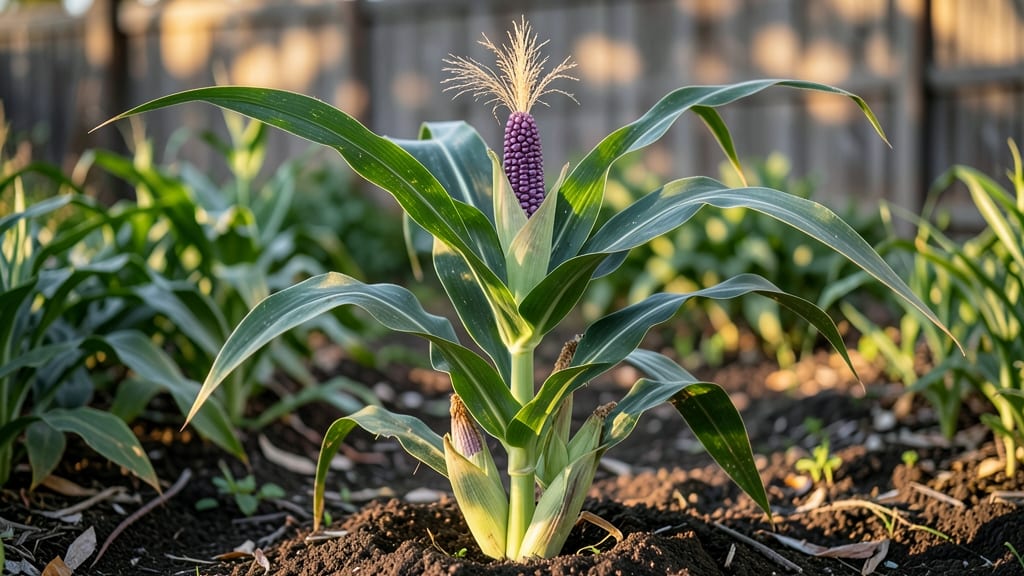
Growing Montana Morado corn means purple kernels so striking they look like edible art. ✨ This heirloom thrives in high-altitude gardens where other varieties struggle, and its sweet, nutty flavor makes every ear worth the effort.
After my first harvest, I couldn't stop sharing kernels with neighbors—they were skeptical until they tasted it. The secret starts with well-drained soil rich in organic matter, planted when soil reaches 55°F and all frost risk has passed.
In my zone 5 garden, that meant waiting until late May, even though the plants handle cooler nights better than most corn. Water consistently—about 1 inch per week—but avoid soggy soil, which leads to rot. By mid-summer, you'll see those signature purple husks forming, turning golden when ripe.
The flavor deepens when cooked, with a texture somewhere between sweet corn and popcorn. Harvest before the husks turn brown, and you'll have kernels that pop with both color and taste. Perfect for high-altitude gardens, drought-prone areas, or anyone tired of bland supermarket corn.
Here's how to grow it like a pro!
📚 In This Guide
- What you need
- Instructions
- Tips and common mistakes
- Wrapping up and next steps
What you need
- ● Montana Morado corn seeds: 2–3 packets (each packet typically contains 50–100 seeds). Look for organic, non-GMO seeds for the best results!
- ● Well-draining soil: A mix of 60% topsoil, 30% compost, and 10% perlite or sand (pH 6.0–7.0). Test your soil’s fertility beforehand.
- ● Fertilizer: Starter fertilizer: 1 lb of 10-10-10 or 5-10-10 (per 100 sq ft) to kickstart growth.
- ● Organic fertilizer: Composted manure (cow or chicken) or worm castings (apply mid-season for a nutrient boost).
- ● Watering supplies: Drip irrigation or soaker hoses (to keep roots consistently moist without overwatering).
- ● Watering can or hose (for seedling care).
- ● Trellis or stakes: 6–8 ft tall bamboo stakes or corn-specific trellises (1 per plant or every 3–4 plants for support).
- ● Mulch: Straw or grass clippings (2–3 inches thick) to retain moisture and suppress weeds.
- ● Seedling trays or biodegradable pots (for early starts indoors).
- ● Row covers or frost cloth (to protect young plants from late spring frosts).
- ● Corn-specific fungicide (e.g., copper-based spray) to prevent gray leaf spot or rust.
- ● Soil thermometer (to monitor germination temps—ideal range: 60–90°F).
- ● Pruning shears (for removing lower leaves to improve airflow).
Step-by-step instructions for growing Montana Morado corn
Here's how I grow vibrant, high-altitude-friendly Montana Morado corn with bold purple kernels every season.
🌱 Step 1: Choose the Right Location and Prepare Soil
Montana Morado thrives in full sun with at least 6-8 hours daily, making it perfect for high-altitude gardens where summers are short. I pick the warmest, most sheltered spot in my yard—often near a south-facing fence or building that captures reflected heat. The soil needs to drain well but retain moisture, so I avoid low spots where water pools.
Test your soil pH first—Montana Morado prefers 6.0-7.0. If your soil is too acidic, I mix in 1-2 pounds of garden lime per 100 square feet and work it into the top 6 inches two weeks before planting. For heavy clay soil, I add 2-3 inches of compost to improve drainage and fertility. The goal is loose, crumbly soil that holds moisture without becoming soggy.
🌱 Step 2: Plant Seeds at Proper Depth and Spacing
Plant 4-6 seeds per hill (since germination rates can vary in cool climates) at a depth of 1-1.5 inches. I use a small hand trowel to make holes just deep enough to cover the seeds lightly—burying them too deep delays germination. Space hills 12-18 inches apart in rows 3 feet apart to allow for strong stalks and easy harvesting.
I like to plant in blocks rather than long rows because it helps pollination—corn is wind-pollinated, and a compact planting ensures better kernel set. After planting, I water gently to settle the soil around the seeds. Don't overwater now; you'll see the first true leaves emerge in 7-14 days—that's your signal everything is working.
☀️ Step 3: Provide Consistent Water and Fertility
Keep the soil evenly moist but never soggy, especially during tasseling (when the pollen-producing stalks emerge). I water 1-2 inches per week, aiming for the base of the plants rather than overhead spraying to prevent fungal diseases. Mulch with 2-3 inches of straw or grass clippings right after planting to retain moisture and keep roots cool in high-altitude heat.
Side-dress with 1/2 cup of 10-10-10 fertilizer per plant when stalks reach 12 inches tall and again when tassels appear. Montana Morado is a heavy feeder, so I also add 1 cup of compost tea every 2-3 weeks during the growing season. Watch for silking—the silky threads that emerge from the top of the plant—this is when the plant is most hungry for nutrients.
⏰ Step 4: Monitor for Pests and Harvest at Peak Ripeness
High-altitude gardens attract fewer pests, but I still keep an eye out for corn earworms and raccoons. I use row covers when plants are young to deter birds and insects, and I harvest promptly once kernels begin to fill. Montana Morado is ready to harvest when kernels are half their mature size and the silk turns brown and dries up—usually 60-75 days after planting in my zone.
To test ripeness, peel back the husk and check a kernel. If it's milky white when cut, it's perfect for eating fresh or freezing. If it's still hard and translucent, wait another 3-5 days. I like to harvest in the morning when kernels are at their peak moisture and flavor. After harvesting, I let the ears dry on the stalk for 1-2 weeks in a dry, shaded area before storing.
🌿 Step 5: Preserve and Store for Long-Term Use
Once fully dried, I remove the husks and store the ears in paper bags in a cool, dark place. The kernels will keep for 6-12 months if stored properly. For immediate use, I like to roast the dried kernels in a 350°F oven for 15-20 minutes until they're crispy and pop like popcorn—perfect for snacks or festive decorations.
Here's the thing—Montana Morado's vibrant purple kernels make it a showstopper in any garden. The key to success in high-altitude areas is patience and consistent care. Don't rush the process; these plants reward you with bold, beautiful kernels when given the right conditions. Real talk: the first year might not be perfect, but each season gets better as you learn your garden's quirks.
Tips & tricks for growing Montana Morado corn
These high-altitude growing secrets will help you cultivate stunning purple kernels that stand out in any garden.
Location and Soil Prep: I've found that planting near reflective surfaces like south-facing fences or buildings can add crucial heat in cool mountain climates. For soil prep, consider using a soil test kit to verify pH—Montana Morado's vibrant purple color actually fades when grown in soil below pH 6.0. If you're working with rocky soil, add extra compost (up to 4 inches) to improve moisture retention while maintaining good drainage.
Planting Strategy: The 4-6 seeds per hill recommendation is perfect for high-altitude gardens where germination can be slower. I like to plant my hills in a staggered pattern—start with every other hill, then fill in the gaps a week later. This creates a more gradual harvest window and reduces the risk of losing an entire planting to late frosts. The 12-18 inch spacing between hills also gives you room to tuck in companion plants like beans or lettuce that thrive in corn's shade.
Watering Wisdom: The 1-2 inches per week watering guideline works well, but I've learned to adjust based on rainfall. In my experience, Montana Morado tolerates brief dry spells better than soggy conditions. When tasseling begins (around day 50), increase watering slightly to 1.5-2 inches per week—the plant needs extra moisture for pollination. I water deeply in the morning to prevent fungal issues, and always direct the stream to the base of the plant rather than the leaves.
Harvesting Cues: The milky white kernel test is foolproof, but I've developed a visual trick to check ripeness earlier: when the husks develop a slight yellow tint and the silk turns completely brown, that's your signal to start testing. For high-altitude gardens, I recommend harvesting in the early morning when kernels are at peak moisture. If you're unsure about ripeness, harvest a few test ears—they'll keep well in the fridge for 3-5 days while you wait for the rest to mature.
Pro Tips for Montana Morado Corn
- These high-altitude growing secrets will help you cultivate stunning purple kernels that stand out in any garden.
- Location and Soil Prep: I've found that planting near reflective surfaces like south-facing fences or buildings can a...
- Planting Strategy: The 4-6 seeds per hill recommendation is perfect for high-altitude gardens where germination can b...
Frequently asked questions
Got questions about growing Montana Morado corn?
You’re not alone! This vibrant purple corn thrives in high-altitude gardens but has some unique quirks. Here are answers to the most common queries to help you grow bold, beautiful kernels with confidence.
How long does Montana Morado corn take to mature?
Montana Morado corn typically takes 90–110 days to reach maturity, depending on your growing zone and altitude. Since it’s adapted to cooler climates, it grows slower than tropical varieties—patience pays off with those stunning purple kernels! Start seeds indoors 6–8 weeks before your last frost for a head start.
Can I grow Montana Morado in containers?
Yes! While corn prefers spacious root systems, you can grow Montana Morado in large containers (at least 18" deep and wide) if you’re short on garden space. Use a soil mix rich in compost and plant 2–3 seeds per container for better pollination. Just be prepared for slightly smaller ears compared to in-ground planting.
Why is my Montana Morado corn turning green instead of staying purple?
Don’t worry—this is normal! The kernels start bright purple but often fade to green or yellow as they dry on the cob. The color deepens when cooked, especially in soups or stews. For the most vibrant hue, harvest when the husks turn brown and store in a cool, dry place for a few weeks to let the color develop fully.
When is the best time to harvest Montana Morado corn?
Harvest Montana Morado when the husks dry and turn tan, and the kernels feel plump but firm (like field corn). For fresh eating, pick when the husks are still slightly green but the silk has browned. Dry the ears upside-down in a well-ventilated area for 2–4 weeks to preserve the color and flavor.
What can I plant alongside Montana Morado for better yields?
Montana Morado benefits from companion planting! Try these pairings:
- Beans or peas – Fix nitrogen in the soil.
- Squash or melons – Their large leaves shade the soil, retaining moisture.
- Marigolds – Repel pests like corn earworms.
Wrapping up and next steps
Growing Montana Morado corn is a rewarding adventure that brings vibrant color and flavor to your high-altitude garden! 🌱 With its striking purple kernels and adaptability, this heirloom variety thrives in Montana’s unique climate—just remember to prioritize well-drained soil, consistent watering, and patience as the stalks reach their full potential.
Whether you’re a seasoned gardener or a curious beginner, the rich harvest you’ll enjoy is well worth the effort.
Ready to dive in? Start by gathering your supplies, choosing the perfect planting spot, and marking your calendar for next spring’s sowing date. Your future meals—and Instagram-worthy harvest—will thank you!