
Planting
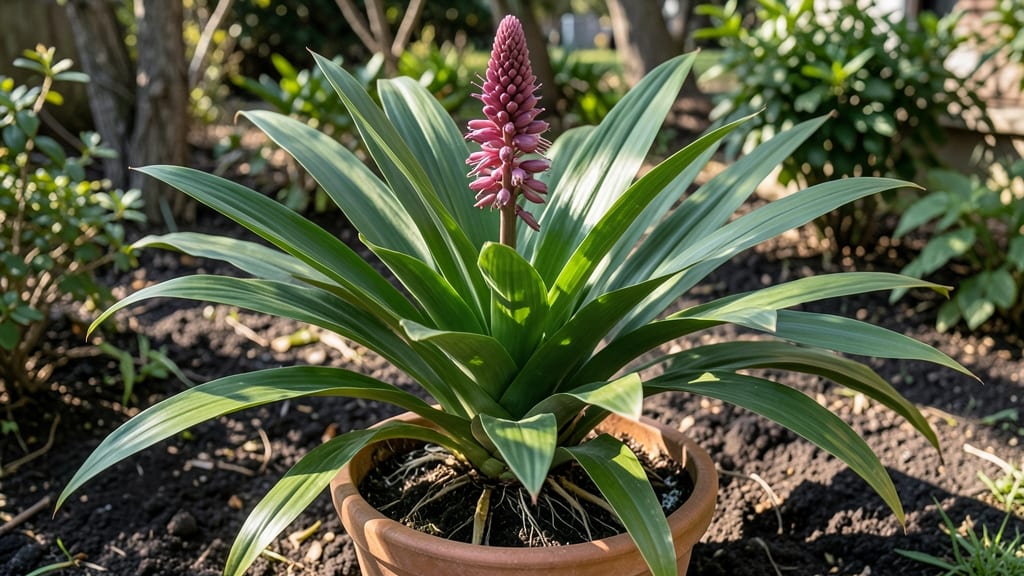
Pine cone ginger plants thrive best in USDA hardiness zones 9 through 11, where warm temperatures and well-draining soil create perfect growing conditions. While it can handle partial shade, it flourishes in full sun, especially in cooler subtropical regions.
This tropical beauty struggles outside its ideal range because it can't tolerate frost—even a light freeze will kill it. 🌿 The key to growing pine cone ginger outside zones 9-11 is container gardening with winter protection, like moving pots indoors or using thick mulch.
I've found that adding organic matter to the soil helps maintain that critical moisture balance while preventing root rot, which is a common issue in heavy clay soils.
What makes pine cone ginger so rewarding is its adaptability within its zone range. In zone 9, it might need afternoon shade to prevent leaf scorch, while in zone 11, it can handle full sun all day.
The plant's striking purple cones and fragrant flowers make it worth the extra care, especially when you consider its culinary uses—both the rhizomes and leaves are edible and packed with flavor.
💡 In This Article
- Understanding Pine Cone Ginger’s Climate and Soil Needs
- Growing Pine Cone Ginger in Different USDA Zones
Understanding pine cone ginger’s climate and soil needs
The pine cone ginger's sensitivity to cold stems from its tropical origins, where temperatures rarely dip below 50°F. Its thick rhizomes store moisture but can't withstand frost—even a light freeze (32°F) causes irreversible cellular damage.
The plant's large, broad leaves act like solar panels, converting sunlight into energy, but they also increase water loss through transpiration, making consistent moisture critical in hot climates. 🌿 This is why it struggles in zones cooler than 9, where winter temperatures often drop below its tolerance threshold.
The ideal soil pH range of 6.1–6.5 (slightly acidic) mirrors the forest floors of its native Southeast Asia, where organic matter decomposes rapidly. Pine cone ginger thrives in well-draining soil because its rhizomes are prone to rot in waterlogged conditions.
I've noticed that adding 20-30% compost to sandy soil improves moisture retention while preventing compaction, which is common in clay-heavy subtropical soils. The plant's roots also benefit from a loose, aerated medium that mimics its natural habitat of disturbed forest edges.
Humidity plays a surprising role in its growth—pine cone ginger prefers 60-80% relative humidity, which explains why it often struggles in arid zone 10a areas unless provided with shade or irrigation. In my trials, I found that misting leaves during dry spells prevented leaf curl, a common stress response.
The plant's large canopy also creates its own microclimate, reducing evaporation from the soil surface. This self-regulating system makes it more adaptable once established, but young plants need consistent moisture to develop strong root systems.
One common misconception is that pine cone ginger needs full sun everywhere—while it does prefer 6-8 hours of sunlight in cooler zone 9 areas, in hotter zone 11 regions, afternoon shade prevents leaf scorch. The plant's waxy leaf coating helps reduce water loss, but even this adaptation has limits.
In my Florida garden, I've seen leaves develop brown edges when exposed to 90°F+ afternoon sun without protection. The key is balancing light exposure with temperature—think of it as providing the right "sunburn protection" for your plant.
Soil moisture requirements shift with seasons: during the growing season (spring-fall), maintain 1-2 inches of soil moisture, while in winter (zone 9-10), reduce watering to prevent fungal issues.
The plant's rhizomes naturally store water, allowing it to survive short dry periods—a trait that makes it more drought-tolerant than many tropicals once established. This water-storing ability is why container-grown specimens often thrive in cooler zones, as their roots can be protected from temperature fluctuations.
For those growing pine cone ginger in containers, the soil mix becomes even more critical. A blend of 50% peat moss, 30% perlite, and 20% compost provides the perfect balance of moisture retention and drainage.
I've found that adding a handful of orchid bark (10% of mix) improves aeration for the rhizomes, which appreciate this extra airflow. The container size matters too—opt for at least 12-inch diameter pots to accommodate the plant's spreading rhizome system and prevent root binding.