
Planting
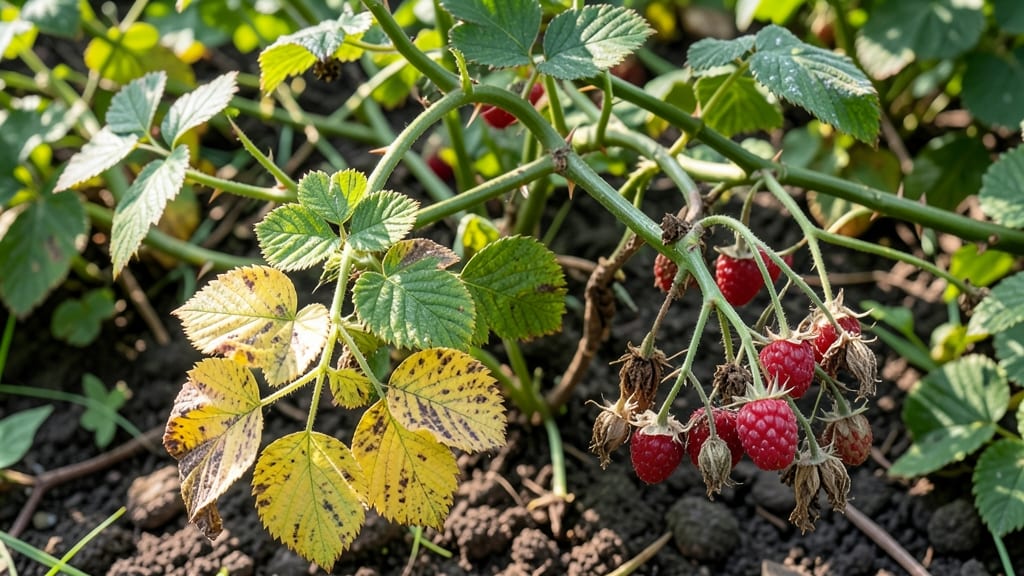
The demonstrative raspberry plant problems with yellow leaves and weak growth are screaming for help—usually from overwatering, nutrient starvation, or hidden pests. 🌱 I’ve nursed back more than a few struggling bushes by addressing the root cause (literally), and the fixes are simpler than you’d think. Most gardeners overlook the basics—like soil drainage or pruning timing—that make all the difference.
The most common culprits? Overwatering (soggy soil = root rot), nutrient deficiencies (especially nitrogen or magnesium), and pests (Japanese beetles skeletonize leaves overnight). My raspberries turned around after I swapped heavy clay soil for a well-draining mix and added a layer of compost—no fancy treatments needed.
The key is checking soil moisture with your finger before watering and fertilizing in early spring.
You’ll see new growth within 2-4 weeks if you fix the issue early. Prune dead canes immediately to redirect energy, and spray neem oil on pests for an organic knockout.
The best part? Once you correct the problem, raspberries rebound faster than almost any other fruit plant. Here’s how to diagnose and treat the most common issues.
Works for both summer- and fall-bearing varieties, and the same principles apply whether you’re growing in containers or in-ground. Let’s get those canes thriving again—your harvest depends on it.
Root Causes Behind Raspberry Struggles
Understanding why your raspberry plants are underperforming starts with peeling back the layers of their care. Raspberries, while hardy, are sensitive to specific environmental and cultural factors. Below, we break down the scientific triggers behind common raspberry plant problems—so you can address the real issues, not just the symptoms.
Raspberries thrive in well-drained soil with consistent moisture—but too much water is a silent killer.
When roots sit in soggy conditions for too long, they suffocate, leading to: - Yellowing leaves (chlorosis) from oxygen deprivation. - Root rot (Phytophthora or Pythium fungi), which blocks nutrient uptake. - Weak stems that snap easily under stress.
Why it happens:
- Compacted or clay-heavy soil holds excess water near roots.
- Lack of mulch or improper irrigation (e.g., overhead watering) encourages fungal growth.
- Container-grown raspberries without drainage holes trap moisture, accelerating rot.
Actionable fix: ✅ Amend soil with compost or perlite to improve aeration. ✅ Water at the base (not leaves) and space sessions 1–2 inches deep. ✅ Use raised beds or pots with drainage if your soil is naturally waterlogged.
Raspberries are heavy feeders, especially during fruiting.
A lack of key nutrients shows up as: - Yellow leaves between veins (iron/manganese deficiency, often in alkaline soil). - Purple stems or small leaves (phosphorus deficiency, common in young plants). - Slow growth or stunted canes (nitrogen deficiency, the most frequent issue).
Why it happens:
- Soil depletion after repeated harvests without replenishment.
- Improper pH levels (raspberries prefer 5.5–6.5; outside this range, nutrients lock up).
- Over-reliance on synthetic fertilizers without organic matter, disrupting microbial balance.
Actionable fix: 💡 Test your soil (home kits or lab analysis) to identify specific deficiencies. 🌿 Feed with balanced organic fertilizer (e.g., 10-10-10) in early spring and after harvest. 🍄 Add compost tea to boost beneficial microbes that unlock nutrients.
Raspberries are magnets for sap-sucking insects and fungal pathogens, which weaken plants over time.
Common culprits: - Spider mites (tiny yellow speckles on leaves, webbing on undersides). - Japanese beetles (skeletonized leaves, chewed fruit). - Cane blight (Didymella applanata) – brown lesions that girdle canes. - Verticillium wilt (yellowing leaves, wilting despite moist soil).
Why it happens:
- Stressed plants (from drought, poor soil, or overcrowding) are easier targets.
- Humid climates (70–90% humidity) or late-season rains create perfect conditions for fungal spread.
- Lack of pruning leaves old, diseased canes to harbor pathogens.
Actionable fix: 🔥 Prune aggressively in late winter/early spring to remove dead/diseased canes. 🛡️ Spray neem oil (for pests) or copper fungicide (for blight) preventively in spring. 🌡️ Improve airflow by spacing plants 3–4 feet apart and avoiding overhead irrigation.
Raspberries are perennial but not indestructible. Extreme conditions trigger problems like:
- Sunburnt leaves (white/yellow patches in hot, dry climates).
- Winter dieback (cold-sensitive varieties in frost-prone zones).
- Floppy canes (from heat stress or lack of support).
Why it happens:
- Sudden temperature swings (e.g., late frosts after bud swell).
- Inadequate winter mulch (canes freeze in Zone 5 and colder).
- Overhead watering in heat (leaves scorch from lens effect of droplets).
Actionable fix: 🏔️ Choose cold-hardy varieties (e.g., ‘Boyne’ or ‘Nova’) for your zone. 🌿 Mulch heavily in fall (4–6 inches of straw or wood chips) to insulate roots. 💦 Water deeply in morning to reduce evaporation and avoid leaf burn.
Raspberries rely on structured pruning to direct energy into fruit production. Mistakes here lead to:
- Weak, tangled canes (from lazy pruning).
- Reduced yields (old canes primocanes vs. floricanes confusion).
- Disease spread (leaving dead canes attached).
Why it happens:
- Not knowing your variety (summer-bearing vs. everbearing pruning differs).
- Pruning at the wrong time (e.g., cutting back after June in summer-bearing types).
- Planting too densely (shading inner canes, trapping moisture).
Actionable fix: ✂️ Summer-bearing types: Remove all old canes after harvest; keep 6–8 strongest new canes. ✂️ Everbearing types: Prune lightly in spring (remove weak canes); leave some old ones for fruit. 📏 Space plants 2–3 feet apart in rows 5–6 feet apart for airflow.
Quick Fixes for Raspberry Plant Struggles
When your raspberry plants start showing signs of distress—whether it’s yellow leaves, stunted growth, or mushy canes—don’t panic! Most issues have simple, actionable fixes.
Below, we break down the most common raspberry plant problems and how to turn them around, plus tips to keep your berries thriving for years.
Cause: Overwatering, underwatering, nutrient imbalance (like lack of nitrogen or magnesium), or fungal infections (e.g., Phytophthora root rot). How to Fix It:1️⃣ Check the Soil Moisture 💧
- Stick your finger 1-2 inches into the soil. If it’s soggy, reduce watering and improve drainage by adding compost or perlite.
- If the soil is bone-dry, water deeply once a week (more in extreme heat) and mulch to retain moisture.
2️⃣ Test for Nutrient Deficiencies 🧪
- Yellow leaves with green veins? Likely a magnesium deficiency (Epsom salt solution: 1 tbsp per gallon of water, spray on leaves weekly).
- Pale, weak leaves? Add a balanced fertilizer (10-10-10) in early spring or a nitrogen-rich compost (like fish emulsion).
3️⃣ Treat Fungal Infections 🍄
- Prune infected leaves/canes (sterilize shears with rubbing alcohol).
- Apply a copper fungicide or neem oil spray (1 tsp neem oil + 1 tsp dish soap per quart of water) every 2 weeks until symptoms fade.
Prevent It: ✅ Mulch with straw or wood chips to regulate soil moisture. ✅ Avoid overhead watering—water at the base to prevent fungal spores. ✅ Rotate crops every 3-4 years to prevent soil-borne diseases.
Cause: Compacted soil, lack of sunlight, root-bound plants, or sap-sucking pests (like spider mites or aphids).
How to Fix It:
1️⃣ Loosen the Soil & Improve Drainage 🏗️
- Gently aerate the soil around the base with a fork or trowel (avoid damaging roots).
- Mix in compost or aged manure (1-2 inches) to boost nutrients.
2️⃣ Relocate or Prune for Better Airflow 🌬️
- If plants are crowded, thin them out—keep 3-5 canes per plant for optimal growth.
- Move to a sunnier spot (raspberries need 6-8 hours of sunlight daily).
3️⃣ Fight Pests Naturally 🐛
- Spider mites? Spray with water + dish soap (1 tsp soap per quart) or release predatory mites.
- Aphids? Blast off with a strong water jet or use insecticidal soap.
Prevent It: 💡 Plant in well-draining soil (raspberries hate "wet feet"). 💡 Inspect plants weekly for early pest signs. 💡 Use drip irrigation to keep foliage dry.
Cause: Phytophthora root rot (from overwatered, poorly drained soil) or bacterial canker.
How to Fix It:
1️⃣ Remove Affected Canes Immediately ⚠️
- Cut infected canes at the base and dispose of them (don’t compost!).
- Sterilize pruners with rubbing alcohol between cuts.
2️⃣ Improve Drainage & Reduce Water 🚰
- Amend soil with sand or gravel if it’s clay-heavy.
- Water only when the top 1-2 inches of soil are dry.
3️⃣ Apply Fungicide as a Preventative 🛡️
- Use a copper-based fungicide or hydrogen peroxide spray (1 tbsp 3% H₂O₂ per gallon of water) every 4 weeks.
Prevent It: 🌡️ Plant on a slight mound to encourage runoff. 🌡️ Avoid planting in low spots where water pools. 🌡️ Rotate crops if root rot was severe.
Most raspberry plant problems are fixable with a little TLC—just act fast and give your plants the right conditions. With these solutions, your berries will be back to thriving in no time! 🍇✨
Frequently asked questions
Why are my raspberry leaves turning yellow, but the veins stay green?
This classic symptom usually signals a magnesium deficiency (often called "lime-induced chlorosis"). Raspberries can't absorb magnesium when soil pH is too high (above 6.5). Try spraying leaves with Epsom salt solution (1 tablespoon per gallon of water) once a week, or work sulfur or peat moss into the soil to lower pH gradually.
Can I still harvest fruit from raspberry canes that look diseased?
Only if the disease is superficial (like powdery mildew on leaves). For fungal issues like cane blight (brown spots) or bacterial canker (oozing lesions), remove and destroy infected canes immediately—don't compost them! The fruit on healthy-looking canes is usually safe, but wash berries thoroughly before eating.
How do I tell if my raspberry plants need more water or less?
Check soil moisture by sticking your finger 1-2 inches deep. If it feels damp but not soggy, your plants are fine. Overwatering signs: yellowing leaves, mushy stems, or white fungal growth. Underwatering signs: crispy leaf edges, wilting despite moist soil. Water deeply 1-2 times per week, then let topsoil dry slightly between waterings.
Why are my raspberry canes flopping over instead of standing upright?
Floppy canes usually mean weak stems from nutrient deficiency (often nitrogen) or lack of support. First, check if canes are root-bound—gently loosen roots if planted in containers. Then, add balanced fertilizer (10-10-10) and install trellis supports immediately. For everbearing varieties, prune lightly to reduce weight.
Is it too late to fix raspberry problems in late summer?
Not at all! While early spring is ideal for major fixes, late summer is perfect for pruning dead canes, adding mulch, and treating pests (like Japanese beetles). Focus on water management (deep but infrequent watering) and nutrient boosts (fish emulsion or compost tea) to help plants recover before winter.