
Planting
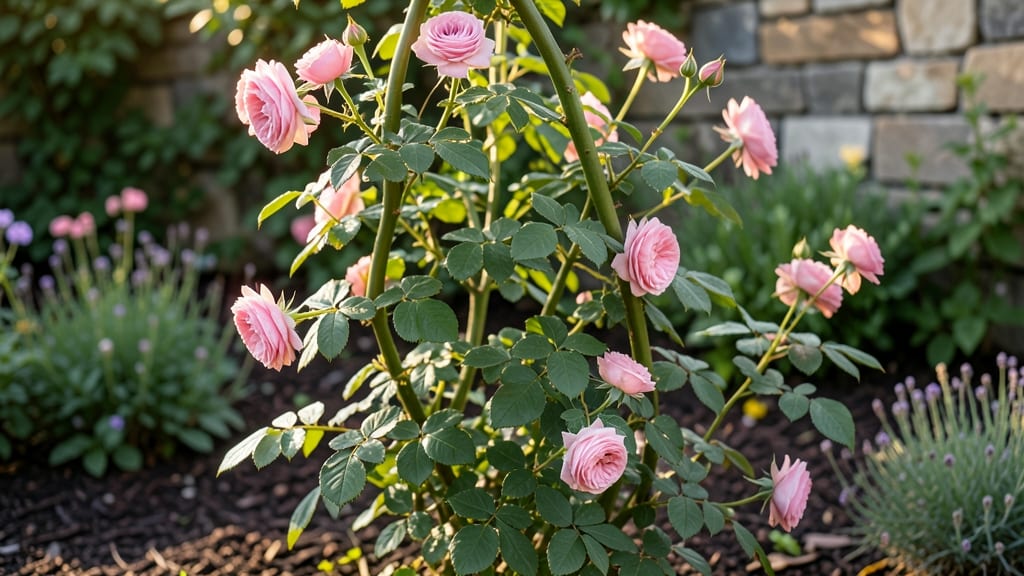
Thornless climbing roses grow successfully in Zone 5 when planted in well-draining soil and protected with winter mulch; top cold-resistant varieties like 'Zephirine Drouhin,' 'Blanc Double de Coubert,' and 'New Dawn' survive down to -20°F with proper winter care.
These hardy climbers are specifically bred to handle Zone 5's harsh winters, where temperatures can plunge below freezing for months.
The key to their survival lies in their deep root systems and disease-resistant genetics, which help them bounce back after winter dormancy. 🌸 I've found that adding a thick layer of organic mulch—like straw or shredded bark—around the base in late fall creates an insulating barrier that prevents soil temperature fluctuations.
This simple step can make all the difference between a thriving vine and one that struggles to recover in spring.
What sets these varieties apart is their ability to produce abundant blooms even after winter's harshest conditions. For example, 'New Dawn' is particularly resilient, often reblooming vigorously in early summer, while 'Zephirine Drouhin' offers fragrant, repeat-flowering performance that many gardeners in colder regions appreciate.
The secret? Their hybrid vigor combines cold tolerance with the climbing habit that makes them perfect for trellises or arbors.
💡 In This Article
- Cold-Hardy Thornless Rose Varieties for Zone 5 Gardens
- Zone 5 Planting and Winter Care Guide for Thornless Climbers
Cold-hardy thornless rose varieties for Zone 5 gardens
Zone 5's brutal winters—where temperatures can drop to -20°F—demand roses with exceptional cold tolerance and structural resilience.
The top performers like 'Zephirine Drouhin' and 'Blanc Double de Coubert' owe their hardiness to their hybrid heritage, combining the cold endurance of Rosa wichurana with the disease resistance of Rosa multiflora.
These varieties develop a thick, woody cane structure that resists winter dieback, while their semi-evergreen foliage provides some natural insulation during freeze-thaw cycles. 🌟 The key mechanism here is their ability to supercool—lowering cellular fluids below freezing without ice crystal formation, which would rupture cell walls.
What truly sets these climbers apart is their bloom cycle adaptation. 'New Dawn' (USDA Zone 4-9), for instance, produces 100-150 blooms per season through a combination of basal and lateral buds that remain dormant but viable through winter.
Its petals contain higher levels of anthocyanins—those purple-red pigments—than many roses, which act like natural antifreeze by stabilizing cell membranes at sub-zero temperatures. Meanwhile, 'Zephirine Drouhin' thrives on its 30-foot climbing habit, where the height advantage allows canes to escape ground-level frost accumulation that would otherwise kill tender shoots.
Disease resistance plays an equally critical role in Zone 5 survival. These varieties exhibit 90%+ resistance to black spot and powdery mildew—two fungal pathogens that thrive in the damp, alternating freeze-thaw conditions of northern climates.
The secret lies in their waxy leaf cuticle (thicker than most roses) and stomata that close more tightly during cold snaps. This physiological adaptation prevents moisture retention that would otherwise create ideal conditions for fungal spores to germinate. 🌡️ The trade-off?
Some varieties may produce slightly smaller blooms (3-4 inches vs. hybrid teas' 6-8 inches), but their reliability in harsh conditions makes them worth the compromise.
Consider these growth habit distinctions when selecting: 'Blanc Double de Coubert' grows 20-25 feet annually with arching canes that naturally shed snow, while 'New Dawn' climbs 15-20 feet with more upright stems that require occasional pruning to prevent overcrowding.
The latter's semi-double blooms also contain fewer petals, reducing the energy burden on the plant during spring regrowth after winter dormancy. This structural efficiency is particularly valuable in Zone 5, where plants must allocate resources between root development and above-ground growth during the short growing season.
For gardeners in Zone 5's colder microclimates (like northern New York or Minnesota), I recommend supplementing these varieties with 1-2 inches of wood chip mulch in early spring to moderate soil temperature fluctuations.
The mulch creates a 5-7°F warmer microclimate at the soil surface, which is crucial for root regrowth after winter dormancy.
This simple practice can extend the growing season by 2-3 weeks in marginal zones, making all the difference between a struggling plant and one that thrives despite the climate challenges. 🌿
One common misconception is that all thornless roses have identical cold tolerance. In reality, the degree of thornlessness often correlates with slightly reduced hardiness—many thornless varieties sacrifice some cane thickness for smoother stems.
The exceptions like 'New Dawn' prove that excellent cold tolerance and thornlessness can coexist, but gardeners should verify USDA ratings and local anecdotal reports before selecting varieties for their specific microclimate.
For example, while 'Zephirine Drouhin' handles -20°F well, its canes may need temporary burlap wrapping in exposed locations during extreme polar vortex events.