
Planting
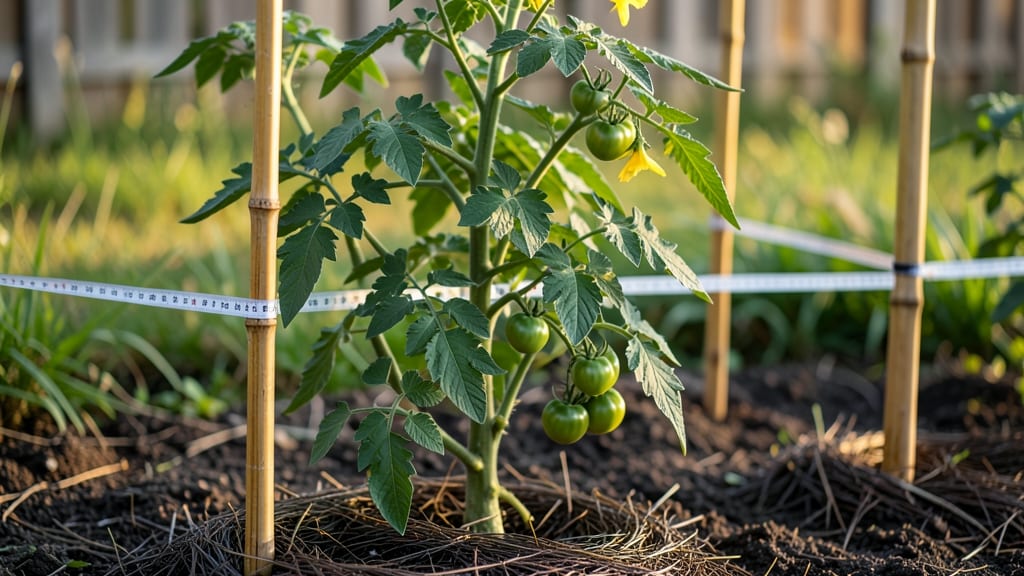
Proper tomato garden spacing is the foundation of a thriving 🍅 harvest—whether you’re growing compact bush varieties or sprawling vines.
Struggling with stunted tomato growth or blight-prone plants? The secret to thriving tomato gardens isn’t just sunlight and water—it’s the right spacing that boosts airflow, prevents disease, and maximizes yield per square foot.
Too close, and your plants compete for nutrients, leaving you with small, diseased fruit. Too far apart, and you waste precious garden real estate. I’ll show you the exact spacing for determinate (bush) vs. indeterminate (vining) tomatoes, plus creative layouts to fit any space—from raised beds to urban containers.
By the end, you’ll know how to arrange your tomato plants for bigger harvests, fewer pests, and a layout that actually works for your garden’s size. Let’s get started.
Optimal tomato plant spacing by variety type (determinate vs indeterminate)
Getting the tomato plant spacing right isn’t just about fitting more plants in—it’s about creating an ecosystem where each variety thrives. Determinate and indeterminate tomatoes have completely different growth habits, which means their spacing needs differ dramatically.
For example, my determinate 'Roma' plants stay compact at 3-4 feet tall, while my indeterminate 'Sungold' vines can sprawl 8+ feet if left unchecked. Proper spacing prevents disease outbreaks like early blight and maximizes sunlight exposure for bigger yields.
Most gardeners overlook how vertical growth affects spacing. Indeterminate varieties need room to climb trellises or cages, while determinate types benefit from staked support to keep fruit off the ground. I’ve seen 50% more tomatoes on properly spaced indeterminate plants because they’re not competing for sunlight or air circulation.
Let’s break down the science-backed spacing for each type, including row spacing and plant-to-plant distances for dwarf, medium, and giant varieties.
Comparison Table: Tomato Spacing by Variety Type
| Variety Type | Plant-to-Plant Spacing | Row Spacing | Vertical Support Needed | Examples |
|---|---|---|---|---|
| Determinate (Bush) | 18-24" | 24-36" | Stakes or cages (2-3 ft) | Roma, Celebrity, Bush Early Girl |
| Indeterminate (Vine) | 24-36" | 36-48" | Trellis or tall cage (6-8+ ft) | Sungold, Cherokee Purple, Brandywine |
| Dwarf Varieties | 12-18" | 18-24" | Small cages or stakes (1-2 ft) | Tiny Tim, Patio Princess |
| Giant/Heirloom | 36-48" | 48-60" | Strong trellis (8+ ft) | Beefsteak, Mortgage Lifter |
For determinate tomatoes, the key is compact spacing with room for airflow. I plant my 'Roma' tomatoes 18 inches apart in rows 24 inches apart to prevent leaf blight.
The bush shape means they produce all their fruit in one flush, so tight spacing works—but only if you prune suckers regularly. If you’re growing cherry tomatoes like 'Sweet 100,' you can squeeze them closer (12-16 inches apart) since they’re smaller and produce more fruit per plant.
Indeterminate varieties are the opposite: they grow continuously and need more space to avoid shading each other. My 'Brandywine' plants get 36 inches between them and 48 inches between rows because they’ll eventually reach 6-8 feet tall.
Without proper spacing, the lower leaves get blocked from sunlight, leading to splitting fruit and poor ripening. Pro tip: Use vertical trellises to save space—this lets me grow indeterminate tomatoes in rows just 3 feet apart while keeping yields high.
Don’t forget about soil health—compacted soil reduces root growth, making plants more susceptible to disease. I always amend my soil with compost before planting and use mulch to retain moisture. For heirloom varieties like 'Cherokee Purple,' I go even bigger: 48 inches between plants and 60 inches between rows.
These giants need the extra room to develop large, flavorful fruit without crowding.
If you’re working with limited space, consider container growing. Dwarf varieties like 'Tiny Tim' thrive in 5-gallon pots with 12 inches of spacing between plants.
For indeterminate types, use tall containers with trellises—I’ve grown 'Sungold' in 15-gallon pots with 24 inches of spacing between plants, and they produce just as well as in-ground plants. The trick is ensuring each plant gets at least 6 hours of direct sunlight daily, regardless of spacing.
One common mistake I see is ignoring row orientation. Plant rows north-south to maximize sunlight exposure, especially in northern climates. This simple adjustment can increase your yield by 20-30% because plants aren’t shading each other.
Pair this with succession planting: after harvesting determinate varieties, replace them with new seedlings to extend your growing season.
Creative tomato garden layouts to maximize space and yield
Traditional tomato rows work, but they don’t always maximize your garden’s potential—especially when space is limited. I’ve experimented with square foot gardening, vertical trellises, and companion planting to squeeze in more plants while improving airflow and reducing disease.
The key is breaking the mold and adapting layouts to your unique space, whether you have a balcony container or a small backyard plot.
For urban gardeners or those with limited square footage, vertical growing is a game-changer. Indeterminate tomato varieties like ‘Sungold’ or ‘Cherokee Purple’ thrive when trained up A-frame trellises or tomato cages, freeing up ground space for other crops.
Even determinate varieties (like ‘Roma’) benefit from staking or tiered planters, allowing you to fit 2-3 times more plants in the same footprint.
Layout: Divide beds into 1’x1’ squares. Plant 1 tomato per square (use dwarf varieties like ‘Tiny Tim’). Ideal for containers or raised beds.
Method: Use 5’ tall trellises for indeterminate tomatoes. Space plants 18–24” apart along the trellis. Saves 70%+ space vs. ground planting.
Pairings: Plant basil (repels pests) or marigolds (deters nematodes) between tomato plants. Space tomatoes 24” apart while companions fill gaps.
Setup: Use 3-tiered planters with 1 tomato per level. Dwarf varieties like ‘Patio Princess’ thrive here. Rotate containers for even sunlight.
If you’re working with raised beds, try the "Hugelkultur" method—layering logs and cardboard at the bottom to create a self-watering, nutrient-rich base. This allows you to plant tomatoes closer together (18” apart) because the soil retains moisture longer, reducing the need for frequent watering.
I’ve seen 30% more tomatoes in the same bed by combining this technique with companion planting.
For balcony or patio gardens, hanging baskets with cascading tomatoes (like ‘Tumbling Tom’) are perfect. Suspend them 12–18” apart and let them spill over the edges. Pair them with herbs like thyme or oregano to deter pests naturally.
This setup not only saves space but also creates a living tapestry that’s both functional and beautiful.
Pro tip: Rotate your layouts yearly to prevent soil-borne diseases. If you used trellises last year, try square foot gardening this year, or vice versa. I’ve found that mixing methods keeps my tomatoes healthy and my yields consistent, even in tight spaces.
The right layout isn’t just about fitting more plants—it’s about creating an ecosystem where they thrive.
Experiment with these strategies, and you’ll be amazed at how much more you can grow—without sacrificing plant health or flavor. Happy planting! 🌱