
Planting
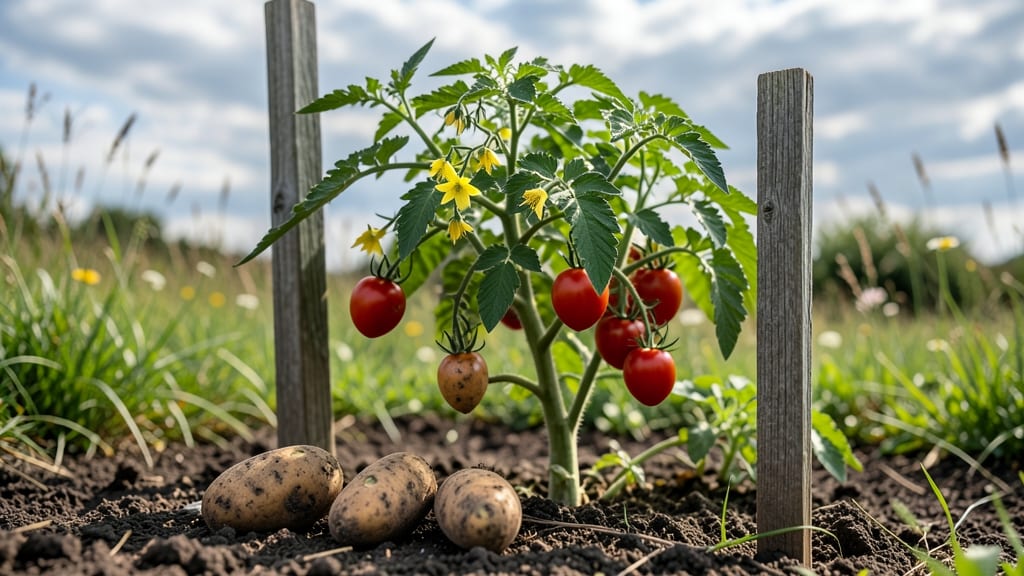
The tomato plant that grows potatoes is called Potato Leaf Tomato (Solanum lycopersicum 'Potato Leaf'), a hybrid variety producing edible tubers at its base alongside traditional fruit. Its potato-like leaves and compact growth make it ideal for small gardens or containers, though tubers are smaller than true potatoes and best used fresh or cooked like fingerling potatoes.
The Potato Leaf Tomato is a fascinating dual-purpose plant that combines the best of both worlds—delicious tomatoes AND edible tubers. 🌱 These tubers form along the plant's stems near the soil and grow to about 1-2 inches in diameter, resembling small fingerling potatoes.
Unlike traditional potatoes, they develop simultaneously with the fruit, making this plant a true space-saver for gardeners with limited room. The leaves' resemblance to potato plants is purely cosmetic, but it's what gives this variety its distinctive name and compact growth habit.
This unique hybrid thrives in well-draining soil with consistent moisture, making it perfect for container gardening or small urban plots. 🌿 The tubers are best harvested when the plant's fruit begins to ripen, typically in late summer.
While they won't replace your spud harvest, their earthy flavor makes them a fun addition to mashed dishes or roasted vegetable medleys.
💡 In This Article
- How Potato Leaf Tomatoes Produce Tubers
- Growing and Harvesting Potato Leaf Tomatoes
How potato leaf tomatoes produce tubers
The tuber formation in Potato Leaf Tomatoes begins with a specialized underground stem called a stolon, similar to how traditional potatoes grow. Unlike regular tomatoes, which focus energy on fruit production, this hybrid allocates resources to both fruit AND tuber development.
The stolons emerge from the plant's main stem at soil level and swell into small, irregularly shaped tubers weighing about 1-3 ounces each. 🌱 These tubers form along the plant's base rather than deep underground, making them easier to harvest than true potatoes.
The plant's distinctive potato-like leaves aren't just for show—they're an evolutionary adaptation. These broad, dark green leaves maximize photosynthesis while maintaining a compact growth habit. The leaves' rough texture and deep lobes mimic potato foliage, though they're actually just a genetic quirk of the hybrid.
What's truly remarkable is how the plant balances two completely different growth patterns simultaneously: the vertical tomato growth and the horizontal tuber development. This dual-purpose system makes it a botanical marvel for space-conscious gardeners.
Environmental factors play a crucial role in tuber development. Consistent moisture is key—too little water stunts tuber growth, while excessive moisture can cause rot. The ideal soil temperature for tuber formation is between 60-75°F, with well-draining soil preventing waterlogging.
Sunlight also matters: while the plant needs 6-8 hours of direct sun daily for fruit production, too much intense afternoon sun can stress the tubers. This is why partial afternoon shade in hot climates often improves tuber quality.
What sets Potato Leaf Tomatoes apart from true potatoes is their growth timing. Tubers begin forming about 6-8 weeks after planting, coinciding with the plant's flowering stage. Unlike potatoes, which require complete vine death for tuber maturation, these tubers are ready to harvest when the fruit starts ripening.
This synchronized growth makes them perfect for sequential harvesting—you can enjoy both fruit and tubers in the same season. 🌿 The trade-off? Their smaller size means you'll need about 4-5 plants to match the yield of one traditional potato plant.
Here's what's happening below ground: The stolons develop tiny buds that swell into tubers through a process called tuberization, triggered by hormonal changes in response to light exposure and temperature shifts.
This is why gardeners in cooler climates often get better tuber yields—the plant perceives the seasonal change and redirects energy storage. The tubers themselves have a slightly waxy skin and a creamy, nutty interior when cooked, making them ideal for roasting or mashing.
For comparison, traditional tomatoes devote nearly all their energy to fruit production, while true potatoes focus entirely on tuber development. This hybrid's ability to split its resources creates a unique growing challenge: if the plant produces too many tomatoes, tuber formation suffers, and vice versa.
Pruning excess fruit can actually increase tuber size, as the plant redirects its energy underground. This delicate balance is what makes growing Potato Leaf Tomatoes both rewarding and educational.