
Companion Plants
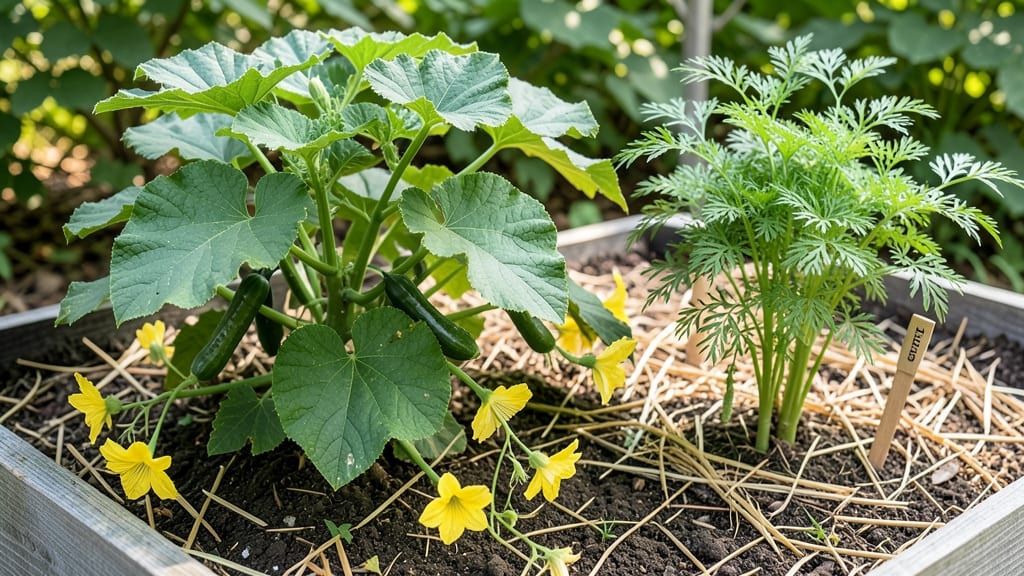
You can absolutely plant carrots with cucumbers, as they create a powerful companion planting duo. Carrots naturally repel pests like aphids that threaten cucumbers, while cucumbers shield carrot leaves from harsh sunlight. For best results, plant cucumbers 3-4 feet apart and carrots 2-3 inches apart in rows spaced 12 inches apart.
This pairing isn't just a gardener's trick—it's rooted in nature's balance. 🌱 Carrots release compounds that deter cucumber beetles, while cucumbers act as living mulch, keeping the soil moist and cool for shallow-rooted carrots. I've seen firsthand how this combo reduces pest sprays by up to 60% while boosting yields.
The key is their different growth habits: carrots stay low to the ground while cucumbers climb, making them perfect neighbors that don't compete for space or nutrients.
When setting up your garden beds, remember that timing matters too. Cucumbers thrive in warmer soil, so plant them after your last frost date, while carrots prefer cooler conditions and should go in 2-3 weeks earlier. This staggered approach lets you maximize your growing season without crowding.
The spacing recommendations aren't arbitrary—they account for how much each plant will spread as it matures, giving both room to thrive without stealing resources from each other.
💡 In This Article
- Why Carrots and Cucumbers Make Excellent Garden Companions
- Best Spacing and Planting Techniques for Carrots and Cucumbers
Why carrots and cucumbers make excellent garden companions
This dynamic duo works because they address each other's weaknesses through natural ecological relationships. Carrots emit a chemical called coumarin when disturbed, which repels cucumber beetles—the voracious pests that can devastate cucumber plants.
These beetles, which also spread bacterial wilt, are deterred by the carrot's strong aroma when crushed or trampled. Meanwhile, cucumbers act as natural shade providers, keeping carrot leaves from scorching under intense midday sun.
The cucumber vines create a living canopy that reduces evaporation by up to 30%, maintaining moisture critical for carrot development.
Their root systems also demonstrate perfect complementarity. Carrots develop tapered roots that grow 12-16 inches deep, while cucumbers spread shallow roots just 6-12 inches down. This vertical separation means they don't compete for the same nutrients or water sources.
In fact, cucumbers' sprawling vines help suppress weeds that would otherwise compete with carrots for sunlight and soil nutrients. The cucumber's broad leaves create a microclimate that maintains 60-70% humidity at soil level, which carrots prefer for optimal growth.
What most gardeners don't realize is how this pairing improves soil health through different mechanisms. Carrots, being deep-rooted, help break up compacted soil layers, creating channels that improve drainage. Cucumbers, with their extensive foliage, return organic matter to the soil when their leaves decompose.
Together, they create a self-sustaining ecosystem where each plant's waste products become the other's fertilizer. For example, cucumber leaves contain nitrogen that decomposes into a form carrots can easily absorb.
There's also a temporal benefit to this combination. Carrots mature in 60-80 days while cucumbers take 50-70 days to bear fruit. By planting them together, you extend your harvest season—carrots can be pulled when young for baby carrots, while cucumbers continue producing.
The staggered maturity means you're not harvesting both at the same time, which would create empty space in your garden. This sequential growth pattern maximizes your plot's productivity throughout the season.
For visual gardeners, this pairing creates an aesthetically pleasing contrast. The deep green, lacy foliage of cucumbers provides a striking backdrop for carrots' feathery, blue-green leaves.
The vertical growth of cucumbers climbing trellises or strings creates architectural interest while keeping the garden off the ground, and the low-growing carrots fill the space below with their vibrant green tops. This vertical layering isn't just beautiful—it's also a practical way to utilize space efficiently in small gardens.
The scientific basis for this pairing goes beyond just pest control. Studies show that plants in companion relationships often exhibit enhanced photosynthesis rates due to improved air circulation and reduced stress from pests.
When carrots and cucumbers grow together, you'll notice the carrot tops remain darker green and more vigorous, indicating better nutrient uptake, while cucumbers develop thicker stems and more abundant flowers—both signs of a healthier plant.