
Planting
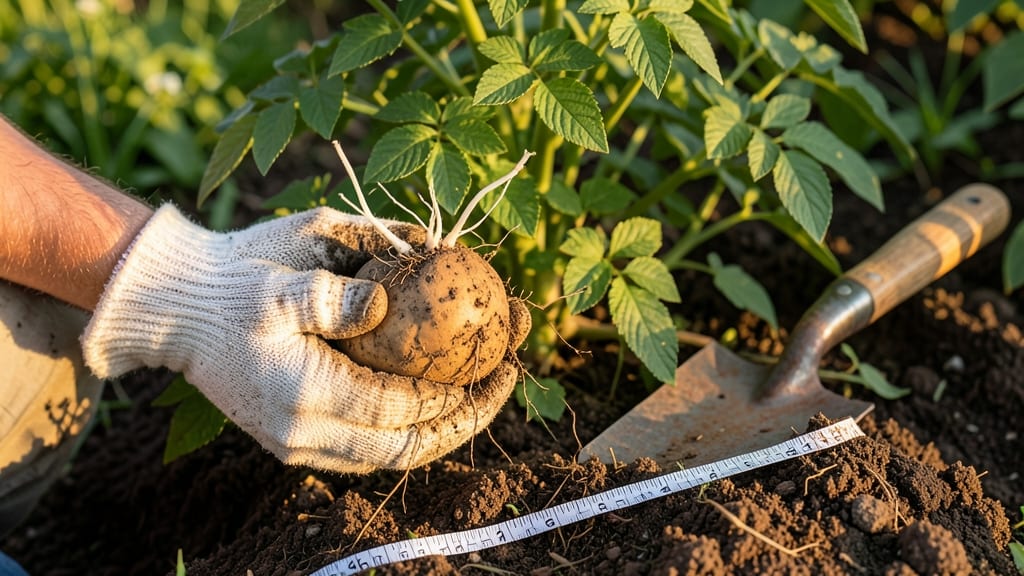
Planting sprouted potatoes at 3 inches deep is the fastest way to turn those little green shoots into a bountiful harvest—but get it wrong, and you’re staring at rot or stunted growth.
Picture this: you’ve waited weeks for those 🥔 sprouts to peek through the soil, only to realize they’re either baking in the sun or drowning in soggy dirt. The 3-inch rule isn’t just a number—it’s the sweet spot where tubers form efficiently, roots anchor properly, and your plants avoid stress.
Why does depth matter so much? Too shallow, and your potatoes bake in the sun or dry out. Too deep, and they struggle to reach the surface, wasting energy.
I’ll break down the science behind the 3-inch guideline, how to adjust for your soil type, and the simple tricks to ensure your 🥔 grow fast and strong.
By the end, you’ll know exactly how to plant your sprouted potatoes for a faster harvest, whether you’re in a raised bed, containers, or a backyard plot—no guesswork, just results.

The 3-Inch planting depth rule explained: why it works for potato growth
When you plant sprouted potatoes, the 3-inch depth rule isn’t arbitrary—it’s rooted in science. This depth balances tuber formation, soil temperature, and photosynthesis efficiency to give your potatoes the best start.
Too shallow, and they’ll rot from exposure; too deep, and you’ll delay harvests by weeks. Understanding why this works helps you avoid common mistakes that waste months of growth.
The eyes (sprouts) of your potato need darkness to trigger tuber formation, but they also need access to warm soil (around 50-60°F) to sprout efficiently. Planting at 3 inches deep places these sprouts just below the soil’s surface where temperatures stabilize, while leaving room for tubers to form below.
This depth also ensures the plant’s stem nodes (where tubers develop) remain in the ideal zone.
Here’s the science behind it: Potatoes form tubers at stem nodes where the stem meets the soil. The 3-inch rule positions the first few nodes just below the surface, where they’ll develop into your first harvestable tubers.
Deeper planting buries these nodes too far, forcing the plant to grow more foliage before tuber formation begins—delaying your harvest by 2-4 weeks.
Another key factor is photosynthesis efficiency. Shallow planting exposes the stem to too much light, which can cause it to green and produce solanine (a toxin). At 3 inches, the stem remains partially shaded while still allowing the leaves to photosynthesize effectively.
This balance ensures your plant focuses energy on tuber growth rather than defensive compounds.
| Factor | Why 3 Inches Works | Result |
|---|---|---|
| Soil Temperature | Places sprouts in 50-60°F zone for optimal growth | Faster sprouting and tuber initiation |
| Tuber Formation | Positions stem nodes at ideal depth for tuber development | Earlier and larger harvests |
| Photosynthesis Balance | Keeps stem partially shaded to avoid solanine buildup | Healthier plants and better yields |
| Moisture Control | Maintains consistent moisture around developing tubers | Reduces rot and improves storage life |
| Climate Adaptability | Works in cool and warm climates with minor adjustments | Consistent results across regions |
Climate plays a surprising role in why this depth works universally. In cooler climates (USDA Zones 3-5), the 3-inch rule ensures the soil warms quickly enough to support sprouting without the tubers freezing.
In warmer climates (Zones 7-10), this depth prevents the soil from becoming too hot, which can stress the plant and reduce tuber formation. The rule acts as a buffer zone that adapts to most conditions.
For container gardening, the 3-inch rule still applies, but you’ll need to adjust spacing. Containers dry out faster, so planting at this depth helps maintain consistent moisture around the tubers. Use a well-draining potting mix and place containers where they’ll get 6-8 hours of sun daily.
This depth also makes it easier to hill soil around the stems as the plant grows, encouraging more tuber formation.
One common mistake is planting potatoes too deep in heavy clay soil. Clay holds moisture but can become waterlogged, slowing tuber growth. In these cases, you can plant slightly shallower (2.5 inches) to improve drainage while still protecting the sprouts.
Conversely, in sandy soil, you might plant a bit deeper (3.5 inches) to retain moisture longer and prevent the tubers from drying out.
Pro tip: If you’re planting in early spring when soil temperatures are still cool, consider using a black plastic mulch to warm the soil faster. This allows you to maintain the 3-inch depth while creating a microclimate that mimics warmer conditions.
The mulch also suppresses weeds and retains moisture, giving your potatoes a head start.
Remember, the 3-inch rule is a starting point. Pay attention to your soil type, local climate, and the specific potato variety you’re growing. Some varieties, like Yukon Gold, thrive with this depth, while others may need slight adjustments.
The key is to observe your plants and adjust as needed—your goal is to create the perfect balance of light, moisture, and warmth for tuber formation.
By mastering this depth, you’ll not only avoid common planting mistakes but also set your potatoes up for maximum yield and quality. Whether you’re a beginner or a seasoned gardener, the 3-inch rule is your secret weapon for a bountiful harvest. 🥔
Adjusting depth for climate and soil type: when to deviate from the 3-Inch rule
The 3-inch rule works beautifully in loamy soil with moderate moisture, but real-world gardening demands flexibility. Your local climate zone and soil composition can dramatically alter what "perfect depth" means for your sprouted potatoes.
For example, sandy soil drains too quickly, while clay soil holds moisture like a sponge—both extremes require depth adjustments to prevent rot or drought stress.
Even container gardening changes the equation. Pots dry out faster, so you might plant 1 inch deeper than in-ground to maintain moisture around the tubers. Meanwhile, cold climates benefit from slightly deeper planting (up to 4 inches) to protect tender sprouts from late frosts.
Understanding these variables lets you customize planting depth for maximum yield.
Adjusting Planting Depth: When to Deviate from 3 Inches
✅ Increase Depth (4-6 inches)
- Sandy soil: Prevents rapid drying
- Cold climates: Protects from frost
- Containers: Slows moisture loss
- Drought-prone areas: Retains water
❌ Decrease Depth (2-3 inches)
- Clay soil: Prevents waterlogging
- Warm climates: Speeds tuber formation
- Heavy rainfall: Reduces rot risk
- Well-draining soil: Avoids overwatering
Let's troubleshoot common issues. If your potatoes rot prematurely, you're likely planting too deep in heavy clay or overwatering. The fix? Reduce depth to 2-3 inches and improve drainage with compost.
Conversely, if your tubers stay small and stunted, shallow planting in sandy soil may be the culprit—dig 1 extra inch deeper next time.
For container gardening, use a minimum 12-inch-deep pot and plant at 3-4 inches deep to balance moisture retention and root growth. Fill the remaining space with well-draining potting mix to mimic ideal in-ground conditions.
In USDA Zone 5 or colder, aim for 4-inch depth to shield sprouts from late-season frosts that can kill emerging foliage.
Don't forget to hill soil around stems as plants grow—this creates a natural 4-6 inch deep zone for tuber formation. For early harvests, plant some potatoes shallower (2 inches) in warm climates, while saving deeper plantings for larger, later-season yields.
The key is adapting while keeping those eyes facing up every time.
Experiment with depth in small batches to see what works best in your garden. Keep a planting journal noting soil type, climate, and results—you'll soon master the art of climate-specific potato planting for bumper crops every season. 🥔