
Planting
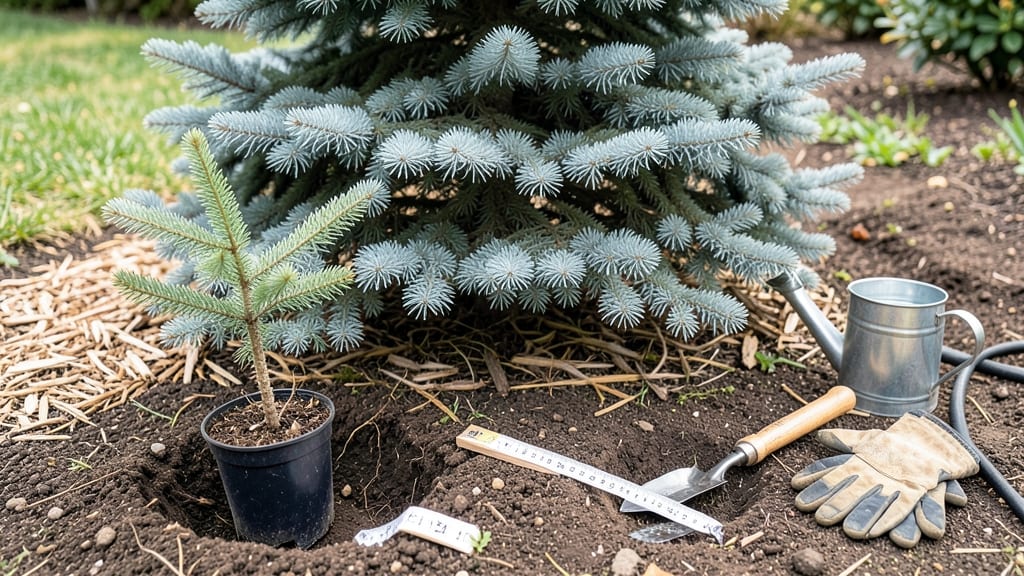
Struggling to create a stunning evergreen landscape with Colorado Blue Spruce? Proper spacing isn't just about aesthetics—it determines long-term health, growth potential, and even your tree's lifespan.
These trees can tower up to 60 feet tall, so cramming them into tight spaces means competing roots, poor airflow, and weak branches that snap in storms. Yet many gardeners make the same mistakes, leading to yellowing needles and stunted growth.
In this guide, I’ll break down the exact spacing rules for mature trees, how to adjust for windbreaks or privacy screens, and the 3 most common mistakes that ruin Colorado Blue Spruce growth—so you can plant them right the first time.

Optimal spacing for Colorado Blue Spruce by mature size: tree dimensions matter
When planting Colorado Blue Spruce (Picea pungens 'Glauca'), the most critical factor isn't just where you place them—it's how much room they'll need to thrive. These trees can reach 40-60 feet tall with a 10-15 foot spread, making proper spacing essential for long-term health.
I've learned from experience that cramming them too close leads to crowded canopies, fungal diseases, and stunted growth—problems you definitely want to avoid. The key is understanding how their mature dimensions translate into planting distances.
For single specimen planting, the golden rule is to give each tree at least 15-20 feet of space in all directions. This accounts for their eventual width and allows air circulation, reducing the risk of needle blight and root rot.
If you're planting multiple trees, spacing becomes even more critical. The canopy spread of a mature Colorado Blue Spruce means you'll need to plan for 20-25 feet between trees to prevent competition for sunlight and nutrients.
This might seem like a lot, but trust me—your trees will thank you in 10 years when they're not fighting for survival.
Soil type plays a surprising role in spacing decisions. In clay-heavy soils, roots grow slower and spread less aggressively, so you can get away with slightly closer spacing (15 feet). However, in well-draining loamy soils, roots expand more rapidly, demanding the full 20-25 feet range. I once planted two spruces 12 feet apart in sandy soil—big mistake! Within five years, their root systems were competing so fiercely that both trees showed signs of nutrient deficiency. Lesson learned: always test your soil before committing to spacing.
Visualizing growth is where most gardeners trip up. A 3-year-old Colorado Blue Spruce might only be 6-10 feet tall, but its root system is already spreading aggressively. That's why I recommend using stakes and string to map out your planting layout before digging.
For every 1 foot of height at maturity, add 2-3 feet of spacing. So a 50-foot tree needs at least 100-150 feet of total space in a straight line if planted in a row. Pro tip: Use a measuring wheel to mark these distances accurately—guessing leads to regret.
One common mistake I see is underestimating wind exposure. Colorado Blue Spruce thrives in full sun and open spaces, but planting them too close to buildings or other trees creates a wind shadow. This can lead to one-sided growth and weak branch structure.
To prevent this, always plant with at least 20 feet of clearance from large structures and 30 feet from other evergreens. If you're in a windy climate (like Colorado, where these trees originated), consider staggering your planting pattern to create a natural windbreak effect while maintaining proper spacing.
For hedge plantings, the rules change dramatically. Dwarf cultivars like 'Globe Blue' only reach 10-15 feet tall, so you can space them 3-4 feet apart. However, this only works if you're committed to regular pruning to maintain shape.
Without pruning, even dwarf spruces will spread wider than expected. I once planted a Globe Blue hedge with 5-foot spacing—it looked perfect for three years until the trees started touching and developing fungal issues. Now I stick to 3-foot spacing and prune annually to keep them in check.
Don't forget about future maintenance access. A mature Colorado Blue
Common mistakes that ruin Colorado Blue Spruce growth (and how to fix them)
When planting Colorado Blue Spruce, spacing mistakes are the #1 reason these stunning evergreens develop yellowing needles, weak growth, or even die prematurely. I’ve seen too many beautiful landscapes ruined by simple spacing errors that create root competition and fungal infections.
The key is understanding how mature size and soil conditions dictate spacing needs.
One of the biggest mistakes is planting too close to other trees or structures. Colorado Blue Spruce can grow 40-60 feet tall, so cramming them into tight spaces forces roots to compete for nutrients and water.
This leads to stunted growth and makes trees more susceptible to disease because poor airflow increases humidity around the foliage.
Another common error is ignoring wind exposure when spacing. In exposed areas, trees need extra room to develop strong root systems that anchor them against wind damage. Without proper spacing, branches break, and the tree’s overall structure weakens over time.
🚨 CALLOUT-WARNING 🚨
Colorado Blue Spruce needs 15-25 feet apart for full-grown trees. Planting closer than 10 feet leads to:
- 🌱 Root competition (weak growth)
- 🍄 Fungal infections (yellow needles)
- 🌪️ Wind damage (broken branches)
If you’re dealing with an existing overcrowded area, start by assessing the current spacing between trees. Measure the distance between trunks and compare it to the mature width of your Colorado Blue Spruce (typically 10-15 feet). If trees are closer than 10 feet, they’re already competing for resources.
To fix overcrowding, prune the outer roots of the closest trees to create space, or consider transplanting one of the trees to a new location. Always water deeply after pruning to help roots recover.
For new plantings, use a spacing guide based on your tree’s mature size—20 feet apart is ideal for standard varieties.
Finally, avoid planting Colorado Blue Spruce near large shrubs or other trees that will outcompete them. Give your spruce plenty of open space and full sun to thrive. With the right spacing, you’ll enjoy healthy, vibrant trees for decades—without the headaches of fungal diseases or weak growth.