
Plants
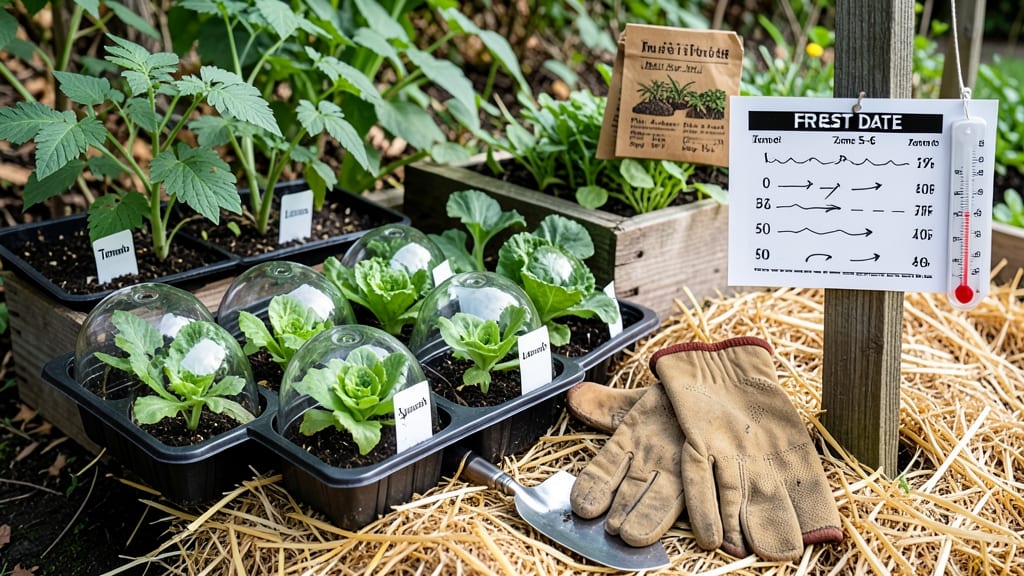
To plant in Missouri, time your crops carefully: cool-season vegetables like lettuce and peas should go in 4-6 weeks before the last frost (February–March), while warm-season plants like tomatoes and peppers wait until after the last frost (April–May). Missouri's hardiness zones (5–7) also shape when to plant perennials and trees.
Missouri's planting schedule hinges on two key factors: frost dates and hardiness zones.
The state's USDA zones 5–7 mean northern areas (like St. Louis) face earlier frosts than southern regions (like Springfield), so check your local last frost date—typically late April in the north and early April in the south. 🌱 For cool-season crops, start seeds indoors in early February if you want a head start, while warm-season plants benefit from soil temperatures above 55°F, usually by mid-May.
Perennials and trees planted in early spring (March–April) give roots time to establish before summer heat sets in.
What many gardeners overlook is that Missouri's climate creates micro-zones within the state. For example, the Ozarks may have a week-long delay compared to Kansas City.
I always recommend using the Missouri Botanical Garden's frost maps or your local cooperative extension service for precise timing—especially when dealing with heat-sensitive crops like basil or eggplants.
💡 In This Article
- Missouri Planting Timing by Hardiness Zones and Frost Dates
- Best Missouri Planting Calendar for Vegetables, Flowers, and Herbs
Missouri planting timing by hardiness zones and frost dates
Missouri's planting schedule is directly tied to its USDA hardiness zones 5–7, which determine how early or late you can safely plant. Zone 5 areas (like northern Missouri) experience 100–120 frost-free days140–160 days
The critical factor is the last spring frost, which typically occurs between April 15–May 1 in the north and March 20–April 15 in the south. These dates create a 4–6 week window for cool-season crops to establish roots before summer heat arrives.
Here's how frost cycles work: cold air sinks and collects in low-lying areas, creating microclimates where frost lingers longer. For example, river valleys (like the Missouri River bottoms) often have 5–7°F colder minimum temperatures than nearby hills.
That's why gardeners in Columbia (Zone 6b) might see frost until April 25, while those in Springfield (Zone 7a) can plant tomatoes by April 10. 🌿 The key is tracking 32°F overnight lows—most annuals can't handle sustained temperatures below this threshold.
For perennials and trees, timing matters just as much. Planting in early spring (March–April) allows roots to establish before summer drought stress sets in.
In Missouri's climate, Zone 5 areas should wait until after the last frost to plant heat-loving shrubs like hydrangeas, while Zone 7 gardeners can start as early as February 15 for early bloomers.
The 10°F rule applies here: choose plants rated for your zone's minimum temperature—most Missouri natives handle -10°F to -20°F without issue.
What most gardeners miss is how soil temperature affects planting. Warm-season crops like cucumbers need soil at 60°F+ to germinate, while cool-season crops like kale tolerate 40°F+. In Missouri, soil warms to 55°F by mid-April in the south but waits until late April in the north.
Use a soil thermometer to verify—planting too early in cold soil leads to rot and poor germination.
Missouri's climate also creates secondary planting windows for fall crops. Cool-season vegetables can be sown 8–10 weeks before the first frost (typically October 15–November 1), giving you a second harvest before winter.
The Missouri Climate Center tracks these dates annually—always check their 30-year averages for your specific county, as microclimates can shift planting dates by 1–2 weeks.
For precision, I recommend using the National Oceanic and Atmospheric Administration (NOAA) frost maps or your local University of Missouri Extension office.
They provide historical frost data that accounts for Missouri's variable weather patterns, including sudden cold snaps in May or early frosts in September. 🌱 This data-driven approach helps you adjust planting dates when anomalies occur—like the 2018 late-May frost that caught many gardeners off guard.